

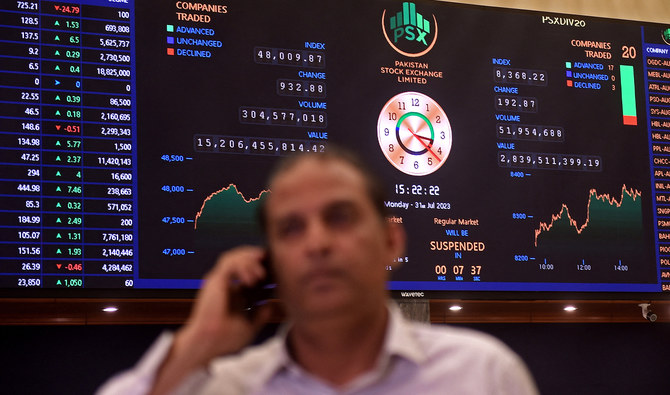

KARACHI: Pakistan’s shares on Friday extended gains and briefly hit an all-time high of 77,310 points during the intraday trading, after posting the biggest single-day gain on Thursday following the announcement of the federal budget for the next fiscal year.
The Pakistan Stock Exchange (PSX) gained more than 1,000 points during the day, but the benchmark KSE100 index closed at 76,706, reflecting an overall gain of 499 points.
The current bullish spell in the market is attributed to the budget presented on Wednesday that did not levy additional taxes on dividends or change the capital gain tax (CGT) for filers.
Some intraday profit taking was observed during the latter part of the trading session, as investors preferred to book their profit before the long weekend on account of Eid Al-Adha holidays.
“The market is trading at an all-time high as budget related uncertainty is over and there are no major changes in CGT and dividend tax rate for filers,” Ali Nawaz, CEO of Chase Securities, told Arab News.
Pakistan’s stock market is experiencing an unprecedented rally, setting new records at a remarkable pace since June last year, following an International Monetary Fund (IMF) bailout program.
Within a year, the KSE100 index has soared by about 85 percent, marking the swiftest recovery witnessed in over two decades.
“The finance minister’s plan to launch Eurobonds of up to $1 billion along with a fresh bid for $4 billion foreign bank loans, projections for massive increase in SOE [state-owned enterprise] dividends and SOE privatization proceeds in [the next fiscal year] played a catalyst role in the record close on Friday,” Ahsan Mehanti, CEO of Arif Habib Corporation, said.
The Pakistani finance chief, Muhammad Aurangzeb, mentioned the government’s plan to raise up to $1 billion through international bonds, with up to $300 million to be generated in the Chinese market.
During the last week, the KSE100 index gained four percent, reflecting a better performance than market expectations.
In the budgetary proposal, the tax rate on dividend and capital gain from stock market for filers was maintained, though there was increase in tax on dividends from mutual fund deriving more than 50 percent income from profit on debt and increase in CGT from three to 15 percent on property.
Analysts believe this can divert more investment toward the stock exchange.
Decline in policy rate by 1.5 percent in monetary policy meeting on Monday by the central bank also provided stimulus to the market.
Pakistani analysts said the outcome of the ongoing talks between the government and the IMF will set the future direction of the stock market.
The finance minister noted this week the country planned to sign a staff-level agreement with the global lender in July. He informed that talks with the IMF were going on in a positive direction.
Pakistan aims to secure a long term and bigger bailout program of about $8 billion from the IMF to stabilize its economy.
Pakistani financial experts believe the budget proposals are in line with the IMF guidelines and will help secure the bailout from the fund.
“Approval of budget will pave way for the new IMF program which will lead to economic stability, controlled inflation and reduction in interest rates going forward,” Ali Nawaz of Chase Securities commented.


