


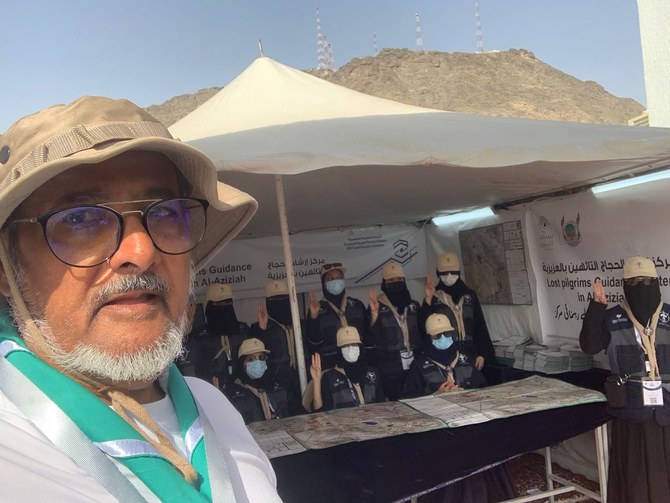


JEDDAH: Saudi scout leader Abdulwahed bin Abdulmalik Khayyat exemplifies the noble volunteer spirit of the Saudi Arabian Boy Scouts Association, which undertakes humanitarian initiatives to serve pilgrims each Hajj season.
Amid the association’s efforts, Khayyat stands out with unwavering determination. Nearing 70 years of age, his unmatched enthusiasm with SABSA remains undiminished.
Khayyat joined the association in 1980 and has been with them ever since.
For over a quarter of a century, he has volunteered in public service camps, continuously serving pilgrims through the Aziziyah camp in Makkah.
Invoking the global scouting motto, “Once a scout, always a scout,” he told Arab News there is no age limit for a scout as long as he is able to fulfill the promise he made to serve others.
Khayyat speaks six languages: English, Hausa, Urdu, Indonesian, Farsi, and his native Arabic.
He believes that serving pilgrims fosters a spirit of community and cooperation, enhances one’s sense of responsibility, and promotes sincerity and honesty in performing one’s duties.
“I learned three languages through my work in guiding pilgrims with my father and preferred scouting over guiding. I learned several (other) languages once I joined SABSA while assisting pilgrims during the Hajj in Mina and Arafat,” he said.
“I find joy in the happiness of the pilgrims; they feel comfortable and delighted when they discover I speak their language.”
This year, Khayyat was nominated to support the guidance center with the rover team. He is eager to continue his journey of service and contribute to creating a meaningful experience for the pilgrims.
In a message to the younger generation of Saudi scouts, Khayyat said he hopes “all scouts participate in voluntary work during Hajj and Umrah” and noted that “the most important qualities a scout must possess are patience, a smile for the pilgrims, (and) good morals. We are here to serve and assist all pilgrims.”
Khayyat holds qualifications as a scout commissioner, specializing in community service development and training. During his long career at SABSA, Khayyat has served in many high positions, such as a commissioner and trainer, holding the International Badge. He was also coordinator of the Girl Scouts Community and the Saudi Scouts Hiking Pioneers Program, both in Makkah.
Since he began working as a scout, Khayyat has undertaken various significant tasks, serving as team leader during Hajj, representing Saudi scouts abroad, coordinating with the Civil Defense in Mina, and serving as a translator and guide for pilgrims, among other responsibilities.
Khayyat holds a bachelor’s degree from Umm Al-Qura University, a master’s degree from the University of Manchester, and a doctorate from King Abdulaziz University in Jeddah, specializing in English.


