

Jeddah university alumna’s film selected for Tribeca festival

1 / 5
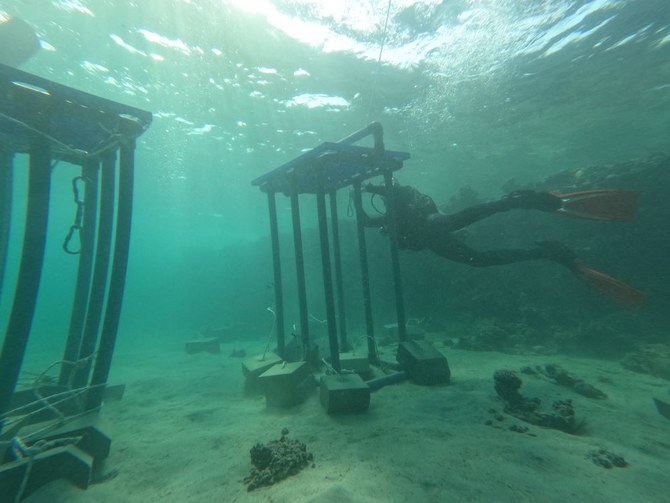
Dur Jamjoom’s graduation film from Effat University, ‘Kum Kum,’ will be shown at the prestigious Tribeca Film Festival in New York. (Supplied)
2 / 5
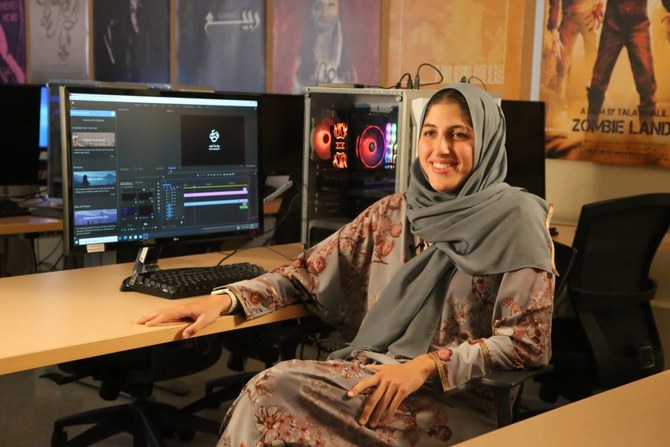
Dur Jamjoom’s graduation film from Effat University, ‘Kum Kum,’ will be shown at the prestigious Tribeca Film Festival in New York. (Supplied)
3 / 5
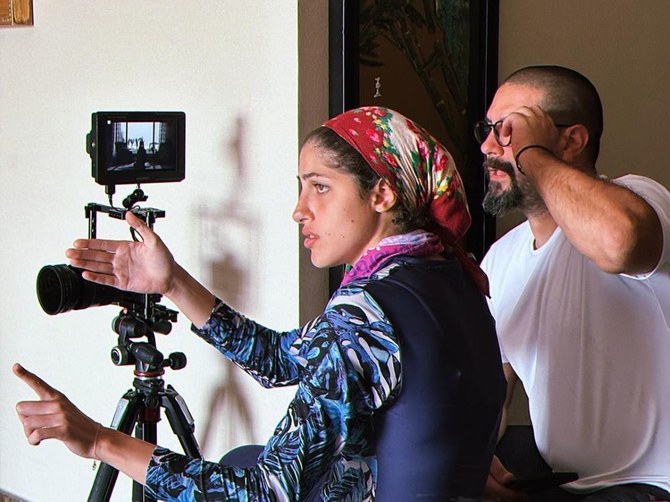
Dur Jamjoom’s graduation film from Effat University, ‘Kum Kum,’ will be shown at the prestigious Tribeca Film Festival in New York. (Supplied)
4 / 5
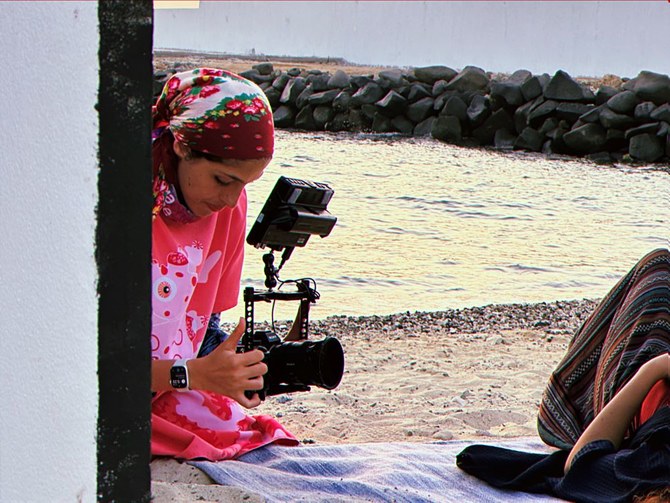
Dur Jamjoom’s graduation film from Effat University, ‘Kum Kum,’ will be shown at the prestigious Tribeca Film Festival in New York. (Supplied)
5 / 5
Dur Jamjoom’s graduation film from Effat University, ‘Kum Kum,’ will be shown at the prestigious Tribeca Film Festival in New York. (Supplied)
Short Url
Updated 11 June 2024
Follow

Jeddah university alumna’s film selected for Tribeca festival

  • ‘Kum Kum,’ directed by Dur Jamjoom, has been chosen for the prestigious Tribeca Film Festival in New York
  • Jamjoom completed the film as her graduation project at Effat University in 2022

JEDDAH: Dur Jamjoom’s graduation film from Effat University, “Kum Kum,” has been chosen for the prestigious Tribeca Film Festival in New York.

Founded by actor Robert De Niro, Tribeca is one of North America’s most important festivals. This year’s event began on June 5 and runs until June 16.

Jamjoom completed the film as her graduation project at Effat University in 2022. She said: “I’m incredibly honored and blessed to be the first Saudi female as part of the shorts program at the Tribeca Festival. This opportunity wouldn’t have been possible without my incredible team.”

The autobiographical film is deeply personal, centering on the untimely passing of Jamjoom’s best friend in 2012. Just 12 years old at the time, the tragic event introduced her to a range of unfamiliar emotions.

As the story unfolds, each person recounts the event from their own perspective. Jamjoom brings these diverse narratives together to form a cohesive story, highlighting the profound impact of one person’s suffering on the lives of others.

She said: “I was hesitant to delve into the memory of my friend who is no longer with us, fearing disrespect. But I realized I’m actually honoring my friend, who made me into the person I am today.”

During production, Jamjoom faced numerous challenges. “We shot the movie in the sea, but the waves were uncooperative, and many people were getting seasick,” she said.

“The underwater housing case for the camera posed unique challenges I had never encountered before. I had to trust my team and stay focused on directing.”

She hopes the film inspires audiences to see the light after darkness, emphasizing that “where there is grief, there can also be healing, and the transformative power of overcoming life’s challenges.”

Speaking about the film’s deeper meanings, she said: “In the movie, ‘Kum Kum’ serves as a traditional Saudi game that holds symbolic significance. The game metaphorically represents how life presents unexpected moments, and individuals must adapt to the changes. ‘Kum Kum’ explores the intricate connections between faith, suffering, resilience, and personal growth.”

Mohamed Ghazala, chair of the Cinematic Arts School at Effat University, expressed his pride and joy in celebrating this incredible achievement. He said: “Jamjoom, one of our finest graduates, has dedicated countless hours to honing her craft at our campus, passionately writing, filming, animating, directing, and documenting real stories.

“The selection of her graduation film for the esteemed Tribeca Film Festival is a tremendous honor for us and for Saudi Arabia as a whole. To be shortlisted from a pool of 8,000 submissions is a remarkable feat that showcases the incredible talent being nurtured within our institution. We are filled with optimism and enthusiasm as we look forward to witnessing more groundbreaking achievements from our talented students in the future.”

He added: “This remarkable accomplishment is a true testament to the impactful teaching at Effat University, empowering students with the strong tools necessary to bring their stories to life, captivating not only local audiences but also international viewers.”


How science is reshaping early years education 

Updated 27 December 2025
Follow

How science is reshaping early years education 

DUBAI: As early years education comes under renewed scrutiny worldwide, one UAE-based provider is making the case that nurseries must align more closely with science.

Blossom Nursery & Preschool, which operates 32 locations across the UAE, is championing a science-backed model designed to close what it sees as a long-standing gap between research and classroom practice.

“For decades, early years education has been undervalued globally — even though science shows the first five years are the most critical for brain development,” said Lama Bechara-Jakins, CEO for the Middle East at Babilou Family and a founding figure behind Blossom’s regional growth, in an interview with Arab News.

Lama Bechara-Jakins is the CEO for the Middle East at Babilou Family and a founding figure behind Blossom’s regional growth. (Supplied)

She explained that the Sustainable Education Approach was created to address “a fundamental gap between what we know from science and what actually happens in nurseries.”

Developed by Babilou Family, the approach draws on independent analysis of research in neuroscience, epigenetics, and cognitive and social sciences, alongside established educational philosophies and feedback from educators and families across 10 countries. The result is a framework built around six pillars; emotional and physical security, natural curiosity, nature-based learning, inclusion, child rhythms, and partnering with parents.

Two research insights, Bechara-Jakins says, were particularly transformative. “Neuroscience shows that young children cannot learn until they feel safe,” she said, adding that stress and inconsistent caregiving can “literally alter the architecture of the developing brain.” 

Equally significant was evidence around child rhythms, which confirmed that “pushing children academically too early is not just unhelpful — it can be counterproductive.”

Feedback from families and educators reinforced these findings. Across regions, common concerns emerged around pressure on young children, limited outdoor time and weak emotional connections in classrooms. What surprised her most was that “parents all sensed that something was missing, even if they couldn’t articulate the science behind it.”

At classroom level, the strongest body of evidence centres on secure relationships. Research shows that “secure attachments drive healthy brain development” and that children learn through trusted adults. At Blossom, this translates into practices such as assigning each child “one primary educator,” prioritising calm environments, and viewing behaviour through “a neuroscience lens — as stress signals, not misbehaviour.”

Bechara-Jakins believes curiosity and nature remain overlooked in many early years settings, despite strong evidence that both accelerate learning and reduce stress. In urban centres such as Dubai, she argues, nature-based learning is “not a luxury. It is a developmental need.” 

For Blossom, this means daily outdoor time, natural materials, gardening, and sensory play — intentional choices aimed at giving children what science says they need to thrive.