Book Review: ‘What I Learned from the Trees’ by Lauren Bowman

Short Url
Updated 09 June 2024
Follow

Book Review: ‘What I Learned from the Trees’ by Lauren Bowman

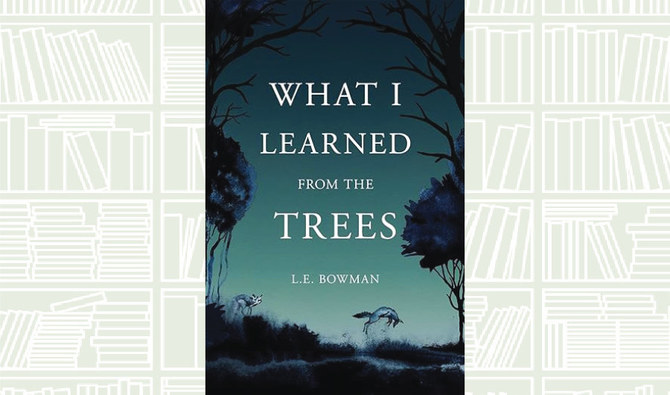
Published in 2021, “What I Learned from Trees” by Lauren Bowman is a beautiful meditation on the lessons humans can learn from nature.

The poetry collection explores the author’s rooted connection with the trees that surround her home. Bowman combines descriptions of the trees she is used to seeing every day with her insightful reflections on the human experience. 

This book is about various species of trees, each with unique lessons to teach people. From the strength and resilience of the oak to the delicate cherry blossom, the author finds wisdom and inspiration in the patterns of the trees. Bowman’s description of each tree’s physical characteristics and ecosystem is engaging and thought-provoking.

One of the collection’s strengths is Bowman’s ability to apply lessons from nature to the human experience. For example, she describes the oak tree’s ability to stand against storms metaphorically to encourage readers to gain inner strength when faced with challenging moments in life.

Another example is the cherry blossom’s short flowering period, which she thinks reflects the essence of one’s life, and how precious moments should be valued. In other words, Bowman invites readers to see trees not only as beautiful part of nature but also as teachers with insights that develops the reader’s personal understanding of life.

Bowman’s appreciation of nature is evident through her narration. Her words are filled with a sense of wonder and humility, reminding readers of their place in the larger structure of life. This perspective is especially important today due to people’s connection to nature is declining in urban spaces. She motivates people to observe, reflect, appreciate, learn, and adapt.

Overall, “What I Learned from Trees” is a call to slow down and think. Bowman’s writing style and deep insights make this book interesting and is recommended for readers searching to develop a genuine appreciation for nature and the power and effect it brings to human life.


Book Review: ‘Keep the Memories, Lose the Stuff’

Updated 01 January 2026
Follow

Book Review: ‘Keep the Memories, Lose the Stuff’

If you are someone who adopts a new year, new me mindset every Dec. 31, then Matt Paxton’s 2022 book “Keep the Memories, Lose the Stuff: Declutter, Downsize, and Move Forward with Your Life,” written with Jordan Michael Smith, is worth picking up.

In the process of reading it, I found myself filling four bags with items to donate.

Paxton’s approach is notably different from Marie Kondo’s once-ubiquitous Japanese tidying method, which asks readers to pile all their possessions into one part of the room, hold each item up and ask whether it sparks joy.

While Kondo’s philosophy sounds appealing on paper — thanking objects and dedicating an entire weekend to the process — it is not realistic for everyday life. Paxton’s method feels more practical and gentler.

Paxton knows the emotional terrain of clutter well. For more than 20 years he has helped people declutter and downsize. He was a featured cleaner on the reality show “Hoarders” and later hosted the Emmy-nominated “Legacy List with Matt Paxton” on PBS.

Through this work, Paxton gained insight into why people hold on to things and what makes letting go difficult even of what seemingly looks useless.

What works especially well is how personal the book feels from the outset.

He opens by explaining his anxiety-inducing decision to move to a different US state with his three children, and all of their stuff, to live with his new wife and all of her stuff.

Together, they would be raising seven children — very Brady Bunch style — but with slightly more practical life considerations.

He also talks about how he got into this line of work. When he was in his 20s, his father died and he had to help clear out his belongings. He found that process to be cathartic and special. And he was good at it.

Soon after, short on cash, he accepted a job from someone in his small, close-knit community to help organize her home — likely hired out of pity more than anything else.

That slow process of sifting through items and learning the stories behind each one — directly from the owner of those objects — sparked plenty of joy. He was hooked.

Throughout the book, Paxton makes the case for consistency. His advice is manageable. He encourages readers to dedicate just 10 minutes a day to decluttering to form a habit. We all can spare that.

Paxton also stresses the importance of communication.

Talk to your loved ones about what you want done with your belongings when you are no longer around, and just as importantly, listen to what they want done with theirs, he urges. He offers practical guidance on having these conversations with parents, partners and children.

One critique of this book is that Paxton dedicates a large portion to physical photographs. While this is relevant for many older readers, it may feel less urgent going forward, particularly for Gen Z and younger, whose clutter is more likely to be solely digital.

Ultimately, “Keep the Memories, Lose the Stuff” is less about getting rid of things than about making space; by speaking about objects, sharing their stories and allowing them — and each of us — to move on.