WASHINGTON: William Anders, the former US astronaut who took the historic “Earthrise” photo from space over 55 years ago, died in a plane crash on Friday at the age of 90, his family said.
Anders had been piloting a small plane which crashed off the coast of Washington state on Friday morning, his son told US media. Anders was alone in the plane.
His body was later recovered by a dive team, The Seattle Times reported, quoting a Coast Guard spokesperson.
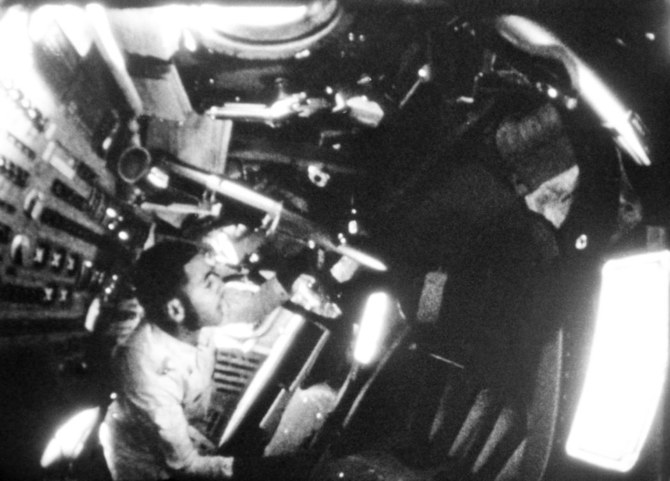
A member of the Apollo 8 mission in December 1968, Anders became one of the first humans to orbit the Moon, along with fellow Americans Frank Borman and James Lovell.
The crew circled the Moon 10 times without landing, before successfully returning to Earth on December 27, 1968.
On one of the lunar orbits, Anders captured a photo of the bright blue Earth against the vast darkness of space, with the Moon’s cratered surface in the foreground.
“We’d been going backwards and upside down, didn’t really see the Earth or the Sun, and when we rolled around and came around and saw the first Earthrise,” he said in a 1997 NASA oral history interview.
“(T)hat certainly was, by far, the most impressive thing. To see this very delicate, colorful orb which to me looked like a Christmas tree ornament coming up over this very stark, ugly lunar landscape.”
The “Earthrise” photo is frequently listed in roundups of key historical images, and was included in Life Magazine’s book “100 Photographs that Changed The World.”
An original version of the photo sold at a Copenhagen auction in 2022 for 11,800 euros.
“In 1968, during Apollo 8, Bill Anders offered to humanity among the deepest of gifts an astronaut can give,” NASA chief Bill Nelson wrote on social media platform X.
“He traveled to the threshold of the Moon and helped all of us see something else: ourselves. He embodied the lessons and the purpose of exploration. We will miss him,” Nelson added.
The San Juan County Sheriff’s Office in Washington state said in a statement that local authorities received a report around noon on Friday that “an older model plane was flying from north to south then went into the water and sunk.”
The Federal Aviation Administration and the National Transportation Safety Board were investigating the crash.
Born October 17, 1933, in Hong Kong, Anders graduated from the US Naval Academy and later earned a master’s degree in nuclear engineering.
After his time as an astronaut, Anders later held various technology-related government positions, notably becoming the first chairman of the Nuclear Regulatory Commission and later serving as the US ambassador to Norway.
In the early 1990s, he headed up the US defense and aerospace company General Dynamics as CEO and chairman, before retiring.
In a 2015 interview with Forbes, Anders said his Earthrise image had captured so much attention because it showed the planet’s beauty and fragility — and “helped kick start the environmental movement.”
But he was also surprised that the public seemed to have lost the memory of the space mission that produced the photo.
“It’s curious to me that the press and people on the ground have kind of forgotten our history-making voyage, and what’s symbolic of the flight now is the ‘Earthrise’ picture,” Anders said.
“Here we came all the way to the moon to discover Earth.”
Of the Apollo 8 members, only Lovell is still alive.
Borman died in November 2023 at the age of 95.
Lovell, 96, was also a member of the Apollo 13 mission that was meant to land on the Moon, but experienced a near-catastrophe that was later made into a Hollywood film.
The last time humans set foot on the Moon was in 1972 during the Apollo 17 mission, but NASA has set its sights on sending new astronauts, including the first woman and person of color, in the coming years.

Apollo 8 astronaut dies in small plane crash at age 90

Short Url
https://arab.news/ghj7c
Apollo 8 astronaut dies in small plane crash at age 90
Fraudsters flee Cambodia’s ‘scam city’ after accused boss taken down
SIHANOUKVILLE: Hundreds of people dragged away suitcases, computer monitors, pets and furniture as they fled a suspected Cambodian cyberfraud center, after the country’s most wanted alleged scam kingpin was arrested and deported.
Boarding tuk-tuks, Lexus SUVs and tourist coaches, an exodus departed Amber Casino in the coastal city of Sihanoukville, one of the illicit trade’s most notorious hubs.
“Cambodia is in upheaval,” one Chinese man told AFP. “Nowhere is safe to work anymore,” he said Thursday.
Similar scenes played out at alleged scam compounds across Cambodia this week as the government said it was cracking down on the multibillion-dollar industry.
But residents said many of the people working inside the tightly secured buildings moved out several days before the arrival of authorities, and an analyst dubbed it “anti-crime theater.”
From hubs across Southeast Asia, scammers lure Internet users globally into fake romantic relationships and cryptocurrency investments.
Initially largely targeting Chinese speakers, transnational crime groups have expanded operations into multiple languages to steal tens of billions annually from victims around the world.
Those conducting the scams are sometimes willing con artists, sometimes trafficked foreign nationals who have been trapped and forced to work under threat of violence.
AFP journalists visited several alleged Internet scam sites in Sihanoukville, in the wake of the high-profile arrest in Cambodia and extradition to China of internationally sanctioned accused scam boss Chen Zhi.
Few of those departing the casinos, hotels and other facilities were willing to speak with AFP, and none were willing to be identified due to concerns for their safety.
“Our Chinese company just told us to leave straight away,” said a Bangladeshi man outside Amber Casino.
“But we’ll be fine. There are plenty of other job offers,” he added.
Studded with casinos and unfinished high-rises, the glitzy resort of Sihanoukville has become a cyberscam hotbed, where thousands of people involved in the black market are believed to operate cons from fortified compounds.
Before Chen was indicted last year by US authorities who said his firm Prince Group was a front for a transnational cybercrime network, the Chinese-born businessman ran multiple gambling hotels in Sihanoukville.
A 2025 Amnesty International report identified 22 scam locations in the coastal resort, out of a total of 53 in the country.
The UN Office on Drugs and Crime estimates global losses to online scams reached up to $37 billion in 2023, and that at least 100,000 people work in the industry in Cambodia alone.
- Tipped off -
But the Cambodian government claims the lawless era has come to an end, with Prime Minister Hun Manet pledging on Facebook to “eliminate... all the problems related to the crime of cyber scams.”
Cambodia’s anti-scam commission says it has raided 118 scam locations and arrested around 5,000 people in the last six months.
Following Chen’s deportation to China, the Cambodian government has tightened the screws on some Prince Group affiliates, ordering Prince Bank into liquidation and freezing home sales at several of its luxury properties.
In recent months, China has stepped up its pursuit of the scam industry, sweeping up Chen and other key figures from across Southeast Asia to try them on its own soil.
But while Cambodia says it is “cracking down,” there are suspicions over the timing.
A tuk-tuk driver in Sihanoukville told AFP hundreds of Chinese people left one compound this week before police arrived.
“Looks like they were tipped off,” said the 42-year-old, declining to give his name.
Mark Taylor, former head of a Cambodia-based anti-trafficking NGO, said the “preemptive shifting of scam center resources,” including workers, equipment and managers, had been seen ahead of law enforcement sweeps.
It was “seemingly the product of collusion,” he added, in a strategy with “dual ends” of boosting the government’s anti-crime credentials while preserving the scamming industry’s ability to survive and adapt.
Amnesty has accused the Cambodian government of “deliberately ignoring” rights abuses by cybercrime gangs, which sometimes lure workers with offers of high-paying jobs before holding them against their will.
AFP journalists saw several coachloads of Mandarin speakers leaving Sihanoukville on the main highway to the capital Phnom Penh.
Multiple people said they “didn’t know” where they were going or what their plans were, but appeared anxious as they anticipated law enforcement closing in.
Outside the Amber Casino, holding a fake designer hold-all, the Bangladeshi man fell in with the crowd, saying: “This is about survival now.”
Boarding tuk-tuks, Lexus SUVs and tourist coaches, an exodus departed Amber Casino in the coastal city of Sihanoukville, one of the illicit trade’s most notorious hubs.
“Cambodia is in upheaval,” one Chinese man told AFP. “Nowhere is safe to work anymore,” he said Thursday.
Similar scenes played out at alleged scam compounds across Cambodia this week as the government said it was cracking down on the multibillion-dollar industry.
But residents said many of the people working inside the tightly secured buildings moved out several days before the arrival of authorities, and an analyst dubbed it “anti-crime theater.”
From hubs across Southeast Asia, scammers lure Internet users globally into fake romantic relationships and cryptocurrency investments.
Initially largely targeting Chinese speakers, transnational crime groups have expanded operations into multiple languages to steal tens of billions annually from victims around the world.
Those conducting the scams are sometimes willing con artists, sometimes trafficked foreign nationals who have been trapped and forced to work under threat of violence.
AFP journalists visited several alleged Internet scam sites in Sihanoukville, in the wake of the high-profile arrest in Cambodia and extradition to China of internationally sanctioned accused scam boss Chen Zhi.
Few of those departing the casinos, hotels and other facilities were willing to speak with AFP, and none were willing to be identified due to concerns for their safety.
“Our Chinese company just told us to leave straight away,” said a Bangladeshi man outside Amber Casino.
“But we’ll be fine. There are plenty of other job offers,” he added.
Studded with casinos and unfinished high-rises, the glitzy resort of Sihanoukville has become a cyberscam hotbed, where thousands of people involved in the black market are believed to operate cons from fortified compounds.
Before Chen was indicted last year by US authorities who said his firm Prince Group was a front for a transnational cybercrime network, the Chinese-born businessman ran multiple gambling hotels in Sihanoukville.
A 2025 Amnesty International report identified 22 scam locations in the coastal resort, out of a total of 53 in the country.
The UN Office on Drugs and Crime estimates global losses to online scams reached up to $37 billion in 2023, and that at least 100,000 people work in the industry in Cambodia alone.
- Tipped off -
But the Cambodian government claims the lawless era has come to an end, with Prime Minister Hun Manet pledging on Facebook to “eliminate... all the problems related to the crime of cyber scams.”
Cambodia’s anti-scam commission says it has raided 118 scam locations and arrested around 5,000 people in the last six months.
Following Chen’s deportation to China, the Cambodian government has tightened the screws on some Prince Group affiliates, ordering Prince Bank into liquidation and freezing home sales at several of its luxury properties.
In recent months, China has stepped up its pursuit of the scam industry, sweeping up Chen and other key figures from across Southeast Asia to try them on its own soil.
But while Cambodia says it is “cracking down,” there are suspicions over the timing.
A tuk-tuk driver in Sihanoukville told AFP hundreds of Chinese people left one compound this week before police arrived.
“Looks like they were tipped off,” said the 42-year-old, declining to give his name.
Mark Taylor, former head of a Cambodia-based anti-trafficking NGO, said the “preemptive shifting of scam center resources,” including workers, equipment and managers, had been seen ahead of law enforcement sweeps.
It was “seemingly the product of collusion,” he added, in a strategy with “dual ends” of boosting the government’s anti-crime credentials while preserving the scamming industry’s ability to survive and adapt.
Amnesty has accused the Cambodian government of “deliberately ignoring” rights abuses by cybercrime gangs, which sometimes lure workers with offers of high-paying jobs before holding them against their will.
AFP journalists saw several coachloads of Mandarin speakers leaving Sihanoukville on the main highway to the capital Phnom Penh.
Multiple people said they “didn’t know” where they were going or what their plans were, but appeared anxious as they anticipated law enforcement closing in.
Outside the Amber Casino, holding a fake designer hold-all, the Bangladeshi man fell in with the crowd, saying: “This is about survival now.”
© 2026 SAUDI RESEARCH & PUBLISHING COMPANY, All Rights Reserved And subject to Terms of Use Agreement.