GENEVA: A long-standing resolution urging WHO action on towering health needs in the Palestinian territories hung in the balance Friday, after Israel secured an amendment requiring the text to mention hostages held in Gaza.
The largely technical text presented on Wednesday by a group of Arab countries, including the Palestinians, to the World Health Organization’s supreme decision-making body, had been expected to pass easily, as similar resolutions have done annually for more than 50 years.
But before the text could go to a vote, Israel surprisingly secured enough support to demand it be amended to include a call for the release of the hostages held in Gaza, and a condemnation of the militarization of hospitals in the territory by Hamas.
The Arab Group then attempted to retract the resolution, but was informed that doing so once an amendment had already been voted through was against the rules.
It remained unclear what would happen on Friday when the issue again comes to the floor of the World Health Assembly — the annual gathering in Geneva of the WHO’s 194 member states.
One option for Arab countries was to vote against their own resolution to avoid approving a text including the Israeli amendment.
But it appeared they would rather try to push through an amendment of their own, beefing up criticism of Israel in the resolution.
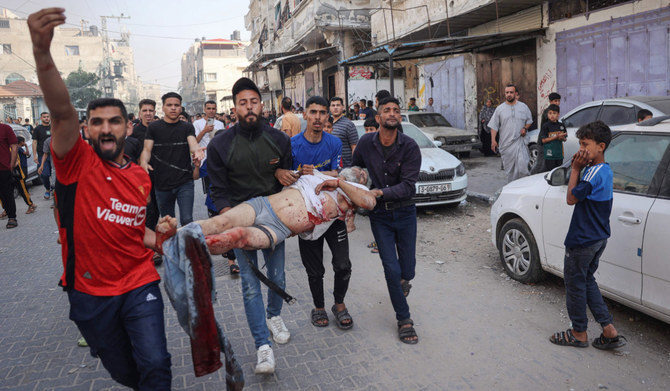
Prior to the amendments, this year’s draft text urged a donor conference to address soaring health needs in Gaza and across the Palestinian territories.
It also requested reporting on the dire health crisis in Gaza, including on Israel’s “wanton destruction of health facilities” in the coastal strip.
Before voting began on Wednesday, Israel’s Ambassador Meirav Eilon Shahar told the assembly that any decision “that does not demand the immediate and unconditional release of all hostages is an unforgivable moral failure.”
A majority of countries had been expected to vote down Israel’s amendment.
But after Shahar demanded a roll-call vote, meaning each state had to publicly announce its stance, it became clear it would be tight.
Basically, all Arab and Muslim countries opposed the amendment, supported by among others heavyweights China and Russia.
The United States and most European nations backed it, while the picture was mixed elsewhere.
In the end, the amendment passed, with 50 votes in favor and 44 opposed, while 83 countries were either absent or abstained.
The Gaza war was sparked by Hamas’s October 7 attack on southern Israel, which resulted in the deaths of 1,189 people, mostly civilians, according to an AFP tally based on Israeli official figures.
Militants also took 252 hostages, 121 of whom remain in Gaza, including 37 the army says are dead.
Israel’s retaliatory offensive has killed at least 36,224 people in Gaza, mostly civilians, according to the Hamas-run territory’s health ministry.

Suspense abounds over Palestinian health resolution at WHO
Short Url
https://arab.news/z9t43
Suspense abounds over Palestinian health resolution at WHO
- Before the text could go to a vote, Israel surprisingly secured enough support to demand it be amended to include a call for the release of the hostages held in Gaza
- The Arab Group then attempted to retract the resolution, but was informed that doing so once an amendment had already been voted through was against the rules
January settler attacks cause record West Bank displacement since Oct 2023: UN
RAMALLAH: Israeli settler violence and harassment in the occupied West Bank displaced nearly 700 Palestinians in January, the United Nations said Thursday, the highest rate since the Gaza war erupted in October 2023.
At least 694 Palestinians were forcefully driven from their homes last month, according to figures from the UN’s humanitarian agency OCHA, which compiles data from various United Nations agencies.
The UN Human Rights Office (OHCHR) said in late January that settler violence has become a key driver of forced displacement in the West Bank.
January’s displacement numbers were particularly high in part due to the displacement of an entire herding community in the Jordan Valley, Ras Ein Al-Auja, whose 130 families left after months of harassment.
“What is happening today is the complete collapse of the community as a result of the settlers’ continuous and repeated attacks, day and night, for the past two years,” Farhan Jahaleen, a Bedouin resident, told AFP at the time.
Settlers in the West Bank, which Israel has occupied since 1967, use herding to establish a presence on agricultural lands used by Palestinian communities and gradually deny them access to these areas, according to a 2025 report by Israeli NGO Peace Now.
To force Palestinians out, settlers resort to harassment, intimidation and violence, “with the backing of the Israeli government and military,” the settlement watchdog said.
“No one is putting the pressure on Israel or on the Israeli authorities to stop this and so the settlers feel it, they feel the complete impunity that they’re just free to continue to do this,” said Allegra Pacheco, director of the West Bank Protection Consortium, a group of NGOS working to support Palestinian communities against displacement.
She pointed to a lack of attention on the West Bank as another driving factor.
“All eyes are focused on Gaza when it comes to Palestine, while we have an ongoing ethnic cleansing in the West Bank and nobody’s paying attention,” she told AFP.
West Bank Palestinians are also displaced when Israel’s military destroys structures and dwellings it says are built without permits.
In January, 182 more Palestinians were displaced due to home demolitions, according to OCHA.
Excluding Israeli-annexed east Jerusalem, the West Bank is home to more than 500,000 Israelis living in settlements and outposts considered illegal under international law.
Around three million Palestinians live in the West Bank.
At least 694 Palestinians were forcefully driven from their homes last month, according to figures from the UN’s humanitarian agency OCHA, which compiles data from various United Nations agencies.
The UN Human Rights Office (OHCHR) said in late January that settler violence has become a key driver of forced displacement in the West Bank.
January’s displacement numbers were particularly high in part due to the displacement of an entire herding community in the Jordan Valley, Ras Ein Al-Auja, whose 130 families left after months of harassment.
“What is happening today is the complete collapse of the community as a result of the settlers’ continuous and repeated attacks, day and night, for the past two years,” Farhan Jahaleen, a Bedouin resident, told AFP at the time.
Settlers in the West Bank, which Israel has occupied since 1967, use herding to establish a presence on agricultural lands used by Palestinian communities and gradually deny them access to these areas, according to a 2025 report by Israeli NGO Peace Now.
To force Palestinians out, settlers resort to harassment, intimidation and violence, “with the backing of the Israeli government and military,” the settlement watchdog said.
“No one is putting the pressure on Israel or on the Israeli authorities to stop this and so the settlers feel it, they feel the complete impunity that they’re just free to continue to do this,” said Allegra Pacheco, director of the West Bank Protection Consortium, a group of NGOS working to support Palestinian communities against displacement.
She pointed to a lack of attention on the West Bank as another driving factor.
“All eyes are focused on Gaza when it comes to Palestine, while we have an ongoing ethnic cleansing in the West Bank and nobody’s paying attention,” she told AFP.
West Bank Palestinians are also displaced when Israel’s military destroys structures and dwellings it says are built without permits.
In January, 182 more Palestinians were displaced due to home demolitions, according to OCHA.
Excluding Israeli-annexed east Jerusalem, the West Bank is home to more than 500,000 Israelis living in settlements and outposts considered illegal under international law.
Around three million Palestinians live in the West Bank.
© 2026 SAUDI RESEARCH & PUBLISHING COMPANY, All Rights Reserved And subject to Terms of Use Agreement.


