

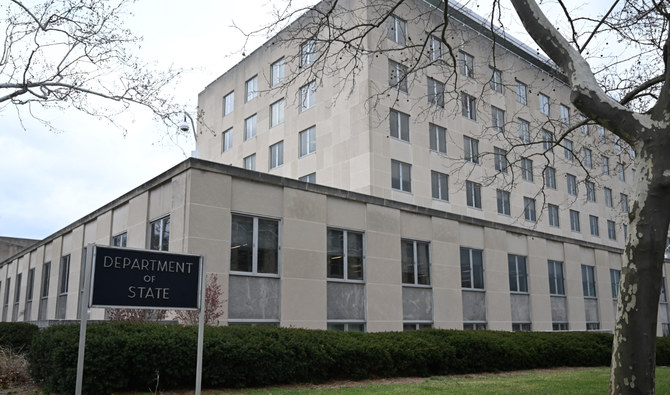

WASHINGTON: A US State Department official who quit this week said on Thursday her resignation was precipitated by an administration report to Congress that she said falsely stated Israel was not blocking humanitarian aid to Gaza, prompting her to resign in protest of President Joe Biden’s Israel policy.
Stacy Gilbert, who served in the State Department’s Bureau of Population, Refugees and Migration, was a subject matter expert working on the report.
“There is so clearly a right and wrong, and what is in that report is wrong,” Gilbert said in an interview.
The United Nations and aid groups have long complained of the dangers and obstacles to getting aid in and distributing it throughout Gaza.
As the Palestinian death toll in Gaza has exceeded 36,000 and a humanitarian crisis has engulfed the enclave, human rights groups and other critics have faulted the US for providing weapons to Israel and largely defending Israel’s conduct.
The State Department submitted the 46-page unclassified report earlier this month to Congress as required under a new National Security Memorandum that Biden issued in early February.
Among other conclusions, the report said that in the period after Oct. 7 Israel “did not fully cooperate” with US and other efforts to get humanitarian aid into Gaza.
But it said this did not amount to a breach of a US law that blocks the provision of arms to countries that restrict US humanitarian aid.
Gilbert, who worked for the State Department for over 20 years, said she notified her office the day the State Department report was released that she would resign. Her last day was Tuesday.
US State Department deputy spokesperson Vedant Patel told reporters on Thursday that he would not comment on personnel issues but that the department welcomes diverse points of view.
He said the administration stood by the report and continued to press the government of Israel to avoid harming civilians and urgently expand humanitarian access to Gaza.
“We are not an administration that twists the facts, and allegations that we have are unfounded,” Patel said.
The Israeli embassy in Washington did not immediately respond to a request for comment on Gilbert’s accusations.
Gilbert’s bureau was one of the four that contributed to a classified initial options memo, reported exclusively by Reuters in late April, that informed US Secretary of State Antony Blinken Israel might be violating international humanitarian law.
Gilbert said the State Department removed subject matter experts from working on the report to Congress when the document was a rough draft about 10 days before it was due. She said the report was then edited by more senior officials.
In contrast to the published version, the last draft she saw stated that Israel was blocking humanitarian assistance, Gilbert said.
Officials who resigned prior to Gilbert include Arabic language spokesperson Hala Rharrit and Annelle Sheline of the human rights bureau.
More than 36,000 Palestinians have been killed in Israel’s air and land war in Gaza. Israel launched its offensive after Hamas fighters crossed from Gaza into southern Israel on Oct. 7 last year, killed 1,200 people and abducted more than 250, according to Israeli tallies.


