

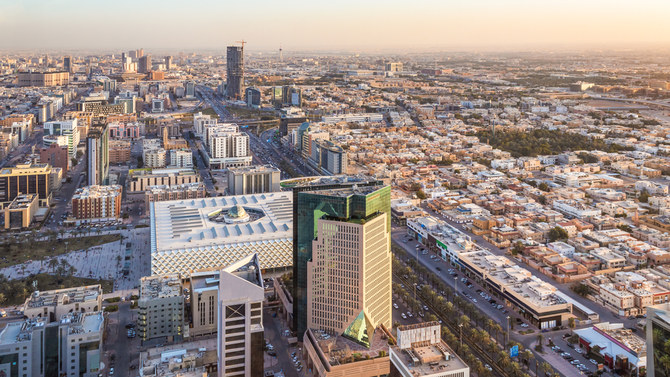
Riyadh residential market sales surge 77%: CBRE report

Villa prices in Riyadh, Jeddah, and Khobar rose by 3.6 percent, 0.2 percent, and 3.1 percent, respectively. Meanwhile, Dammam saw a slight decline of 0.5 percent. Shutterstock
Short Url
Updated 30 May 2024
Follow

Riyadh residential market sales surge 77%: CBRE report

RIYADH: Saudi Arabia’s residential market experienced robust growth in demand, with Riyadh witnessing a 77 percent year-on-year increase in sales transactions in the first quarter, a new report showed. 

According to global consultancy firm CBRE, Jeddah residential transactions surged by 92.9 percent in the first three months of this year, while Dammam saw a 28.0 percent increase year-over-year. 

Taimur Khan, head of research MENA, said: “Whilst we have seen strong performance across commercial sectors within Saudi Arabia in the recent past, something which continues to date, we are now beginning to see the residential sector also register a significant surge in demand. This is, in turn, underpinning performance in the sector.” 

As new stock continues to be delivered, he said they expect this trend to continue, with demand outpacing supply for some time to come. 

“However, we also expect that there might be some bifurcation in performance within the residential sector, with new quality assets likely to register record rates,” added Khan.

Villa prices in Riyadh, Jeddah, and Khobar rose by 3.6 percent, 0.2 percent, and 3.1 percent, respectively. Meanwhile, Dammam saw a slight decline of 0.5 percent. 

In the apartment segment, prices in Riyadh, Dammam, and Khobar increased by 8.4 percent, 0.9 percent, and 0.4 percent, respectively, compared to the previous year.  

However, Jeddah experienced a 1.1 percent decrease in average apartment prices over the same period.   

Throughout the first quarter of this year, the office sector witnessed a slowdown in rental growth across all market segments.  

Prime rents in Riyadh’s occupier market surged by 14.5 percent, while Grade A and Grade B rents increased by 11.8 percent and 10.3 percent, respectively.  

In Dammam, Grade A rents rose by 8.0 percent, Grade B by 6.2 percent, and Khobar’s Grade A rents saw a 4.6 percent increase.  

Occupancy rates stood at 93.8 percent, 99.7 percent, and 99.4 percent for Prime, Grade A, and Grade B segments in Riyadh, while Dammam and Khobar displayed respective Grade A occupancy rates of 86.3 percent and 85.2 percent as of the first quarter.  

In Jeddah, Grade A and Grade B rents increased by 13.6 percent and 13.1 percent, respectively, with occupancy rates reaching 92.5 percent and 86.6 percent. 

The hospitality sector’s performance remained strong throughout the first quarter due to high visitation levels.  

Year-on-year, from January to March 2024, the average occupancy rate saw a slight uptick of 0.1 percentage points.  

Additionally, the country experienced an 11.8 percent increase in average daily rate, leading to a 12.0 percent rise in revenue per available room.


Saudi consumer inflation eases to 1.8% in January: GASTAT 

Updated 4 sec ago
Follow

Saudi consumer inflation eases to 1.8% in January: GASTAT 

RIYADH: Saudi Arabia’s inflation softened to 1.8 percent in January, signaling contained price pressures even as housing rents remained the main driver of consumer costs, official data showed.  

According to the General Authority for Statistics, average prices for housing, water, electricity, gas and other fuels rose 4.2 percent in January, reflecting a 5.2 percent increase in actual residential rents. 

Saudi Arabia’s inflation trajectory broadly aligns with projections by the International Monetary Fund, which said in October the Kingdom is expected to maintain an annual inflation rate of about 2 percent in 2026. 

In its latest report, GASTAT stated: “The Consumer Price Index in Saudi Arabia recorded an annual increase of 1.8 percent in January 2026, compared to the same month of the previous year.”   

It added: “This increase was mainly driven by a rise in housing, water, electricity, gas, and other fuel prices by 4.2 percent, transport prices by 1.5 percent and restaurant and accommodation services prices by 1 percent.”  

According to the report, expenses for personal care, social protection and miscellaneous goods and services increased 7.9 percent year on year in January, while insurance and financial services costs rose 3.3 percent. 

Prices for recreation, sport and culture increased 2.3 percent, driven by a 3.7 percent rise in package holiday expenses. Education service prices rose 1.6 percent, reflecting higher secondary education costs. 

Food and beverage prices increased 0.2 percent year on year. 

Conversely, prices for furnishings, household equipment and routine household maintenance fell 0.3 percent in January, while healthcare expenses declined 0.1 percent over the same period. 

On a month-on-month basis, Saudi Arabia’s CPI rose 0.2 percent in January from December. 

Housing, water, electricity, gas and other fuels increased 0.5 percent month on month, again driven by higher residential rents. Transport prices rose 0.2 percent, while restaurant and accommodation services gained 1 percent. 

Food and beverage prices fell 0.6 percent during the month, and information and communication costs slipped 0.1 percent. Education, healthcare, furnishings and tobacco prices were largely unchanged. 

Wholesale Price Index 

In a separate report, GASTAT said Saudi Arabia’s Wholesale Price Index rose 2.9 percent in January compared with the same month in 2025. 

The increase was attributed to higher prices for other transportable goods — excluding metal products, machinery and equipment — which climbed 4.9 percent, as well as agricultural and fishery products, which rose 4.2 percent. 

Metal products, machinery and equipment prices increased 1.2 percent year on year in January, while food products, beverages, tobacco and textiles rose 0.3 percent. Ores and mineral prices declined 0.1 percent. 

Compared with December, the Kingdom’s WPI increased 1.5 percent, driven by a 3.4 percent rise in other transportable goods excluding metal products, machinery and equipment. 

On a month-on-month basis, agricultural and fishery product prices increased 0.5 percent, while food products, beverages, tobacco and textiles posted a modest 0.2 percent gain. 

Average prices 

In another report, GASTAT highlighted notable changes in average prices of goods and services across Saudi Arabia in January. 

Local watermelon recorded the largest month-on-month increase at 7.5 percent, followed by local black eggplants at 6.5 percent, local okra at 6.3 percent and Indian pomegranates at 6.1 percent. 

Conversely, several items posted sharp price declines. 

Abu Sorra Egyptian oranges recorded the steepest fall at 28.2 percent, followed by Pakistani mandarins at 21.3 percent and green beans at 12.3 percent.