ICC includes Pakistani legends Wasim, Waqar and Ramiz in World Cup commentary panel

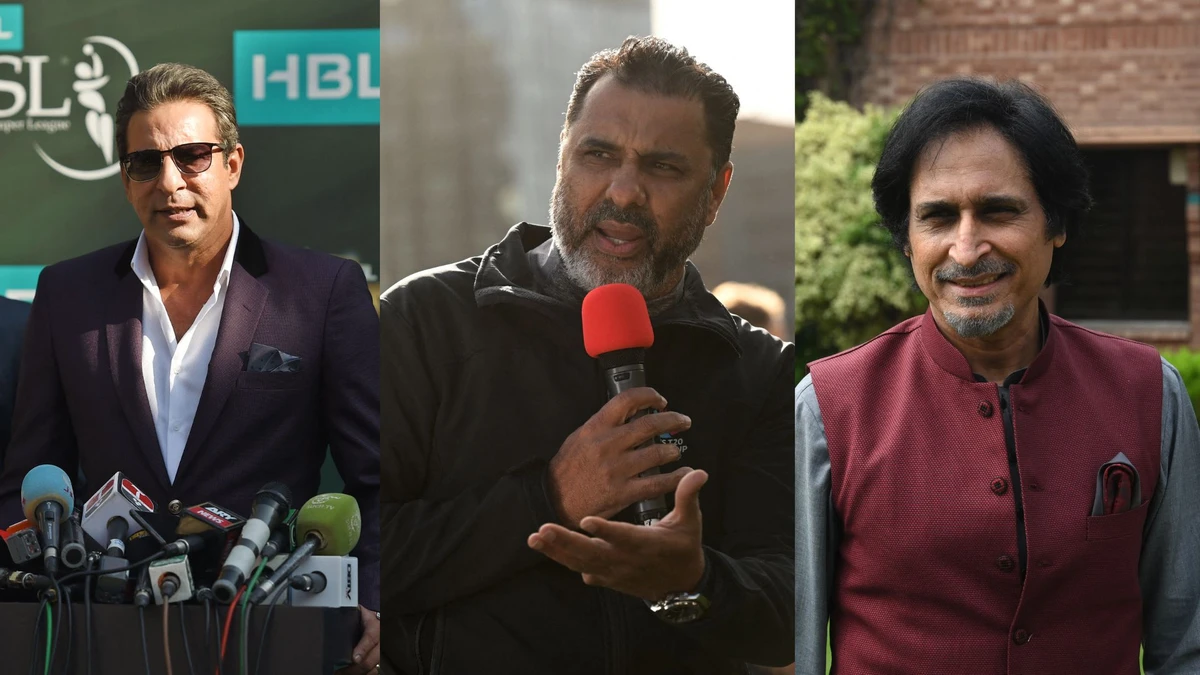
A combination of file photos of Pakistani cricket legends Wasim Akram, Waqar Younis and Ramiz Raja. (Photo courtesy: AFP)
Short Url
Updated 27 May 2024
Follow

ICC includes Pakistani legends Wasim, Waqar and Ramiz in World Cup commentary panel

  • Wasim Akram and Ramiz Raja are former World Cup winners who will share expert analysis during T20 World Cup 2024
  • Veterans Ravi Shastri, Nasser Hussain, Ian Smith, Mel Jones, Harsha Bhogle and Ian Bishop to lead commentary team

ISLAMABAD: The International Cricket Council (ICC) recently announced it has roped in Pakistani cricket legends Wasim Akram, Waqar Younis and Ramiz Raja as members of a star-studded commentary panel for next month’s T20 World Cup to share their insights and expert analysis during matches. 

The ICC Men’s T20 World Cup 2024, scheduled to kick off from June 1-29, will feature 20 teams across the world compete for the trophy. The tournament will be hosted for the first time partly in the United States while the West Indies will also host some matches of the tournament.

In a post on Sunday, the ICC said the commentary panel would be led by veterans such as Ravi Shastri, Nasser Hussain, Ian Smith, Mel Jones, Harsha Bhogle and Ian Bishop. Former men’s and women’s T20 World Cup champions Dinesh Karthik, Ebony Rainford-Brent, Samuel Badree, Carlos Brathwaite, Steve Smith, Aaron Finch and Lisa Sthalekar will also add insights to the game during the matches. 

“Former 50-over World Cup winners Ricky Ponting, Sunil Gavaskar, Matthew Hayden, Ramiz Raja, Eoin Morgan, Tom Moody and Wasim Akram will also be lending their expert analysis to the upcoming tournament,” the ICC said. 

The global cricket body said other big names part of the commentary team are Pakistan’s Younis, Dale Steyn, Graeme Smith, Michael Atherton, Simon Doull, Shaun Pollock and Katey Martin. Renowned names in broadcasting such as Mpumelelo Mbangwa, Natalie Germanos, Danny Morrison, Alison Mitchell, Alan Wilkins, Brian Murgatroyd, Mike Haysman, Ian Ward, Athar Ali Khan, Russel Arnold, Niall O’Brien, Kass Naidoo and former West Indies skipper Daren Ganga will also be part of the commentary team.

ICC will provide extensive coverage of the tournament across the 28 days of action with a pre-match show, an innings interval program and a post-match wrap-up.

The T20 World Cup is being seen by the ICC as a launch pad toward the sport’s return to the Olympics for Los Angeles 2028. The ninth edition of the tournament, in the fastest and most explosive form of the game, will be the biggest ever after the decision of the International Cricket Council (ICC) to expand the field from 16 nations to 20.

Nepal, Papua New Guinea and Oman are among nations relatively new to the big stage who will be looking to make their mark and grab attention with an upset win or two during the tournament.

Groups for T20 World Cup 2024

Group A: India, Pakistan, Ireland, Canada, United States

Group B: England, Australia, Namibia, Scotland, Oman

Group C: New Zealand, West Indies, Afghanistan, Uganda, Papua New Guinea

Group D: South Africa, Sri Lanka, Bangladesh, Netherlands, Nepal

Sindh assembly passes resolution rejecting move to separate Karachi

Updated 6 sec ago
Follow

Sindh assembly passes resolution rejecting move to separate Karachi

  • Chief Minister Shah cites constitutional safeguards against altering provincial boundaries
  • Calls to separate Karachi intensified amid governance concerns after a mall fire last month

ISLAMABAD: The provincial assembly of Pakistan’s southern Sindh province on Saturday passed a resolution rejecting any move to separate Karachi, declaring its territorial integrity “non-negotiable” amid political calls to carve the city out as a separate administrative unit.

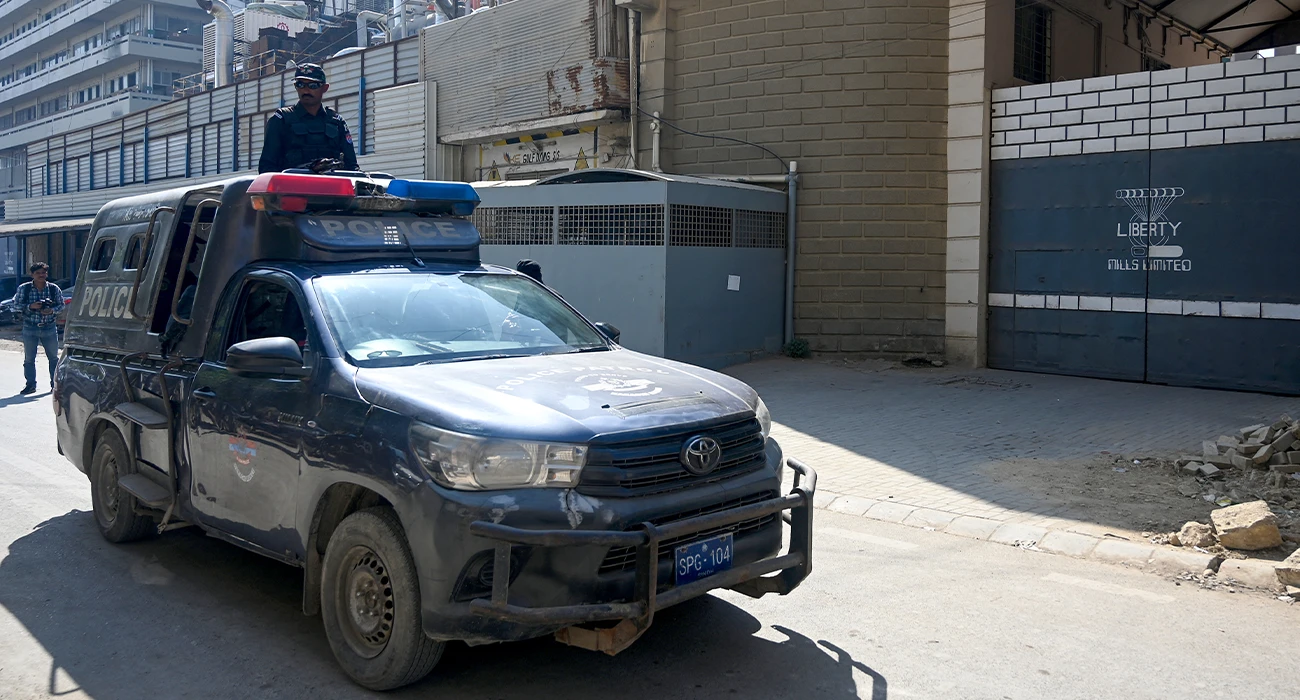
The resolution comes after fresh demands by the Muttahida Qaumi Movement (MQM) and other voices to grant Karachi provincial or federal status following governance challenges highlighted by the deadly Gul Plaza fire earlier this year that killed 80 people.

Karachi, Pakistan’s largest and most densely populated city, is the country’s main commercial hub and contributes a significant share to the national economy.

Chief Minister Syed Murad Ali Shah tabled the resolution in the assembly, condemning what he described as “divisive statements” about breaking up Sindh or detaching Karachi.

“The province that played a foundational role in the creation of Pakistan cannot allow the fragmentation of its own historic homeland,” Shah told lawmakers, adding that any attempt to divide Sindh or separate Karachi was contrary to the constitution and democratic norms.

Citing Article 239 of Pakistan’s 1973 Constitution, which requires the consent of not less than two-thirds of a provincial assembly to alter provincial boundaries, Shah said any such move could not proceed without the assembly’s approval.

“If any such move is attempted, it is this Assembly — by a two-thirds majority — that will decide,” he said.

The resolution reaffirmed that Karachi would “forever remain” an integral part of Sindh and directed the provincial government to forward the motion to the president, prime minister and parliamentary leadership for record.

Shah said the resolution was not aimed at anyone but referred to the shifting stance of MQM in the debate while warning that opposing the resolution would amount to supporting the division of Sindh.

The party has been a major political force in Karachi with a significant vote bank in the city and has frequently criticized Shah’s provincial administration over its governance of Pakistan’s largest metropolis.

Taha Ahmed Khan, a senior MQM leader, acknowledged that his party had “presented its demand openly on television channels with clear and logical arguments” to separate Karachi from Sindh.

“It is a purely constitutional debate,” he told Arab News by phone. “We are aware that the Pakistan Peoples Party, which rules the province, holds a two-thirds majority and that a new province cannot be created at this stage. But that does not mean new provinces can never be formed.”

Calls to alter Karachi’s status have periodically surfaced amid longstanding complaints over governance, infrastructure and administrative control in the megacity, though no formal proposal to redraw provincial boundaries has been introduced at the federal level.