

Saudi Arabia to propel global sustainable development through AI, says finance minister

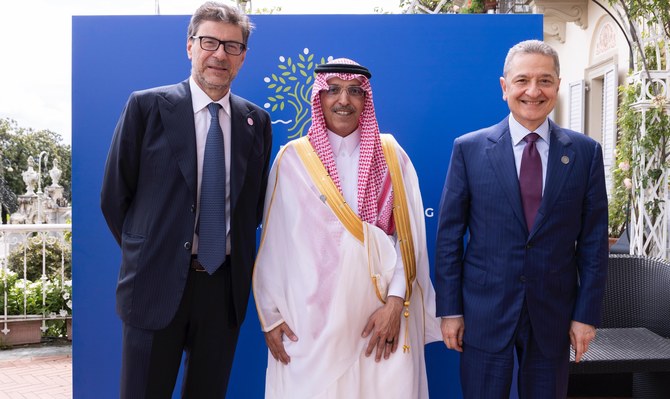
On the sidelines of the G7 finance ministers and central bank governors meeting, Saudi Finance Minister Mohammed Al-Jadaan met with Italy’s Minister of Economy & Finance Giancarlo Giorgetti, and the Governor of the Bank of Italy Fabio Panetta, to discuss bilateral relations between the two nations and avenues for enhancement. Supplied
Short Url
Updated 06 June 2024
Follow

Saudi Arabia to propel global sustainable development through AI, says finance minister

RIYADH: Saudi Arabia is on track to help propel sustainable development globally through its pivotal role in artificial intelligence, according to the Kingdom’s finance minister. 

In a session titled “AI and Development: Challenges and Opportunities” at the third meeting of G7 finance ministers and central bank governors under the Italian presidency, held last week in Stresa, Italy, Mohammed Al-Jadaan explained that the Kingdom is committed to advancing technology, particularly AI, to foster inclusive growth, according to a statement.  

This aligns with Saudi Arabia’s National Strategy for Data and AI, which aims to establish the Kingdom as a global tech leader by 2030. 

Additionally, the minister participated in a session titled “Addressing Financing Needs of Vulnerable Countries,” where he stressed the potential of a proposed multidimensional approach to dealing with debt vulnerabilities.  

He underscored that this strategy aims to create fiscal space, improve resilience, and progress toward the Sustainable Development Goals.  

In addition, Al-Jadaan also participated in a session titled “Initiatives for Development with a Focus on Africa.” 

In this meeting, the minister shed light on how Africa has great potential, represented by its ambitious people, young population, and rich natural resources.  

Furthermore, the finance minister joined a session titled “Cross-Border Payments,” where he highlighted the G20’s agreement under the Saudi Presidency in 2020 on a clear roadmap to support cross-border payments. 

Al-Jadaan elaborated that this roadmap led to the establishment of the Cross-Border Payments Coordination Group, which collaborates with international organizations to enhance global payments. He stressed the importance of building on current efforts in this area. 

On the sidelines of the meeting, Al-Jadaan met with several ministers and leaders of global organizations to discuss key economic and financial developments and topics of mutual interest. 

Throughout the three-day meeting, the G7 finance ministers and central bank governors exchanged views on the global implications of AI, ongoing development initiatives, and cross-border payments. They agreed to continue close cooperation in relevant multilateral fora, such as the G20. 

During the sessions, the ministers and governors reaffirmed their commitment to multilateral cooperation to promote sustainable development, recognizing the multiple challenges requiring a coordinated response from the international community. 


Free trade negotiations between GCC, India mark new phase of partnership, says sec-gen

Updated 24 February 2026
Follow

Free trade negotiations between GCC, India mark new phase of partnership, says sec-gen

RIYADH: The Gulf Cooperation Council’s secretary-general affirmed that the negotiations for a free trade agreement between the GCC and India, and the signing of the joint statement, represents a new phase of strategic partnership.

Jasem Mohamed Al-Budaiwi said that this contributes to enhancing close cooperation and strengthening economic and trade ties, according to the Saudi Press Agency.

This came during the signing ceremony of the joint statement on launching the free trade agreement negotiations between the Al-Budaiwi and India’s Minister of Commerce and Industry, Piyush Goyal, which took place in New Delhi, on Tuesday.

During the signing ceremony, Al-Budaiwi said that the Terms of Reference, signed on Feb. 5, provide a comprehensive and clear framework for these negotiations. The two nations agreed to discuss enhancing cooperation in vital strategic areas, including trade in goods, customs procedures, and services.

Additionally, the framework covers Sanitary and Phytosanitary measures, intellectual property rights, cooperation on Micro, Small, and Medium Enterprises, along with other topics of mutual interest. This reflects the comprehensive nature of the agreement and its ability to keep pace with the future economy.

Al-Budaiwi expressed hope that these negotiations would lead to a comprehensive and ambitious free trade agreement that works to remove customs and non-customs barriers, enhance the flow of quality investments in both directions, and achieve further liberalization in trade and investment cooperation between the GCC and India for mutual benefit. 

This would provide a stimulating economic environment and an investment climate that opens broad horizons for the business sector, supports supply chains, and accelerates the pace of economic growth in line with the ambitious developmental visions of the GCC states. 

The top official affirmed the full readiness of the General Secretariat to host the first round of negotiations at its headquarters in Riyadh during the second half of this year.

The two sides held a meeting during which they reviewed the existing cooperation relations between the GCC and India and discussed ways to develop and elevate them to broader horizons, serving mutual interests and enhancing opportunities for strategic partnership between the two sides, particularly in the economic, investment, and trade fields.

They praised the role undertaken by the negotiating teams from both sides, appreciating the efforts contributing to reaching a comprehensive agreement that enhances economic integration and supports the smooth flow of trade between the two nations.