Hatching of red-necked ostrich chicks highlights success of Saudi royal reserve’s breeding program

1 / 2
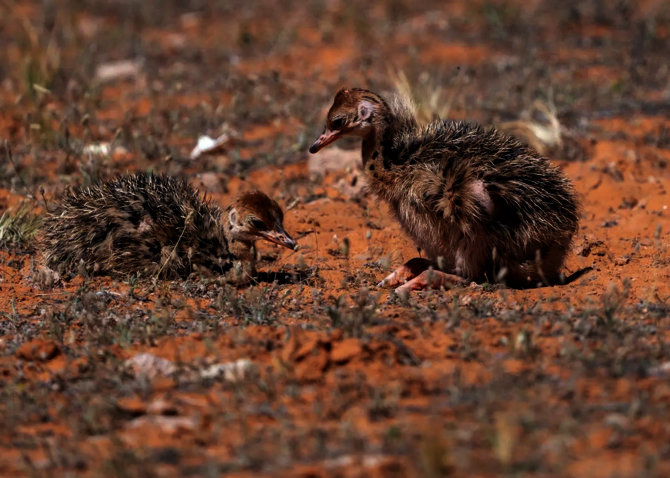
At the end of 2021, the royal reserve launched a scheme to reintroduce ostriches to the wild, creating a habitat for a male and a female. The ostriches soon adapted to the reserve and laid their first clutch of 12 eggs in the spring of 2024, three of which hatched naturally. (Supplied)
2 / 2
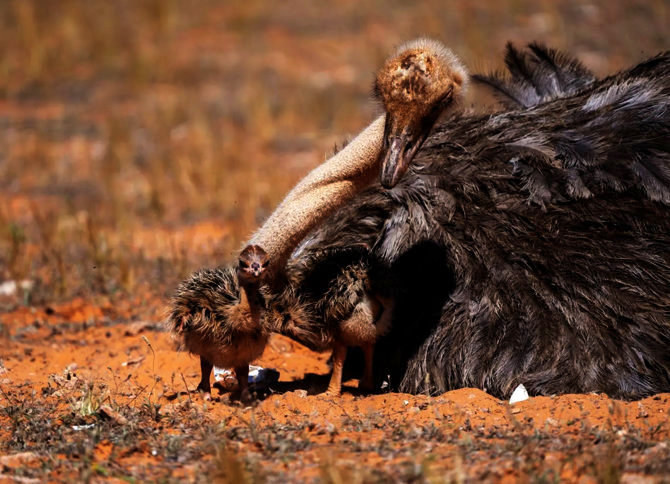
The royal reserve is dedicated to providing a suitable environment for endangered species to help increase their numbers, restore biodiversity, and provide a safe haven for animals like reem gazelle, Arabian oryx, red-necked ostrich, and others to flourish in the wild. (Supplied)fffffffr
Short Url
Updated 25 May 2024
Follow

Hatching of red-necked ostrich chicks highlights success of Saudi royal reserve’s breeding program

  • The Imam Turki Royal Nature Reserve launched its ostrich conservation scheme in 2021 to rescue this critically engaged species 
  • Saudi Arabia’s second largest royal reserve is dedicated to providing secure habitats to allow the Kingdom’s wildlife to thrive

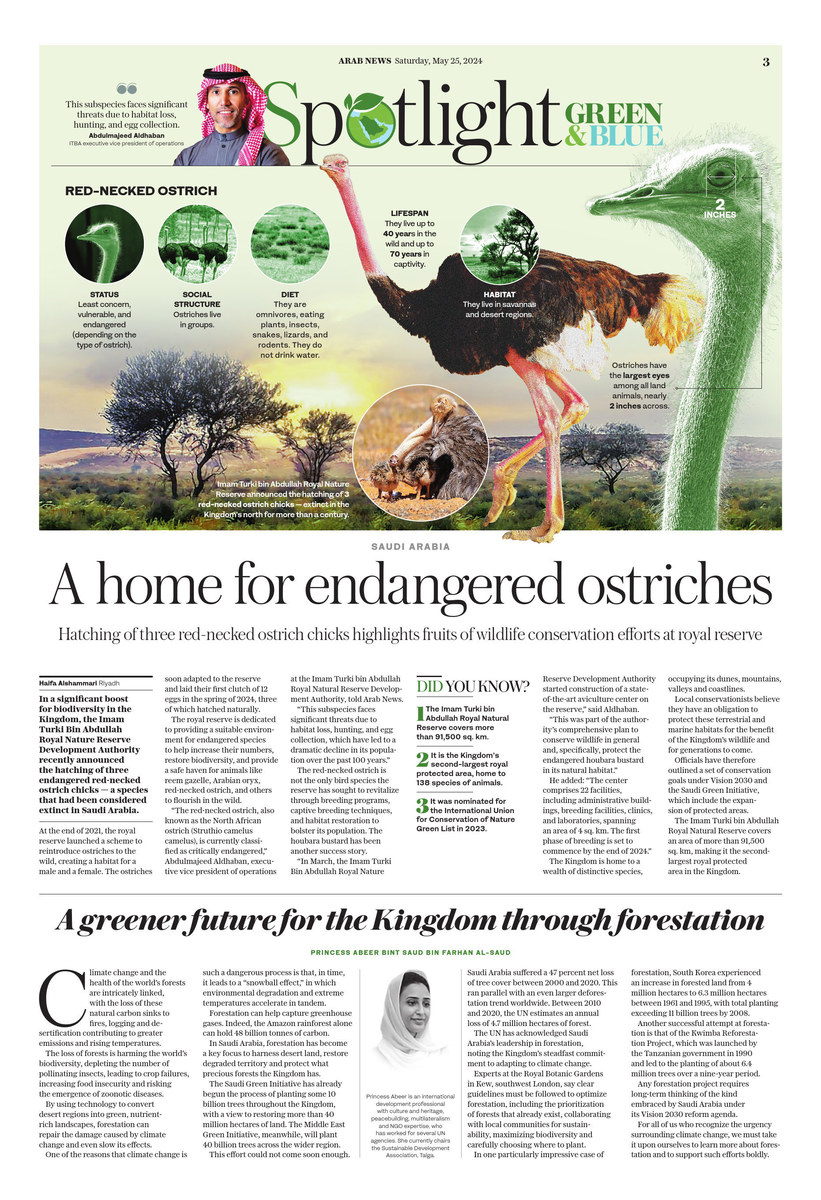
RIYADH: In a significant boost for biodiversity in the Kingdom, the Imam Turki Bin Abdullah Royal Nature Reserve Development Authority recently announced the hatching of three endangered red-necked ostrich chicks — a species that had been considered extinct in Saudi Arabia.

At the end of 2021, the royal reserve launched a scheme to reintroduce ostriches to the wild, creating a habitat for a male and a female. The ostriches soon adapted to the reserve and laid their first clutch of 12 eggs in the spring of 2024, three of which hatched naturally.

The royal reserve is dedicated to providing a suitable environment for endangered species to help increase their numbers, restore biodiversity, and provide a safe haven for animals like reem gazelle, Arabian oryx, red-necked ostrich, and others to flourish in the wild.

“The red-necked ostrich, also known as the North African ostrich (Struthio camelus camelus), is currently classified as critically endangered,” Abdulmajeed Aldhaban, executive vice president of operations at the Imam Turki bin Abdullah Royal Natural Reserve Development Authority, told Arab News.“This subspecies faces significant threats due to habitat loss, hunting, and egg collection, which have led to a dramatic decline in its population over the past 100 years.”

 The red-necked ostrich is not the only bird species the reserve has sought to revitalize through breeding programs, captive breeding techniques, and habitat restoration to bolster its population. The houbara bustard has been another success story.


The royal reserve is dedicated to providing a suitable environment for endangered species to help increase their numbers, restore biodiversity, and provide a safe haven for animals like reem gazelle, Arabian oryx, red-necked ostrich, and others to flourish in the wild. (Supplied)


“In March, the Imam Turki Bin Abdullah Royal Nature Reserve Development Authority started construction of a state-of-the-art aviculture center on the reserve,” said Aldhaban.

“This was part of the authority’s comprehensive plan to conserve wildlife in general and, specifically, protect the endangered houbara bustard in its natural habitat.”
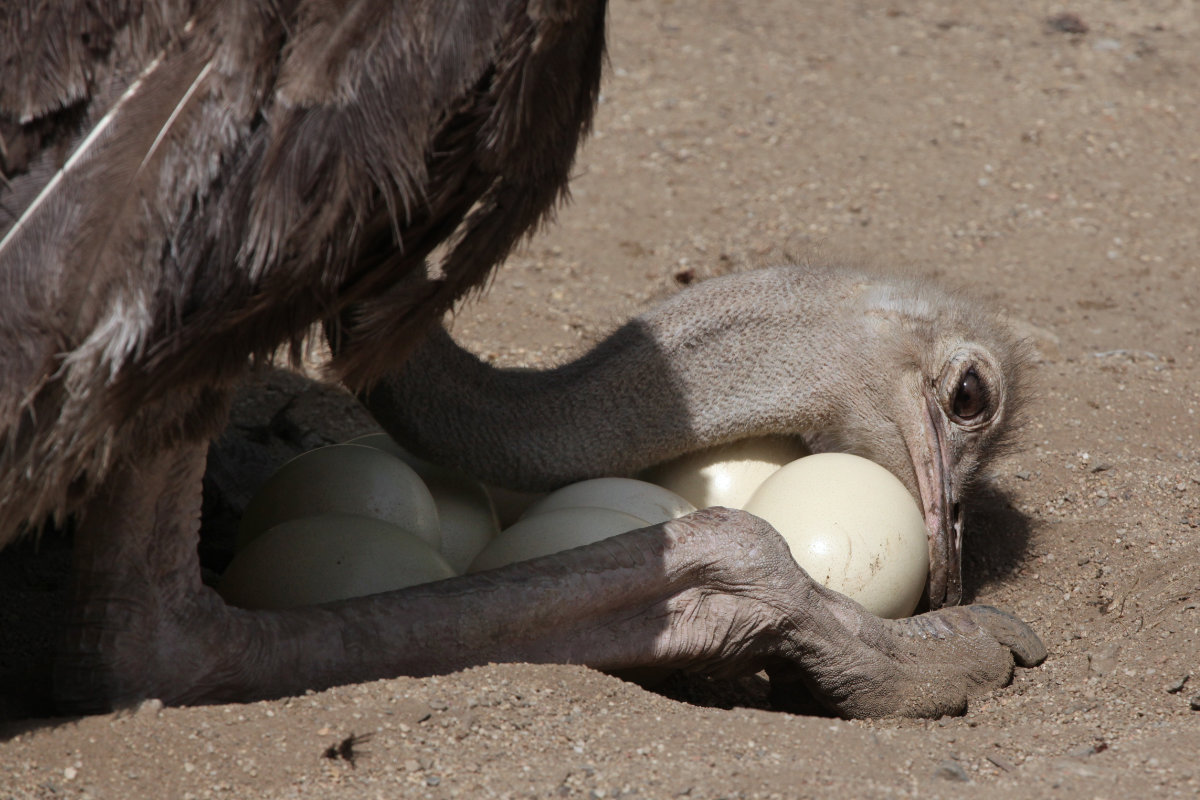


Despite its arid climate and vast desert landscape, the Kingdom is home to a wealth of distinctive species, occupying its dunes, mountains, valleys and coastlines. (Shutterstock)

He added: “The center comprises 22 facilities, including administrative buildings, breeding facilities, clinics, and laboratories, spanning an area of 4 sq. km. The first phase of breeding is set to commence by the end of 2024.”

Saudi Arabia’s rich biodiversity has long been overlooked by environmentalists. Despite its arid climate and vast desert landscape, the Kingdom is home to a wealth of distinctive species, occupying its dunes, mountains, valleys and coastlines.

Local conservationists believe they have an obligation to protect these terrestrial and marine habitats and maintain the ecological balance for the benefit of the Kingdom’s wildlife and for generations to come.

Opinion

This section contains relevant reference points, placed in (Opinion field)

Officials have therefore outlined a set of biodiversity conservation goals under various initiatives like Vision 2030 and the Saudi Green Initiative designed to work in partnership with civil society groups and the private sector.

One focus is the design of protected areas. 

During an interview with Arab News at the Hima forum in Riyadh last April, Mohammed Qurban, the CEO of the National Center for Wildlife in Saudi Arabia, outlined the Kingdom’s aim to protect 30 percent of the Kingdom’s terrestrial and marine areas by 2030.
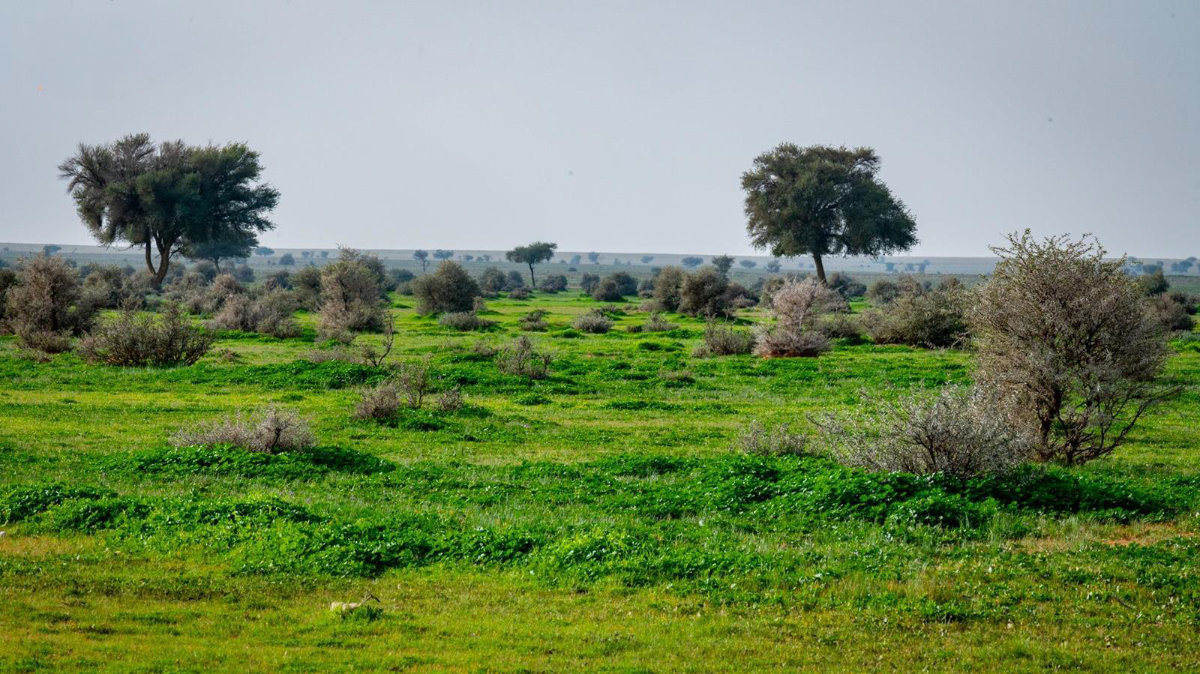


The Imam Turki bin Abdullah Royal Natural Reserve, where the red-necked ostriches hatched last month, covers an area of more than 91,500 sq km, making it the second largest royal protected area in the Kingdom, home to 138 species of animal and 179 species of plant. (Supplied)

This goal includes the creation of wildlife sanctuaries and restoration programs to restore natural habitats and protect endangered animal species such as the Arabian oryx, red-necked ostrich, gazelle, and Arabian leopard.

The Imam Turki bin Abdullah Royal Natural Reserve, where the red-necked ostriches hatched last month, covers an area of more than 91,500 sq. km, making it the second-largest royal protected area in the Kingdom, home to 138 species of animal and 179 species of plant.
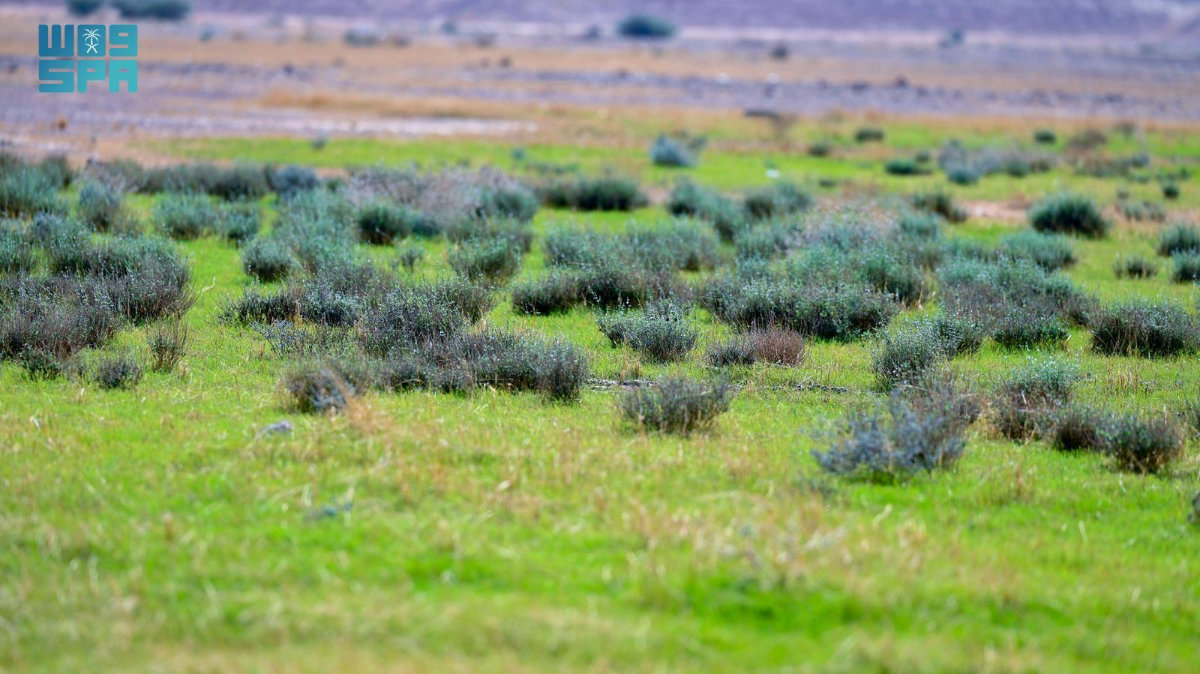


Despite its arid climate and vast desert landscape, the Kingdom is home to a wealth of distinctive species, occupying its dunes, mountains, valleys and coastlines. (SPA)

Situated in the country’s northeast, close to the border with Iraq, the reserve is a popular destination for tourists interested in hiking and bird watching.

In 2018, the royal reserve declared three key objectives, including the conservation of biodiversity, the development of the reserve as a destination for ecotourism, and the aim of generating socio-economic benefits for local communities.

The Natural Reserve Development Authority has registered the reserve in the World Database on Protected Areas. It has also earned global recognition after being nominated for the International Union for Conservation of Nature Green List in 2023.


Jeddah masterclass explores power of sound in cinema with leading industry experts

Updated 7 sec ago
Follow

Jeddah masterclass explores power of sound in cinema with leading industry experts

  • The event offered an intimate look into cinematic sound design, attracting aspiring filmmakers and composers eager to learn from one of the industry’s leading voices

JEDDAH: The Alliance Francaise of Jeddah, in collaboration with the French Consulate, recently hosted an exclusive masterclass on Sound and Cinema led by Fanny Lamothe, CEO of Cercle Rouge Productions, along with composers Fabien and Mike Kourtzer.

The event offered an intimate look into cinematic sound design, attracting aspiring filmmakers and composers eager to learn from one of the industry’s leading voices.

Cercle Rouge Productions has contributed to internationally acclaimed films such as “John Wick 4” and “Emilia Perez,” as well as notable Saudi productions including “Mandoob” by Ali Kalthami, “Al Zarfa” by Abdullah Majed, and “Sayfi” by Wael Abumansur.

Lamothe, who also heads the music department at Why Not Productions, oversees all aspects of sound in film — from composition and recording to editing, foley, and legal clearances — bringing extensive experience to both international and regional projects.

During the masterclass, Lamothe and the Kourtzers highlighted two key areas for participants: understanding the precise process of creating original music for a film and establishing clear communication between composers and directors to ensure a shared understanding of the film’s deeper meaning. “This allows us to express our own point of view and add an extra dimension to the story,” they said.

Discussing her approach to composing for films with strong cultural identities, Lamothe added: “It’s a process of back-and-forth with the director, along with many researches that allow us to immerse ourselves in the context and universe of the film and to perceive different cultural threads that resonate with it.

“Each city, for instance, has its own rhythm, its own sound. Music in itself is a universal language, and emotions can be transmitted to audiences worldwide when expressed with a clear artistic direction and a confident musical discourse.”

Fabien Kourtzer said: “Working with international directors broadens our perspective. What has particularly enriched our film scores from the Arab world is the ancient aspect of these civilizations, which is a powerful influence even when we work on films from other parts of the world.

Mike Kourtzer said: “The growth of Saudi cinema is explosive. It stems from a very strong desire among industry players to share stories that showcase this cultural heritage to the rest of the world. This dynamic will give birth to major works that will stand out on the global audiovisual landscape.”

Lamothe offered advice to young Saudi composers and filmmakers aiming to enter film scoring: “Seek to deeply understand the film you are working on and take the necessary time to achieve the best result.

“Start by understanding the director — what they want to express through communication and building a human relationship. Then, understand yourself and your musical identity. Your own point of view and artistic vision are what set you apart.”

Larry Lamartiniere, managing director of Alliance Francaise in Jeddah, highlighted the significance of the event. “It was an honor to host this masterclass on music and cinema with Cercle Rouge Productions. We organized it in partnership with the French Consulate of Jeddah as a closing event of a very intense and productive sequence for France at the Red Sea International Film Festival.

“This evening highlighted the vital role of sound in storytelling and celebrated the creative exchange between France and Saudi Arabia. Supporting such conversations not only strengthens our cultural ties but also nurtures the next generation of filmmakers and sound artists in the region,” he said.

With Saudi cinema experiencing rapid growth and a surge in international collaborations, events like this masterclass provide a platform for emerging talent to learn from industry leaders and shape the Kingdom’s filmmaking future.

All three confirmed their ongoing commitment, saying: “We have already worked on eight Saudi films, and these experiences have been more than enriching. We have had fantastic encounters, and we have a very strong desire for this adventure to continue.”