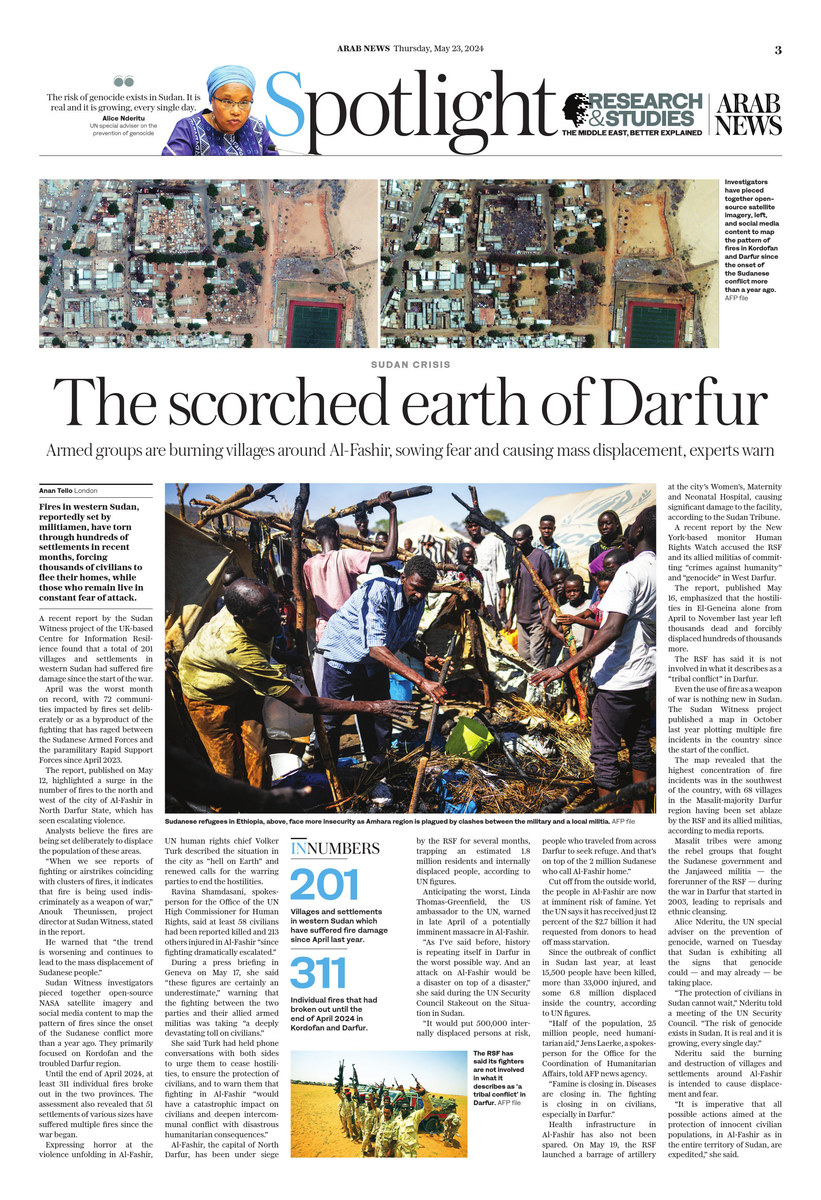
LONDON: Fires in western Sudan, reportedly set by militiamen, have torn through hundreds of settlements in recent months, forcing thousands of civilians to flee their homes, while those who remain live in constant fear of attack.
A recent report by the Sudan Witness project of the UK-based Centre for Information Resilience found that a total of 201 villages and settlements in western Sudan had suffered fire damage since the start of the war.
April was the worst month on record, with 72 communities impacted by fires set deliberately or as a byproduct of the fighting that has raged between the Sudanese Armed Forces and the paramilitary Rapid Support Forces since April 2023.

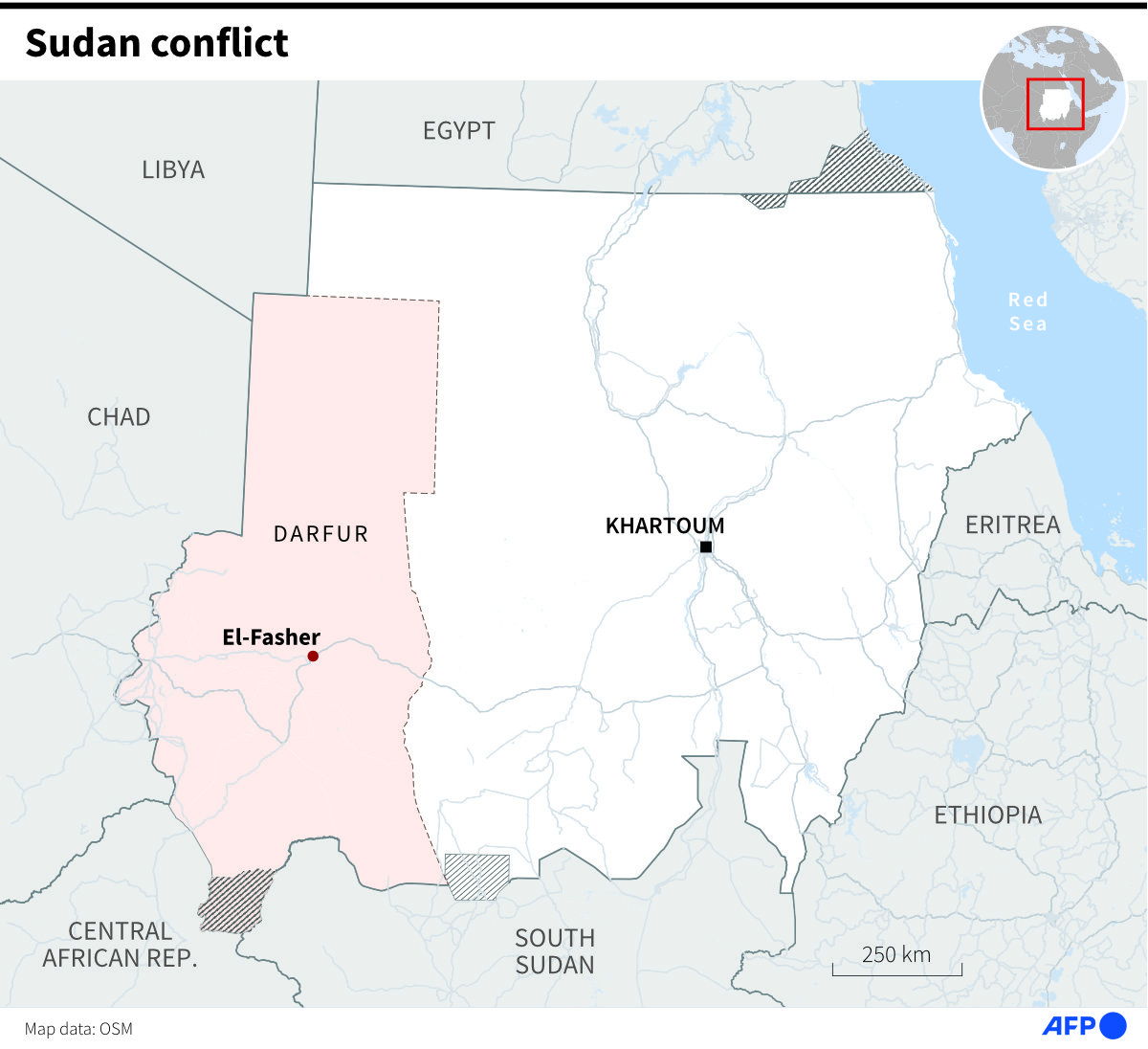
The report, published on May 12, highlighted a surge in the number of fires to the north and west of the city of Al-Fashir in North Darfur State, which has seen escalating violence.
Analysts believe the fires are being set deliberately to displace the population of these areas.
“When we see reports of fighting or airstrikes coinciding with clusters of fires, it indicates that fire is being used indiscriminately as a weapon of war,” Anouk Theunissen, project director at Sudan Witness, stated in the report.
He warned that “the trend is worsening and continues to lead to the mass displacement of Sudanese people.”
Sudan Witness investigators pieced together open-source NASA satellite imagery and social media content to map the pattern of fires since the onset of the Sudanese conflict more than a year ago. They primarily focused on Kordofan and the troubled Darfur region.
Until the end of April 2024, at least 311 individual fires broke out in the two provinces. The assessment also revealed that 51 settlements of various sizes have suffered multiple fires since the war began.
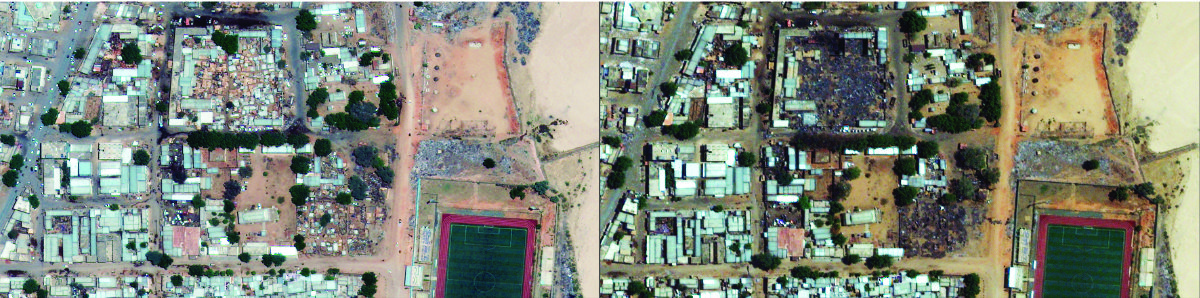
Investigators have pieced together open-source satellite imagery, left, and social media content to map the pattern of fires in Kordofan and Darfur since the onset of the Sudanese conflict more than a year ago. (AFP file)
Expressing horror at the violence unfolding in Al-Fashir, UN human rights chief Volker Turk described the situation in the city as “hell on Earth” and renewed calls for the warring parties to end the hostilities.
Ravina Shamdasani, spokesperson for the Office of the UN High Commissioner for Human Rights, said at least 58 civilians had been reported killed and 213 others injured in Al-Fashir “since fighting dramatically escalated.”
INNUMBERS
• 201 Villages and settlements in western Sudan which have suffered fire damage since April last year.
• 311 Individual fires that had broken out until the end of April 2024 in Kordofan and Darfur.
During a press briefing in Geneva on May 17, she said “these figures are certainly an underestimate,” warning that the fighting between the two parties and their allied armed militias was taking “a deeply devastating toll on civilians.”
She said Turk had held phone conversations with both sides to urge them to cease hostilities, to ensure the protection of civilians, and to warn them that fighting in Al-Fashir “would have a catastrophic impact on civilians and deepen intercommunal conflict with disastrous humanitarian consequences.”
Al-Fashir, the capital of North Darfur, has been under siege by the RSF for several months, trapping an estimated 1.8 million residents and internally displaced people, according to UN figures.
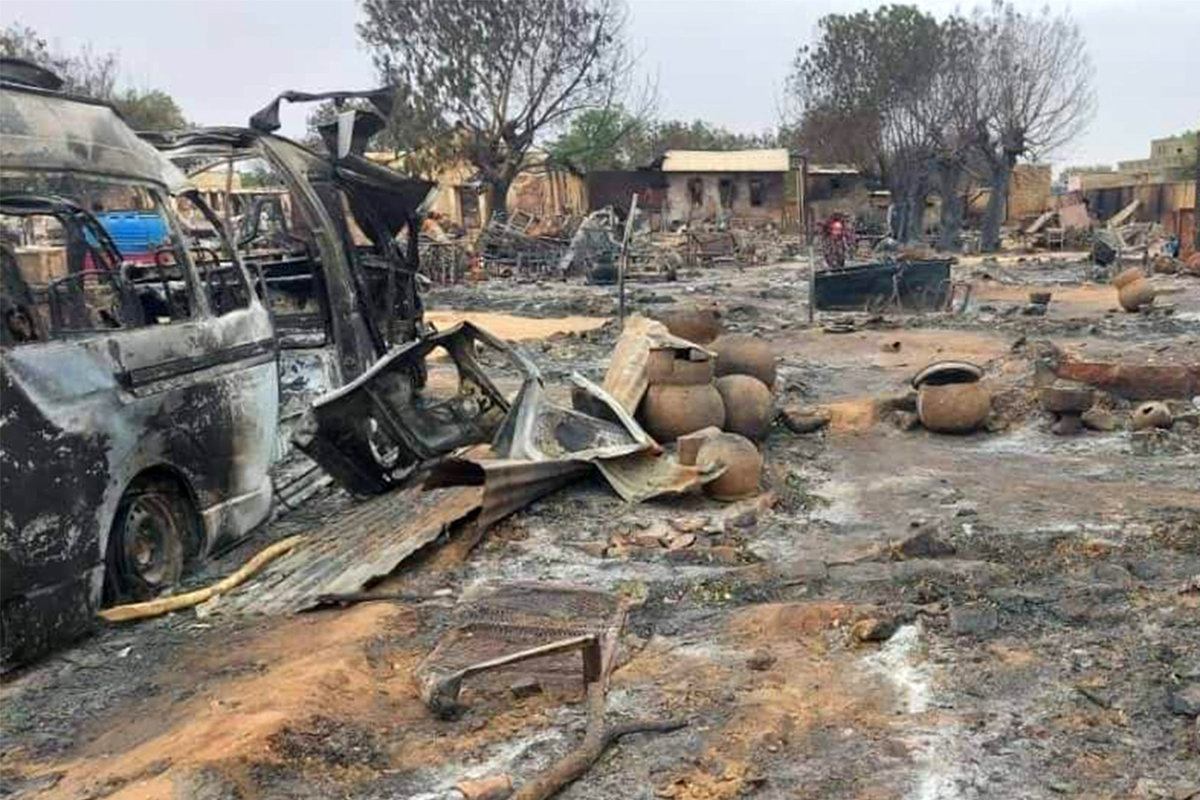
This picture taken on June 16, 2023, shows bodies strewn outdoors near houses in the West Darfur state capital El Geneina. (AFP/File photo)
Anticipating the worst, Linda Thomas-Greenfield, the US ambassador to the UN, warned in late April of a potentially imminent massacre in Al-Fashir.
“As I’ve said before, history is repeating itself in Darfur in the worst possible way. And an attack on Al-Fashir would be a disaster on top of a disaster,” she said during the UN Security Council Stakeout on the Situation in Sudan.
“It would put 500,000 internally displaced persons at risk, people who traveled from across Darfur to seek refuge. And that’s on top of the 2 million Sudanese who call Al-Fashir home.”
Cut off from the outside world, the people in Al-Fashir are now at imminent risk of famine. Yet the UN says it has received just 12 percent of the $2.7 billion it had requested from donors to head off mass starvation.
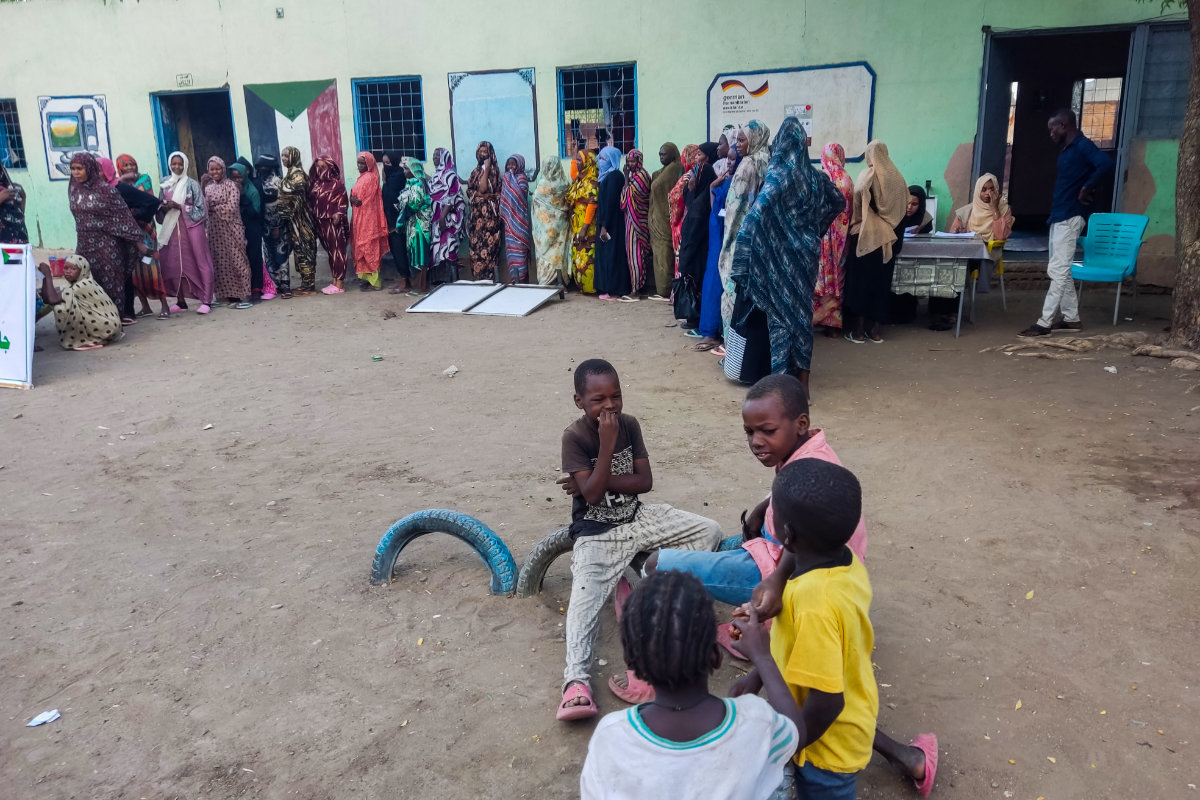
Internally displaced women wait in a queue to collect aid from a group at a camp in Gedaref on May 12, 2024. (AFP)
Since the outbreak of conflict in Sudan last year, at least 15,500 people have been killed, more than 33,000 injured, and some 6.8 million displaced inside the country, according to UN figures.
“Half of the population, 25 million people, need humanitarian aid,” Jens Laerke, a spokesperson for the Office for the Coordination of Humanitarian Affairs, told AFP news agency.
“Famine is closing in. Diseases are closing in. The fighting is closing in on civilians, especially in Darfur.”
Health infrastructure in Al-Fashir has also not been spared. On May 19, the RSF launched a barrage of artillery at the city’s Women’s, Maternity and Neonatal Hospital, injuring nine people and causing significant damage to the facility, according to the Sudan Tribune.
A recent report by the New York-based monitor Human Rights Watch accused the RSF and its allied militias of committing “crimes against humanity” and “genocide” in West Darfur.
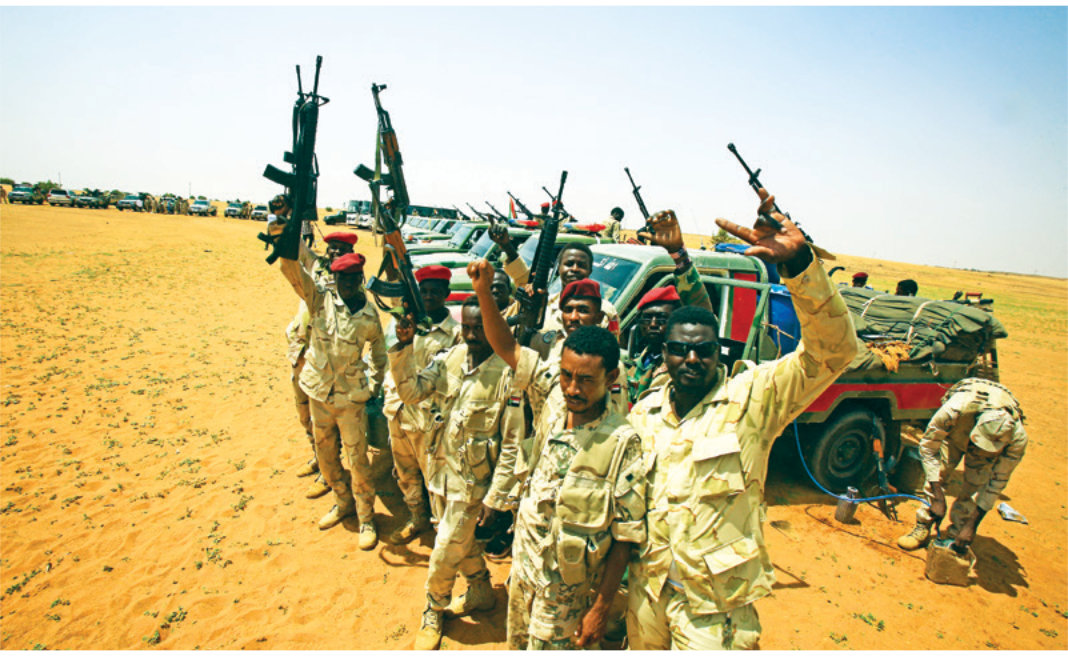
The RSF has said its fighters are not involved in what it describes as ‘a tribal conflict’ in Darfur. (AFP file)
The report, published May 16, emphasized that the hostilities in El-Geneina alone from April to November last year left thousands dead and forcibly displaced hundreds of thousands more.
The RSF has said it is not involved in what it describes as a “tribal conflict” in Darfur.
Even the use of fire as a weapon of war is nothing new in Sudan. The Sudan Witness project published a map in October last year plotting multiple fire incidents in the country since the start of the conflict.
The map revealed that the highest concentration of fire incidents was in the southwest of the country, with 68 villages in the Masalit-majority Darfur region having been set ablaze by the RSF and its allied militias, according to media reports.
Masalit tribes were among the rebel groups that fought the Sudanese government and the Janjaweed militia — the forerunner of the RSF — during the war in Darfur that started in 2003, leading to reprisals and ethnic cleansing.
Andrew Mitchell, the UK’s minister for development and Africa, warned in December that the latest reported targeting and mass displacement of the Masalit community in Darfur “bears all the hallmarks of ethnic cleansing.”
Alice Nderitu, the UN special adviser on the prevention of genocide, warned on Tuesday that Sudan is exhibiting all the signs that genocide could — and may already — be taking place.
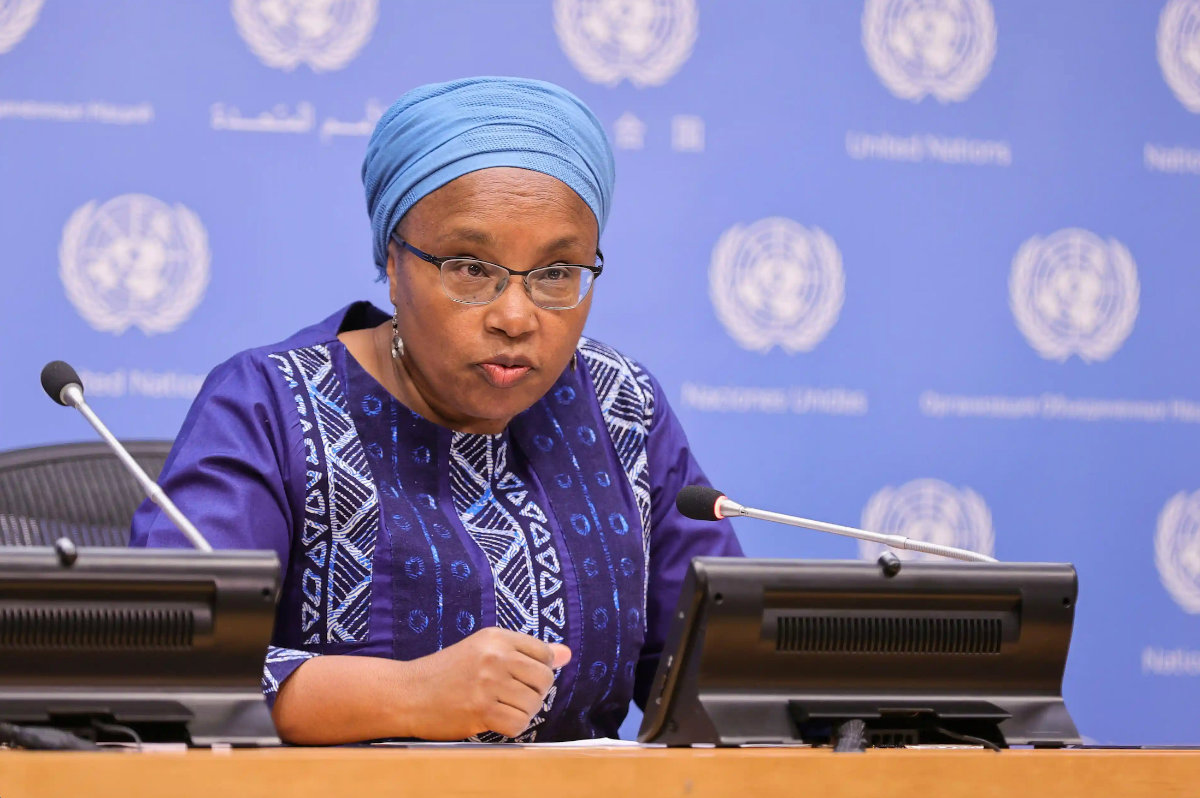
Alice Nderitu, UN special adviser on the prevention of genocide. (Supplied)
“The protection of civilians in Sudan cannot wait,” Nderitu told a meeting of the UN Security Council. “The risk of genocide exists in Sudan. It is real and it is growing, every single day.
“In Darfur and Al-Fashir, civilians are being attacked and killed because of the color of their skin, because of their ethnicity, because of who they are. They are also targeted with hate speech and with direct incitement to violence.”
Nderitu said the burning and destruction of villages and settlements around Al-Fashir is intended to cause displacement and fear, rather than accomplish any specific military objectives.
“It is imperative that all possible actions aimed at the protection of innocent civilian populations, in Al-Fashir as in the entire territory of Sudan, are expedited,” she said. “It is urgent to stop ethnically motivated violence.”