

Pakistan’s deputy PM visits Kyrgyzstan to address concerns of Pakistani students following mob violence

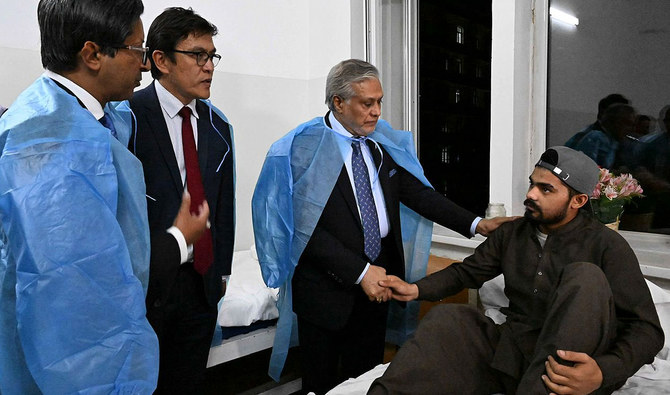
In this handout photograph, taken and released by Pakistan’s foreign ministry, Pakistan’s Deputy Prime Minister Ishaq Dar (2R) shakes hands with Pakistani textile worker, Shahzaib, at the National Hospital in Bishkek on May 22, 2024. Shahzaib was among five Pakistanis who were injured during the May 17 mob violence in Kyrgyz capital. (Photo courtesy: MOFA)
Short Url
Updated 22 May 2024
Follow

Pakistan’s deputy PM visits Kyrgyzstan to address concerns of Pakistani students following mob violence

  • Ishaq Dar flew to Bishkek with the Kyrgyz foreign minister after their meeting on the sidelines of SCO conference in Astana
  • Pakistan continues to evacuate students even as the top officials of the two countries hold meetings to sort things out

ISLAMABAD: Pakistan’s Deputy Prime Minister Ishaq Dar arrived in Kyrgyzstan’s capital, Bishkek, on Tuesday to address concerns of young nationals of his country enrolled in various educational institutions of the Central Asian state who were targeted by mob violence last week.
The violence began in Bishkek on Friday night after videos of a brawl between Kyrgyz and Egyptian students went viral on social media, prompting groups of local residents to target university hostels and private lodgings of international students, including those from Pakistan.
According to official figures, about 10,000 Pakistani students are enrolled in Kyrgyzstan, with nearly 6,000 in Bishkek. The frenzied violence forced them to confine themselves for several hours in their rooms without food and drinking water, with many of them making evacuation requests online.
Dar, who is also the foreign minister of Pakistan, held a meeting with his Kyrgyz counterpart in Kazakhstan on the sidelines of a meeting of the Shanghai Cooperation Organization (SCO) Council of Foreign Ministers.
“Deputy Prime Minister and Foreign Minister Senator Mohammad Ishaq Dar has arrived in Bishkek, Kyrgyz Republic for a working visit,” Pakistan’s foreign office announced in a statement on Tuesday. “He was invited to visit the Kyrgyz Republic by Kyrgyz Foreign Minister Zheenbek Kulubaev after their meeting yesterday in Astana, Kazakhstan on the sidelines of the SCO Council of Foreign Ministers. The two Ministers traveled together from Astana to Bishkek.”
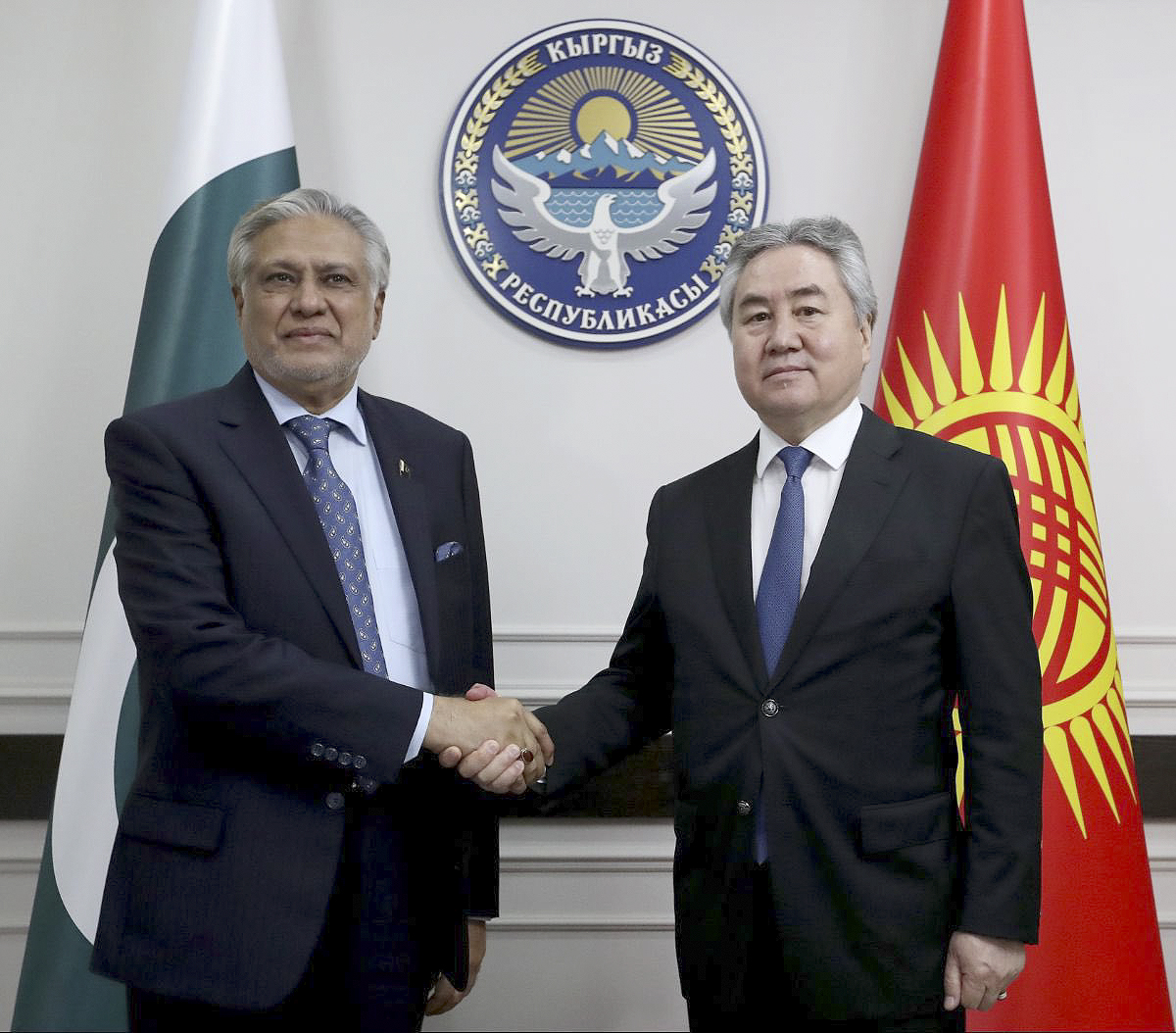


In this handout photograph, taken and released by Pakistan’s foreign ministry, Pakistan’s Deputy Prime Minister Ishaq Dar (L) shakes hands with Kyrgyzstan Foreign Minister Kulubaev Zheenbek Moldokanovich in Bishkek on May 22, 2024. (Photo courtesy: MOFA)

“In Bishkek, the Deputy Prime Minister will discuss with the Kyrgyz Foreign Minister the concerns of Pakistani nationals in the Kyrgyz Republic, including the recent issues faced by Pakistani students,” it added.
Five Pakistani nationals were injured in last week’s violence. Four of them were released after receiving first aid. However, one student was hospitalized due to more serious injuries.
Dar also met with the student who remains under treatment among his other official engagements.
Pakistan has so far repatriated over 1,000 students from Bishkek after the mob violence via various flights. The evacuation process continues even as officials of the two countries try to sort things out.
The most recent flight carrying about 170 Pakistani students arrived in Multan on Wednesday morning.
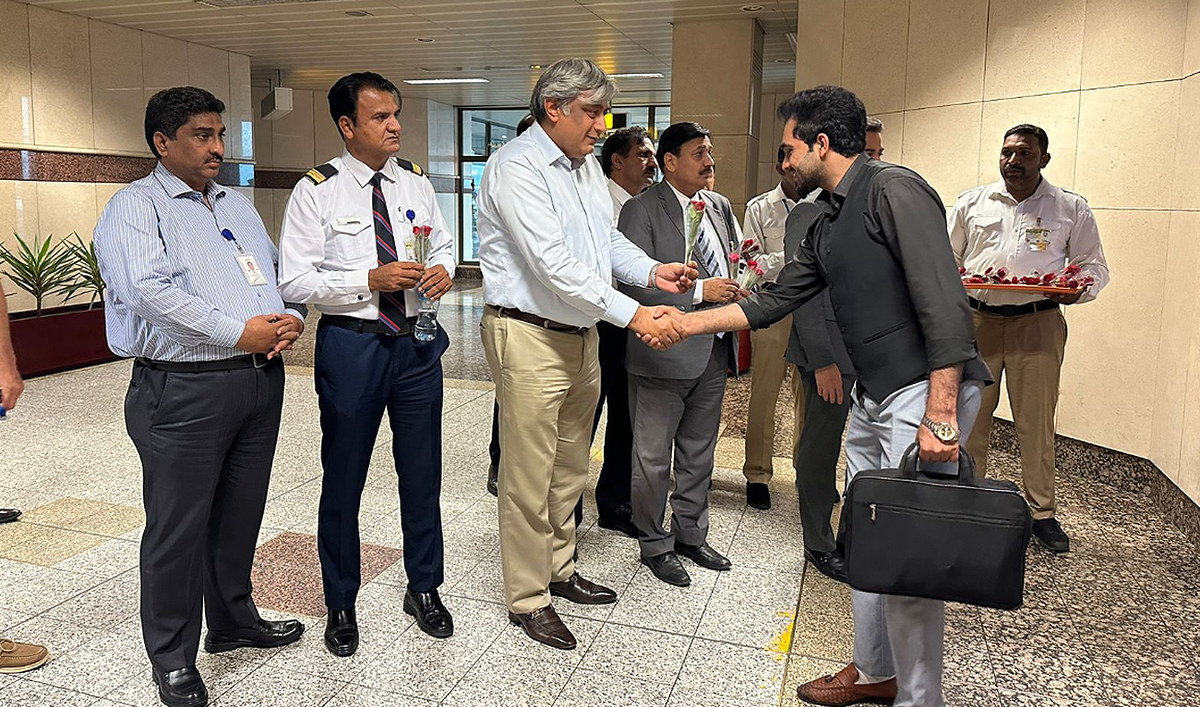


In this handout photograph, taken and released by Pakistan International Airlines, officials from Pakistan's national airline welcome students arriving from Bishkek via a special PIA flight at the Allama Iqbal International Airport in Lahore on May 21, 2024, days after mobs in Kyrgyz capital attacked foreign students following a brawl with migrants. (Photo courtesy: PIA)


UN says 270,000 Afghans have returned from Iran, Pakistan this year

Updated 4 sec ago
Follow

UN says 270,000 Afghans have returned from Iran, Pakistan this year

  • UNHCR says 110,000 Afghans returned from Iran while 160,000 returned from Pakistan since start of 2026
  • Return numbers seem to have risen since Gulf war erupted on Feb. 28, says UNHCR official in Afghanistan

GENEVA: Some 270,000 Afghans have returned to their country from Pakistan and Iran so far this year, the UN said Tuesday, warning that the escalating Middle East war risked pushing the numbers higher.

UNHCR, the United Nations’ refugee agency, said that 110,000 Afghans had returned from Iran and another 160,000 had returned from Pakistan since the start of 2026.

And the numbers seem to have risen since the Middle East erupted on February 28, with the United States and Israel unleashing a barrage of strikes on Iran, and Tehran responding with drone and missile strikes on Israeli and US interests across the region.

Since then, there have been some 1,700 returns from Iran to Afghanistan each day, Arafat Jamal, UNHCR’s representative in Afghanistan, told reporters in Geneva.

Speaking from Islam Qala, on the Afghan-Iranian border, he said the situation there was “deceptively calm.”

“Returns are orderly but freighted with tension and apprehension,” he said, adding that with the hostilities elsewhere escalating, “I do fear there is more to come.”

“We are preparing for massive returns.”

He pointed out that Afghanistan was “facing the ramifications of what is happening with Iran,” while clashes have erupted along the Afghan border with Pakistan.

The new Middle East war, he warned, was “layering itself on top of an existing war on another frontier,” Jamal said.

UNHCR highlighted that the latest crises came after returns to Afghanistan had already been “exceptionally high” in recent years.

More than five million Afghans had returned from neighboring countries in the past two years, including 1.9 million returning from Iran last year alone.

Jamal warned that “many Afghan families are now facing cycles of displacement: first forced to flee Afghanistan, later displaced again inside Iran due to conflict, and now returning once more to Afghanistan.”

“And upon return in Afghanistan, the triply-displaced enter a spiral of precarity and uncertainty.”
Returns from Pakistan had meanwhile stabilized in recent weeks, as the main crossing point at Torkham remained closed due to the tensions there, Jamal said.

But he warned that “movements could increase sharply once the border reopens.”

UNHCR and the UN children’s agency UNICEF said Tuesday they were working to strengthen their capacity to operate at the borders and within Afghanistan.

But “given the scale of returns and the financial constraints facing humanitarian operations, additional support will be needed if arrivals increase,” UNHCR said, without specifying the amount needed.