

Oil Updates – crude set for weekly gain on signs of improving demand

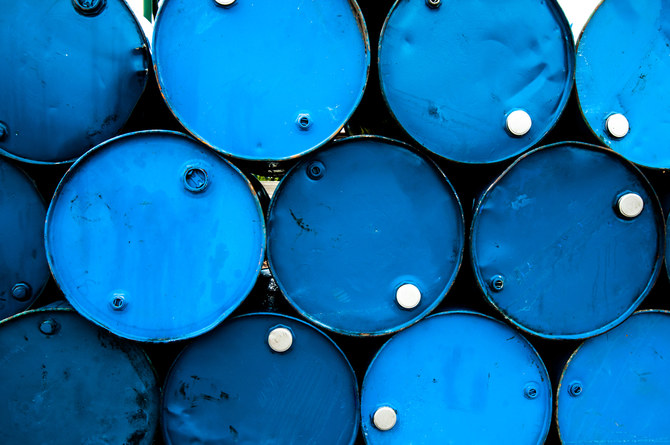
Brent crude oil prices climbed 21 cents, or 0.25 percent, to $83.48 a barrel by 6:14 a.m. Saudi time. Shutterstock
Short Url
Updated 17 May 2024
Follow

Oil Updates – crude set for weekly gain on signs of improving demand

NEW YORK : Oil prices gained on Friday, with global benchmark Brent set for its first weekly increase in three weeks on signs of improving global demand amid stronger economic indicators from key consumers China and the US, according to Reuters.

Brent crude oil prices climbed 21 cents, or 0.25 percent, to $83.48 a barrel by 6:14 a.m. Saudi time. US West Texas Intermediate crude futures rose 7 cents, or 0.09 percent, to $79.30 a barrel.

Brent futures are set to rise about 1 percent on a weekly basis, with WTI futures set to gain 1.4 percent.

“WTI crude oil prices seem to have found a near-term floor/support at around $78.40/barrel after a 9 percent+ decline from 26 April in the past week due to several encouraging factors such as two consecutive weeks of decline in US crude oil stockpile and more upcoming ‘piecemeal’ stimulus measures from China,” said OANDA senior market analyst Kelvin Wong, referring to the country’s potential program to buy up unsold homes directly from property developers.

Markets were also bolstered by China’s industrial output growth at 6.7 percent year-on-year in April as recovery in its manufacturing sector gathered pace, pointing to possibly stronger demand to come.

Declines in oil and refined products inventories at major global trading hubs have also created optimism over oil demand growth, reversing a trend of rising stockpiles that had weighed heavily on crude oil prices in prior weeks.

Recent economic indicators from the US have fed into the optimism over global demand. US consumer prices rose less than expected in April, data showed on Wednesday, boosting expectations of lower interest rates in the country.

Those expectations were further bolstered by data on Thursday that showed a stabilizing US job market.

Lower interest rates could help soften the US dollar, which would make oil cheaper for investors holding other currencies and drive demand.

On the supply side, investors were mostly looking for direction from an upcoming OPEC+ meeting on June 1, which will likely be held online.

An extension of OPEC+ cuts in oil output beyond June is likely to see firmer prices in the medium term, said OANDA’s Wong.

ANZ analysts said in a client note: “We see three possible scenarios for the outcome of the 1 June meeting: extend, unwind or complete removal of the voluntary cuts of 2.2mb/d. Our current model is based on a gradual unwinding of the cuts in H2 2024. Even with that, we see the market moving into a deficit, with the future call on OPEC production well above current output.” 


Kuwait PMI climbs to 54.5; Egypt falls to 48.9 in February: S&P Global 

Updated 7 sec ago
Follow

Kuwait PMI climbs to 54.5; Egypt falls to 48.9 in February: S&P Global 

RIYADH: Kuwait’s non-oil private sector continued to expand in February, supported by growth in output and new orders, while business conditions in Egypt weakened, an economy tracker showed. 

According to the latest Purchasing Managers’ Index surveys released by S&P Global, Kuwait’s PMI rose to 54.5 in February from 53 in January, extending the current run of improving business conditions to a year and a half. 

The expansion in Kuwait’s non-oil sector aligns with a broader trend across the Gulf Cooperation Council region, where countries are pursuing diversification strategies to reduce reliance on crude revenues. 

The surveys were conducted before regional tensions escalated following US and Israeli strikes on Iran and Tehran’s retaliatory attacks across the Gulf, which have since disrupted markets and energy trade. 

Commenting on the February survey, Andrew Harker, economics director at S&P Global Market Intelligence, said: “Growth momentum strengthened in Kuwait’s non-oil private sector in February as companies were again successful in securing new business.”  

According to the report, key factors supporting expansions in new orders and business activity included the provision of good-quality products at competitive prices and successful marketing efforts. 

The rate of job creation was modest in February and unchanged from January. 

Firms continued hiring staff for advertising and project-related work, resulting in a twelfth consecutive monthly increase in employment. 

“The main issue facing firms at present is being able to grow workforce numbers quickly enough to keep up with workloads,” said Harker. 

He added: “With backlogs rising at a fresh record pace for three months in a row now, fulfilling customer requirements in a timely manner is becoming more difficult, although companies did expand their purchasing activity at a near-record pace in February to help make sure the necessary materials are available going forward.”

Overall input cost inflation hit a nine-month high in February, with both purchase prices and staff costs rising at faster rates compared to January. 

The report added that some companies increased their selling prices in response to higher input costs. 

Regarding the outlook, companies expressed optimism, with sentiment reaching a 26-month high in February, driven by product variety, competitive pricing and good-quality customer service. 

Egypt’s non-oil sector contracts 

Egypt’s non-oil private sector contracted in February, driven by rising costs and softer demand, according to S&P Global. 

The country’s PMI fell to 48.9 in February from 49.8 in January. 

Although the reading remained below the 50 neutral threshold, it was still above its long-run average of 48.3, the report said. 

Output declined for the first time in four months in February, and all five sub-components of the PMI indicated weaker business conditions compared to January. 

“The February PMI data pointed to a slowdown in the Egyptian non-oil private sector as activity curtailed and new order volumes weakened,” said David Owen, senior economist at S&P Global Market Intelligence.

That said, he added that the dip followed an unusually strong run in business performance, and that the latest figures are consistent with annual GDP growth of approximately 4.5 percent. 

Egyptian non-oil companies also reported a decline in order book volumes during the month. 

Sales fell across manufacturing, wholesale and retail, and services, while construction was the only monitored sector where new orders improved. 

Employment fell for the third consecutive month in February, though at a slower rate, as companies continued active job cuttings and hiring freezes. 

The report revealed that cost pressures accelerated across the month, driven by rising ⁠global commodity prices, particularly oil and metals. 

Selling prices, however, were up only fractionally, with just a small proportion of firms choosing to pass cost increases onto their customers.

“Egyptian non-oil companies were notably exposed to the uplift in global commodity prices, with firms emphasising the impact of higher prices for oil and metals, resulting in the sharpest increase in business costs for nine months and hitting margins at a time when firms are reluctant to raise their selling prices,” said Owen. 

He concluded: “Firms will therefore be keen to see commodity markets settle, especially as recent periods of high input cost inflation have typically constrained business output.”