

Citi expects Pakistan to strike new $8 billion IMF deal by end-July

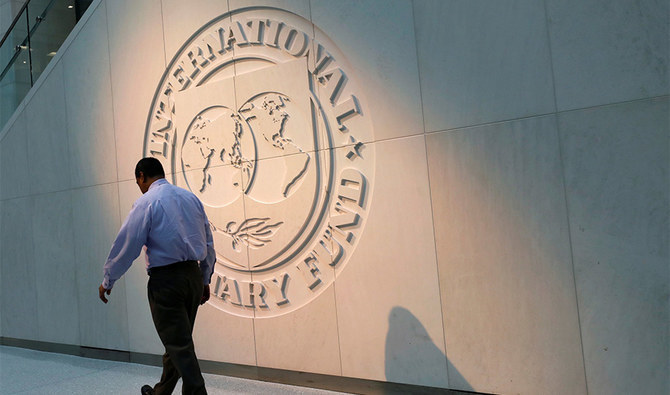
In this file photo, a man walks past the International Monetary Fund (IMF) logo at its headquarters in Washington, U.S., May 10, 2018. (REUTERS/File)
Short Url
Updated 13 May 2024
Follow

Citi expects Pakistan to strike new $8 billion IMF deal by end-July

  • Pakistan last month completed a short-term $3 billion program, which helped stave off a sovereign default 
  • But the government of Prime Minister Shehbaz Sharif has stressed the need for a fresh, longer-term program

LONDON: Wall Street Bank Citi expects Pakistan to reach an agreement with the International Monetary Fund for a new four year of up to $8 billion program by end-July, and recommends going long on the country’s 2027 international bond.

Pakistan last month completed a short-term $3 billion program, which helped stave off sovereign default, but the government of Prime Minister Shehbaz Sharif has stressed the need for a fresh, longer term program.

“While longer-term challenges pertain, we see several positive catalysts supporting the Eurobonds,” Nikola Apostolov at Citi wrote in a note to clients.

“First, a larger and longer IMF EFF (Extended Fund Facility) program could be finalized by July – possibly a $7-8 billion 4-year program and secondly and a possible inflow of Saudi investments,” Apostolov said after a team from Citi visited Pakistan and met policymakers, including Finance Minister Muhammad Aurangzeb.

An IMF mission is expected to visit Pakistan this month to discuss the financial year 2025 budget, policies, and reforms under a potential new program, according to the Fund.

Citi said it expected Pakistan’s international 2027 bond to offer a sweet spot to investors with sufficient liquidity and large upside as risks of default dissipate further.

The 2027 maturity trades at 87.292 cents in the dollar, according to Tradeweb data.

The country’s shorter-dated bonds — maturing 2025 and 2026 — are trading at 91-96 cents following a sharp rally since late last year. Pakistan’s international bonds had sunken to as little as mid-20 cents in the dollar in 2022. 


Pakistan bank enables Shariah-compliant digital payment facility for passengers at Islamabad airport

Updated 23 February 2026
Follow

Pakistan bank enables Shariah-compliant digital payment facility for passengers at Islamabad airport

  • Pakistan is a cash-dominated market where a significant portion of transactions in the informal sector are made without any taxes, officials say
  • The move comes amid Pakistan’s efforts to introduce a cashless model at airports under which only digital service providers can provide services

KARACHI: Aik, Pakistan’s first Islamic digital bank, has enabled fully digital payments at Islamabad International Airport to offer travelers and passengers secure, Shariah compliant digital transaction facility.

The development comes amid Pakistan’s efforts to introduce a cashless model at airports across the country, under which only digital service providers can provide services to customers.

Aik, a subsidiary of Bank Islami, said it has onboarded merchants across the Islamabad airport and integrated QR code deployments at key touchpoints to allow passengers and visitors to make secure, seamless, and Shariah-compliant digital transactions at all counters, retail outlets, and service points.

It said the implementation complies with the regulations and framework set by the State Bank of Pakistan (SBP) and is a working model for a large-scale adoption of cashless systems in public infrastructure.

“This deployment reflects our commitment to building practical digital infrastructure that improves everyday transactions,” Aik Chief Officer Ashfaque Ahmed said in a statement.

“By enabling a fully cashless environment at a major national gateway, we are supporting efficiency, transparency, and financial inclusion at scale. This is not only a project; it is a foundation for Pakistan’s cashless future.”

Pakistan is a cash-dominated market where a significant portion of transactions, particularly in the informal sector, are conducted in cash. Officials say many of these transactions are aimed at avoiding taxes.

In recent years, the SBP has taken steps to ensure a transition toward a more cashless economy so that transactions are more traceable, reducing chances of tax evasion and corruption.

By digitizing Islamabad airport, aik said it continues to invest in secure and accessible financial solutions that “expand digital participation and support national economic modernization.”