

More than 3,400 Pakistani Hajj pilgrims arrive in Madinah via 15 flights

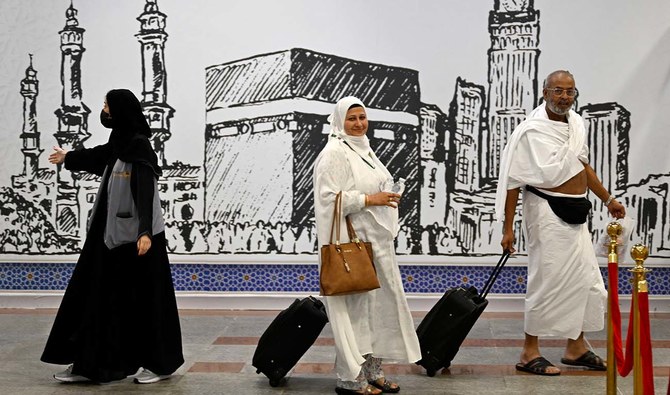
Muslim pilgrims arrive at King Abdul Aziz International Airport in Jeddah, ahead of the Hajj pilgrimage in Mecca, on May 10, 2024. (AFP)
Short Url
Updated 11 May 2024
Follow

More than 3,400 Pakistani Hajj pilgrims arrive in Madinah via 15 flights

  • Pakistan on Thursday launched its pre-Hajj flight operation which will continue till June 9
  • Out of all, seven flights were operated from Islamabad, Karachi under Makkah Route initiative

ISLAMABAD: More than 3,400 Pakistani Hajj pilgrims have arrived in Madinah via 15 flights during the first two days of the country’s pre-Hajj flight operation, Pakistani state media reported on Friday.

Out of these, seven flights were operated from Islamabad and Karachi under the Makkah Route project, an initiative of the Saudi government to streamline the immigration process for pilgrims.

Currently, only Islamabad and Karachi airports in Pakistan are functioning under the initiative to facilitate pilgrims during the Hajj days.

“Filled with excitement and devotion, the pilgrims, who have been preparing for this moment for years, stepped foot in the Prophet’s (SAW) city, marking the beginning of the Hajj season,” the state-run APP news agency reported.

“Approximately three million pilgrims from around the world, including 179,210 Pakistanis, will converge on the holy cities to perform the sacred Hajj.”

From the airport, the passengers were transported to residential buildings located in Markazia, some 20-minute away from the Prophet’s Mosque.

Hajj is one of the five pillars of Islam, and requires every adult Muslim to undertake the journey to the holy Islamic sites in Makkah at least once in their lifetime, if they are financially and physically able.

Pakistan has a Hajj quota of 179,210 pilgrims this year, according to the Pakistani religious affairs ministry. Of them, 63,805 pilgrims will be performing the pilgrimage under the government scheme, while the rest would be accommodated by private tour operators.

Pakistan began its pre-Hajj flight operation on May 9, which will continue till June 9. This year’s pilgrimage is expected to run from June 14 till June 19.


Pakistan sees 5% increase in overseas employment, remittance surge by 9% in 2025 — ministry

Updated 13 sec ago
Follow

Pakistan sees 5% increase in overseas employment, remittance surge by 9% in 2025 — ministry

  • Hundreds of thousands of Pakistanis annually travel abroad to seek jobs in Gulf, Europe, US and other nations
  • Hundreds of thousands of Pakistanis annually travel abroad to seek jobs in Gulf, Europe, US and other nations

ISLAMABAD: Pakistan reported a 5% increase in overseas employment and a 9% rise in workers’ remittances, Pakistani state media reported on Sunday, citing the Ministry of Overseas Pakistanis.

Hundreds of thousands of Pakistanis every year travel abroad for jobs in Gulf countries, Europe, the United States and other nations, who send back funds in foreign currencies that help Islamabad maintain its foreign exchange reserves.

Sharing key updates from the last year, the Ministry of Overseas Pakistanis said “tangible measures,” taken by the Bureau of Immigration to facilitate overseas job seekers, had yielded positive results in 2025, the Radio Pakistan broadcaster reported. 

“A total of 762,499 Pakistanis were sent abroad in 2025, while overseas Pakistanis remitted about 40 billion dollars during the year,” it reported, citing the ministry.

The ministry noted that it signed labor mobility agreements with Italy, Belarus and Iraq in 2025.

Pakistan currently seeks to diversify overseas employment destinations for its workforce and increase remittance inflows as it navigates a long path to economic recovery under a $7 billion International Monetary Fund (IMF) bailout.

“Italy’s allocation of 10,500 workers for Pakistan over three years was a major development providing opportunities for about 3,500 workers per year for three years,” the ministry said.

“Qatar’s resumption of work visas for Pakistani workers after 19 years expanded access to Gulf countries.”