



UKRAINE: Russia on Saturday said it had captured six villages in Ukraine’s east after launching a surprise ground offensive that prompted mass evacuations.
The defense ministry said its troops had “liberated” five villages in the Kharkiv region near the border with Russia — Borisivka, Ogirtseve, Pletenivka, Pylna and Strilecha — “as a result of offensive actions.”
The village of Keramik in the Donetsk region was also now under Russian control, it said.
Ukrainian officials said Russian forces made small advances in the area it was pushed back from nearly two years ago, the latest in a series of gains as Ukrainian forces find themselves outgunned and outmanned.
“A total of 1,775 people have been evacuated,” Kharkiv governor Oleg Synegubov wrote on social media.
He reported Russian artillery and mortar attacks on 30 settlements over the past 24 hours.
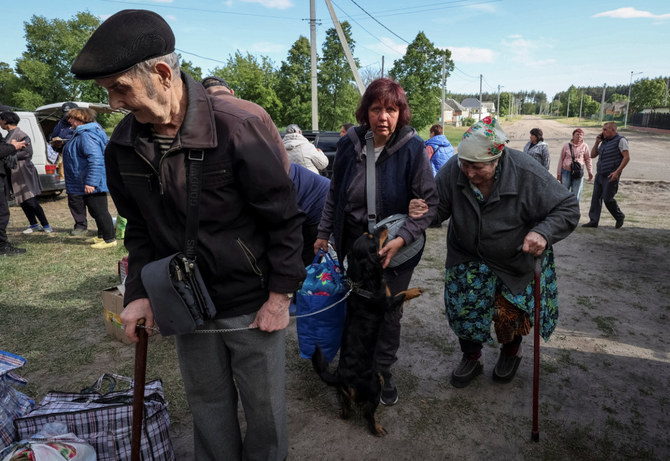
Groups of people could be seen coming in vans and cars with as many bags as they could carry at an evacuation arrival point outside the city of Kharkiv.
Evacuees — many of them elderly — registered and received food and medical assistance in makeshift tents.
“We must disrupt Russian offensive operations and return the initiative to Ukraine,” Ukrainian President Volodymyr Zelensky said on Saturday.
Ukrainska Pravda quoted military sources saying the Russian assault had resumed on Saturday near the village of Glyboke in Kharkiv.
The report could not be independently verified.

The Kharkiv region has been mostly under Ukrainian control since September 2022.
A senior Ukrainian military source said on Friday that Russian forces had advanced one kilometer into Ukraine and were trying to “create a buffer zone” in the Kharkiv and neighboring Sumy regions to prevent attacks on Russian territory.
Ukrainian forces have multiplied attacks inside Russia and Russian-held areas of Ukraine, particularly on energy infrastructure.
Moscow-installed authorities in the Russian-occupied Lugansk region in eastern Ukraine said four people were killed by a Ukrainian strike with US-made missiles on an oil depot in Rovenky.
Governor Leonid Pasechnik said the strike “enveloped the oil depot in fire and damaged surrounding homes.”
In Russia, two people were reported killed by Ukrainian strikes in the Belgorod and Kursk regions.
Ukrainian officials also reported a total of six civilians killed in Russian shelling in the Donetsk, Kharkiv and Kherson regions over the past day.
Officials in Kyiv had warned for weeks that Moscow might try to attack its northeastern border regions, pressing its advantage as Ukraine struggles with delays in Western aid and manpower shortages.
Ukraine’s military said it had deployed more troops and Zelensky said Ukrainian forces were using artillery and drones to thwart the Russian advance.
“Reserve units have been deployed to strengthen the defense in this area of the front,” it said.
The US-based Institute for the Study of War said on Friday that Russia had made “tactically significant gains.”
But the main aim of the operation was “drawing Ukrainian manpower and material from other critical sectors of the front in eastern Ukraine,” it said.
ISW said it did not appear to be “a large-scale sweeping offensive operation to envelop, encircle and seize Kharkiv” — Ukraine’s second biggest city.
Washington announced a new $400 million military aid package for Kyiv hours after the offensive began, and said it was confident Ukraine could repel any fresh Russian campaign.


