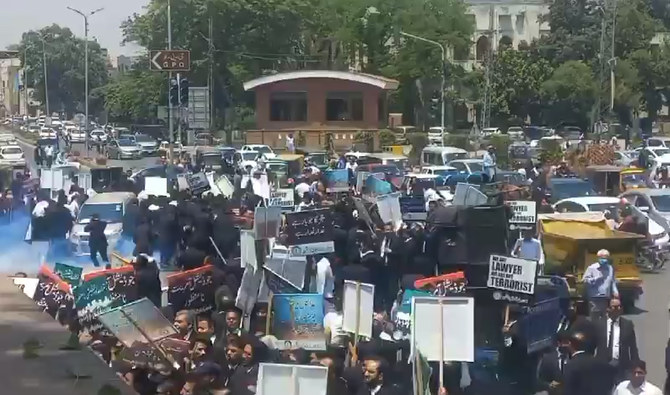
ISLAMABAD: Pakistani police fired teargas, baton-charged and detained dozens of lawyers who were protesting on Wednesday and tried to enter the building of a high court in the eastern Pakistani city of Lahore.
Hundreds of lawyers had gathered outside the court building to protest the relocation of civil courts in Model Town. They are also demanding the dismissal of a terror case filed against fellow lawyers.
As the lawyers tried to enter the Lahore High Court building, police baton-charged them and fired tear gas and water cannons to disperse them. Video footage widely broadcast on Pakistani news channels showed dozens of lawyers being arrested and piled into police vans.
Punjab Chief Minister Maryam Nawaz said she had directed Inspector General of Police Dr. Usman Anwar to “refrain from using force against the lawyers.”
“Lawyers must also resolve their matters with LHC amicably. For the safety of the citizens of Lahore, confrontation should be avoided,” she said in a post on X.
Speaking to media, a senior police officer said the protesters had pelted stones at the police and tried to engage them in a fight first, after which police were forced to use tear gas, water cannons and batons.
Speaking to Pakistani news channel Dawn News, LHCBA President Asad Butt said the lawyers’ protest would continue until all demands were met.
“The police have inflicted cruelty by using force against a peaceful march,” Butt said, adding that dozens of lawyers had been injured in tear gas shelling.
She demanded that the notification of the division of courts be withdrawn immediately and cases filed against lawyers be dismissed.
Speaking to Pakistan’s Geo News channel, Deputy Inspector General (DIG) Faisal Kamran said while law enforcement had showed restraint, they would not permit any breach of the law.
“The police are demonstrating maximum patience and restraint,” he said, adding that one station house officer and one constable were injured as lawyers pelted officers with stones.
Protests by lawyers are relatively common in Pakistan and have been a notable feature of the country’s political and social landscape. Protests in the past have been sparked by a variety of issues ranging from judicial appointments and legal reforms to specific grievances related to court administration and the treatment of lawyers.


![]()

Police baton-charge lawyers, fire tear gas as protest turns violent outside Lahore court
Short Url
https://arab.news/b3amy
Police baton-charge lawyers, fire tear gas as protest turns violent outside Lahore court
- Hundreds of lawyers had gathered outside Lahore High Court to protest relocation of civil courts, registration of terror cases against lawyers
- DIG Lahore says one station house officer, one constable injured as lawyers pelted stones, forcing police to use tear gas and batons
Latest updates


© 2026 SAUDI RESEARCH & PUBLISHING COMPANY, All Rights Reserved And subject to Terms of Use Agreement.