

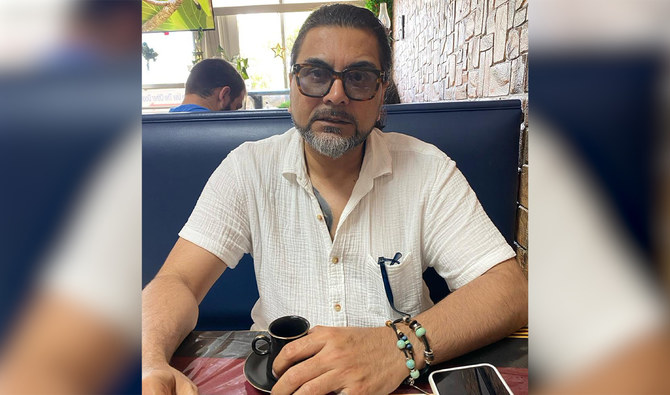

KARACHI: Kamran Faridi, a fallen undercover FBI agent from Karachi who was recently released from a Florida prison on the condition he would surrender his American nationality and deport himself to Pakistan permanently, said on Tuesday it would be “dangerous” for him to return to his home country from where he had escaped a life of crime nearly 30 years ago.
Faridi, 60, worked as an informant and agent for the FBI for nearly 15 years and was the architect of the plan to entrap Karachi businessman Jabir Motiwala, arrested by Scotland Yard in London in 2018 on the request of the United States. After years working for the FBI, he was sentenced to 84 months in jail on Dec. 9, 2022, after he refused to testify against Motiwala.
“It will compromise my well-being, it’s going to be difficult,” Faridi told Arab News in a phone interview from Florida, speaking about the prospect of returning to Karachi after nearly 30 years. “It’s going to be dangerous but what choices do I have?”
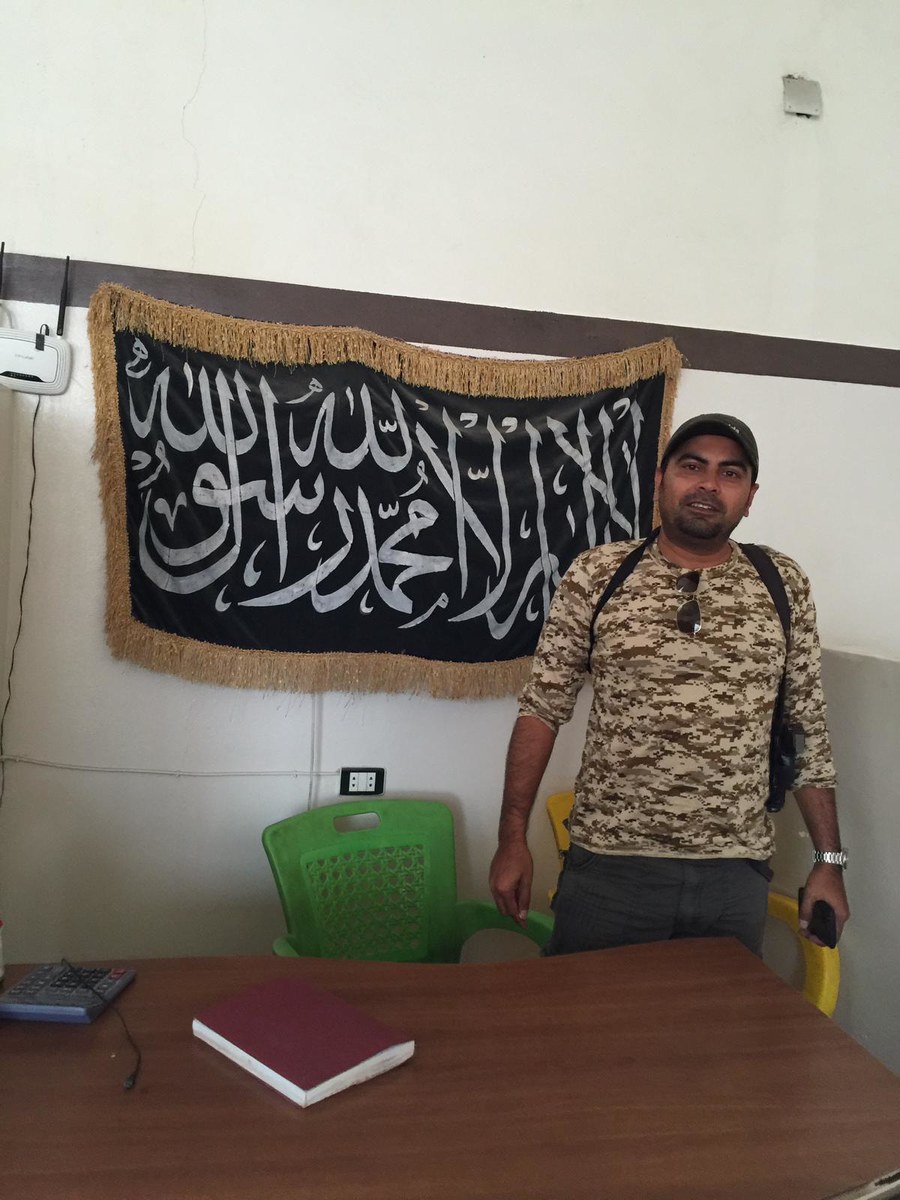
The undated photograph shows Kamran Faridi, a fallen undercover FBI agent from Karachi, posing for a picture. (Kamran Faridi)
Faridi, who lives in the US with his American wife, said the judge had reduced one year from his prison sentence on account of a recent law where a first offender gets a two-point sentence reduction.
Good conduct in prison and a verbal agreement with American authorities that he would surrender his nationality and return to Pakistan before August this year further reduced his sentence, Faridi said. Another stipulation of the agreement was that he would not appeal the court’s decision.
VETERAN SPY
Faridi worked for the FBI from 1995 till 2020 and helped the American agency nab several targets associated with transnational terrorist organizations. However, a 25-year relationship with the American agency turned sour in 2020 after Faridi said he refused to testify against Motiwala, allegedly a high-ranking member of the Indian organized crime syndicate D-Company.
Motiwala was arrested in London in August 2018 for conspiring to launder money into the United States and using force to extort funds. Faridi, who played a pivotal role in his arrest, said he later refused to testify against Motiwala after he realized the businessperson had been framed on bogus charges.
Faridi said his FBI colleagues had informed him that FBI was involved in a joint operation with India’s spy agency the Research and Analysis Wing (RAW) to establish a link between Motiwala, the D-Company and Pakistan’s Inter-Services Intelligence (ISI) military spy agency.
Faridi was arrested in London in 2020 after FBI agents intercepted his conversations with Motiwala’s lawyers, revealing his intent to testify in Motiwala’s favor. He was apprehended at the London Heathrow Airport while attempting to enter the UK, intending to testify against the FBI’s actions regarding Motiwala.
Charged with being a threat to his former FBI colleagues, Faridi was swiftly extradited back to the US and jailed.
“It’s a very complex case, the FBI wants to punish me for not testifying against D-Company,” Faridi said.
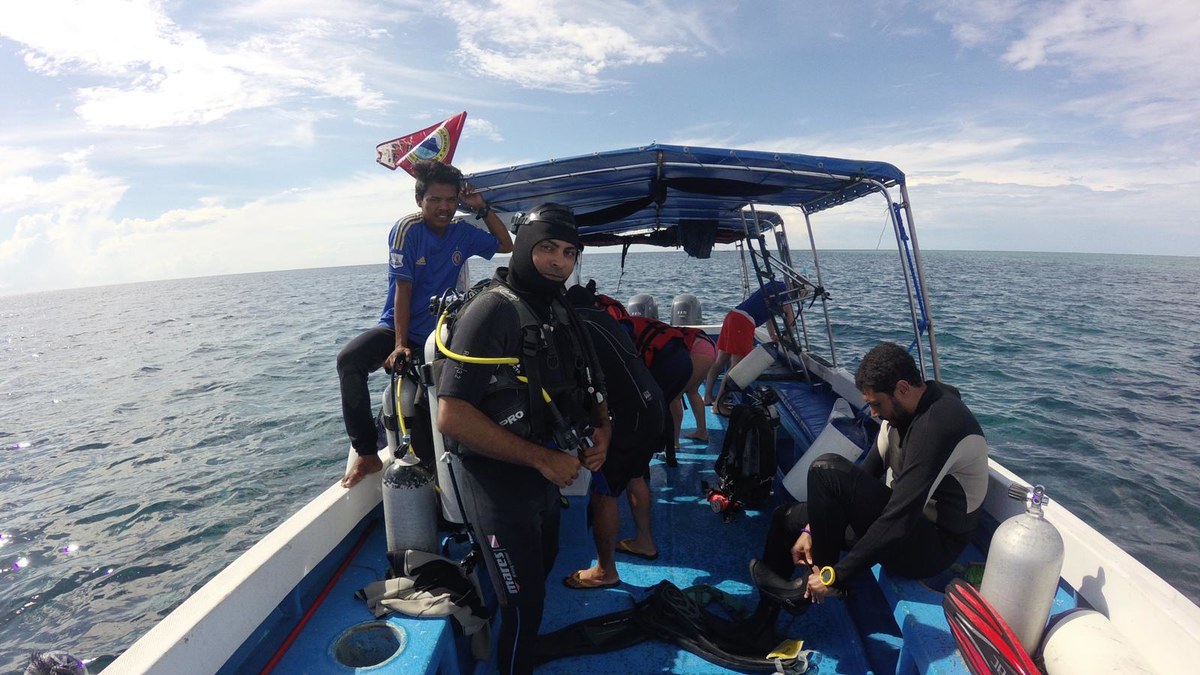
The undated picture shows a fallen undercover FBI agent from Karachi, Kamran Faridi (left). (Kamran Faridi)
FROM KARACHI TO ATLANTA
Faridi was a member of the Karachi-based Muttahida Qaumi Movement (MQM) party and subsequently of its rival, the Peoples Student Federation (PSF), in the 1990s. Both groups were widely known to be involved in criminal activities like kidnappings and armed robberies, which Faridi also became linked to. He later went on the run and escaped to Sweden, where he sought asylum almost three decades ago. He was later arrested by authorities after getting into fights with local gangs there, but broke out of prison and managed to escape to the US, where he ran a gas station in Atlanta.
It was there that he came into contact with the Atlanta Police Department after he complained to them about “corrupt” police officers whom Farid said were harassing him. Thus began his work as an informant with Atlanta police, who later introduced him to the FBI. Impressed with his proficiency in the Urdu, Punjabi, Hindi, and Spanish languages, the FBI decided to recruit him as an informant and agent.
“So that’s how I got introduced to FBI and they introduced me to the Drug Enforcement Authority, Immigration and Customs Enforcement, and after 9/11 the Central Intelligence Agency, MI6, French intelligence and many others,” Faridi said.
Faridi said he had paid a “hefty” price for refusing to testify against Motiwala but would now return to Karachi with his wife.
“I was a gangster but I am neither a criminal nor a gangster now,” he said. “I am returning to my city as a normal man.”


