

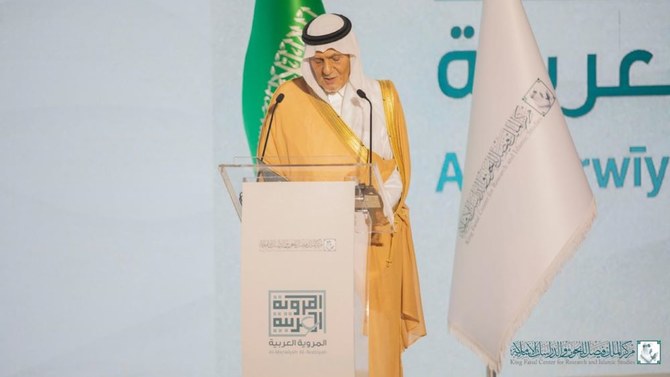

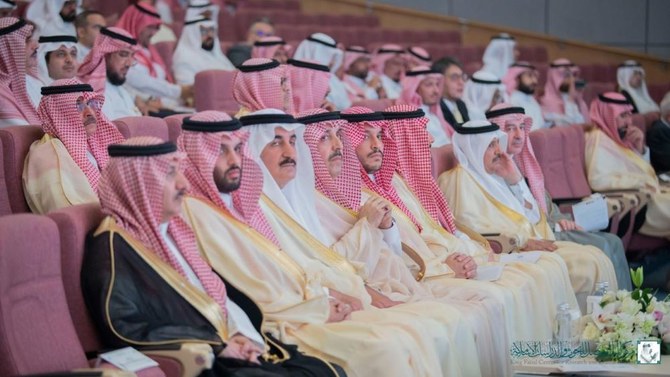

RIYADH: The Al-Marwiyah Al-Arabiyah Conference, called “Desert Culture,” concluded on Monday in Riyadh. The two-day event brought together a diverse group of scholars, officials, and experts to explore and celebrate the rich cultural heritage of the Arabian Peninsula.
Prince Turki Al-Faisal, the chairman of the King Faisal Center for Research and Islamic Studies, said that nomadism was central to Arab culture, emphasizing its roots in values over materialism. He noted that Arabs were natural storytellers, adept at turning chaos into clarity.
Katakura Kunio, president of the Motoko Katakura Foundation for Desert Culture in Japan, delivered a speech in memory of his late wife, anthropologist Motoko Katakura, which highlighted her research in Saudi Arabia.
Kunio said: “Motoko’s enduring passion for comfort inspired our foundation to establish the Comfort Prize, aimed at supporting both Japanese and international researchers and artists. This award honors individuals who dedicate their lives to enriching desert culture.
“In the current climate of positive change within Saudi Arabia, including the increased societal participation of women and the focus on tourism development, it is natural to re-evaluate the traditional value of comfort. Perhaps, in a world increasingly driven by hyper-capitalism, comfort can offer a remedy for the global population yearning for a slower pace.”
Kunio said that both Japanese and Islamic cultures had historic roots in promoting peace. He noted that Prince Shotoku of Japan endorsed “respect for peace” in his 17-Article Constitution, while the Prophet Muhammad established the Madinah Charter, which also emphasized peace and tolerance. These parallels suggested a common ground for fostering cross-cultural understanding, he added.
Abdullah Hamidaddin, assistant secretary-general for scientific affairs at the KFCRIS, described Al–Marwiyah Al-Arabiyah as a research initiative which aimed to address confusion about Arab civilization. It sought to combat attempts to undermine and marginalize Arab culture.
Hamidaddin said that the project used scientific methods to study Arab narratives and the origin of language in the Arabian Peninsula, while promoting dialogues, field studies, and critical analyses in various fields, including history, archaeology, sociology, philosophy, literature, and art.
The conference aimed to highlight the civilizational and cultural significance of the Arabian Peninsula, while seeking to strengthen the sense of Arab identity for future generations. It also promoted cultural exchange between the Arab world and neighboring regions.
A lecture titled “Gifts of God (Camels),” by Sulaiman Al-Theeb, cultural adviser at the center, was presented during the conference.
He spoke of the Arabian Peninsula’s deep connection with camels through three key concepts: rock and mural art; archaeological finds, like daily tools; and references to camels in ancient Arabic inscriptions, especially Thamudic writings.
Al-Theeb highlighted the significant status of camels in the region, which has earned them the moniker “the ship of the desert.”
Mohammed Al-Rowaily, a member of the Cultural Council at the Abdulrahman Al-Sudairy Cultural Center, said that the Arabic narrative played a crucial role in sharing ideas with others. He noted that Arabic storytelling enhanced cross-cultural understanding by conveying elements from history, oral literature, civilization, arts, and other creative works.
Hajar Al-Shammari, a linguistic researcher in Saudi history, said that the event boosted cultural engagement by fostering dialogue and cultural exchange among academics. Through the sharing of ideas it helped to establish a foundation for field studies and critical analyses focused on Arab perceptions and identity.
Al-Shammari added that Arabic storytelling played a significant role in promoting social cohesion, fulfilling the search for roots, and reinforcing values. This was especially important in the context of cultural identity and Arab heritage.


