STRAIT OF DOVER: Dozens of people in two rubber dinghies reached the southern coast of England on Saturday, the latest among thousands of asylum-seeking migrants to make the risky sea crossing from France this year.
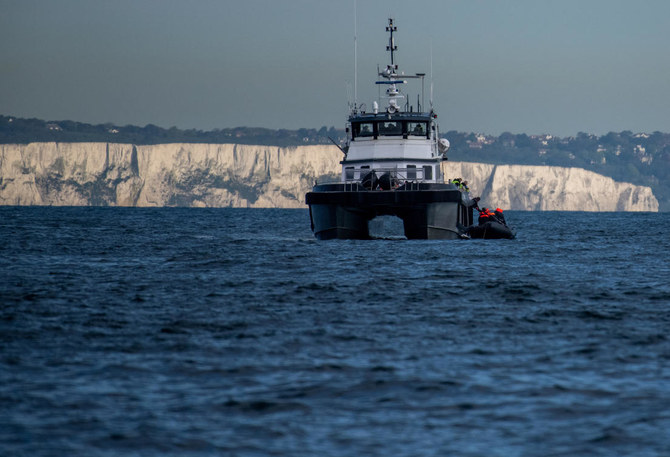
Bobbing on the waves of the English Channel on a clear morning, the boats sailed across the narrow strip of sea separating France and Britain, with a French naval vessel following them until they reached English waters.
Their largely male passengers, some of whom were in orange life jackets and waving, were taken aboard a British Border Force vessel off Dover.
The arrivals illustrate the difficulties British Prime Minister Rishi Sunak faces on his pledge to tackle illegal migration and “stop the boats,” ahead of a national election expected later this year.
More than 8,000 people have arrived so far this year on small boats, with many fleeing war or famine and traveling through Europe to Britain, making the start of this year a record for such arrivals.
Sunak hopes his flagship Rwanda policy to deport those arriving in Britain without permission to the African nation will deter people from making the Channel crossing. Five people died in the attempt last month.
The government hopes to operate the first flights to Rwanda in 9-11 weeks.
“The unacceptable number of people who continue to cross the Channel demonstrates exactly why we must get flights to Rwanda off the ground as soon as possible,” a spokesperson for Britain’s Home Office said.
“We continue to work closely with French police who are facing increasing violence and disruption on their beaches as they work tirelessly to prevent these dangerous, illegal and unnecessary journeys.”


![]()

More migrant dinghies cross Channel to England despite Rwanda threat
Short Url
https://arab.news/9va5j
More migrant dinghies cross Channel to England despite Rwanda threat
- The arrivals illustrate the difficulties British Prime Minister Rishi Sunak faces on his pledge to tackle illegal migration and “stop the boats“
- Sunak hopes his flagship Rwanda policy to deport those arriving in Britain without permission to the African nation will deter people from making the Channel crossing


Latest updates


© 2026 SAUDI RESEARCH & PUBLISHING COMPANY, All Rights Reserved And subject to Terms of Use Agreement.