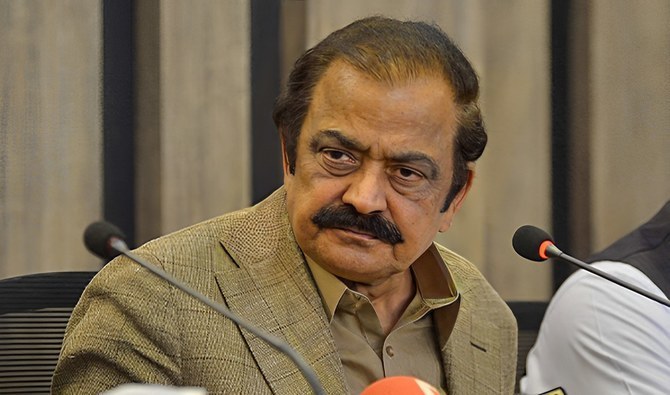
ISLAMABAD: President Asif Ali Zardari on Tuesday appointed Rana Sanaullah adviser to Prime Minister Shehbaz Sharif, according to a post on the Pakistan president’s official account on platform X.
Sanaullah is considered a close aide of PM Sharif’s elder brother, Nawaz Sharif, who is also a three-time former prime minister.
Sanaullah has previously served as the federal interior minister and provincial law minister for Pakistan’s most populous Punjab province.
“President Asif Ali Zardari has approved the appointment of Rana Sanaullah Khan as Adviser to the Prime Minister on Political and Public Affairs,” read the post on President Zardari’s official social media account.
“The President approved the appointment of Rana Sanaullah Khan on the advice of the Prime Minister under Article 93 (a) of the Constitution.”
Sanaullah’s appointment comes two days after Foreign Minister Ishaq Dar was named the country’s deputy prime minister. Dar, a 73-year-old chartered accountant, is another close Nawaz Sharif ally.
The elder Sharif, who returned to Pakistan in October 2023 after years of self-exile, was widely seen as the favorite candidate for the prime minister’s office ahead of the February 8 national polls, and was believed to be backed by the country’s powerful army.
However, the three-time former prime minister decided against taking the PM’s office after the elections failed to produce a clear winner, leading to speculation that his role in the country’s politics had come to an end.
Analysts widely believe that the recent appointments of Dar and Sanaullah indicate Nawaz Sharif is attempting to assert control over the government through indirect means.


![]()

Rana Sanaullah, another Nawaz Sharif loyalist, appointed adviser to Pakistan PM
Short Url
https://arab.news/vnwxs
Rana Sanaullah, another Nawaz Sharif loyalist, appointed adviser to Pakistan PM
- Sanaullah’s appointment comes two days after foreign minister Ishaq Dar was named deputy prime minister
- Analysts believe the appointments indicate Nawaz Sharif is trying to assert indirect control over the government
Latest updates


Recommended


© 2026 SAUDI RESEARCH & PUBLISHING COMPANY, All Rights Reserved And subject to Terms of Use Agreement.