


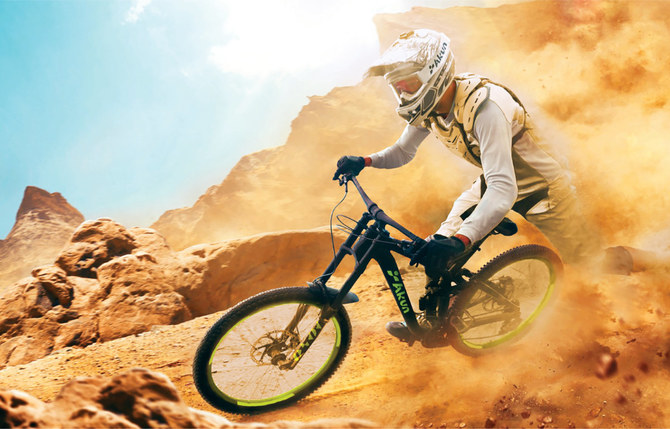

RIYADH: Contrary to popular conception, sporting activities provided in the Red Sea and AMAALA are not just confined to water, but these destinations offer exciting leisure choices on land as well, said a top official.
Speaking to Arab News at the Future Hospitality Summit, Oliver Wood, senior director of Destination Development at Red Sea Global, said the destination currently offers more than 50 activities for visitors.
Wood said that RSG created three business entities last year — Galaxea, WAMA, and Akun.
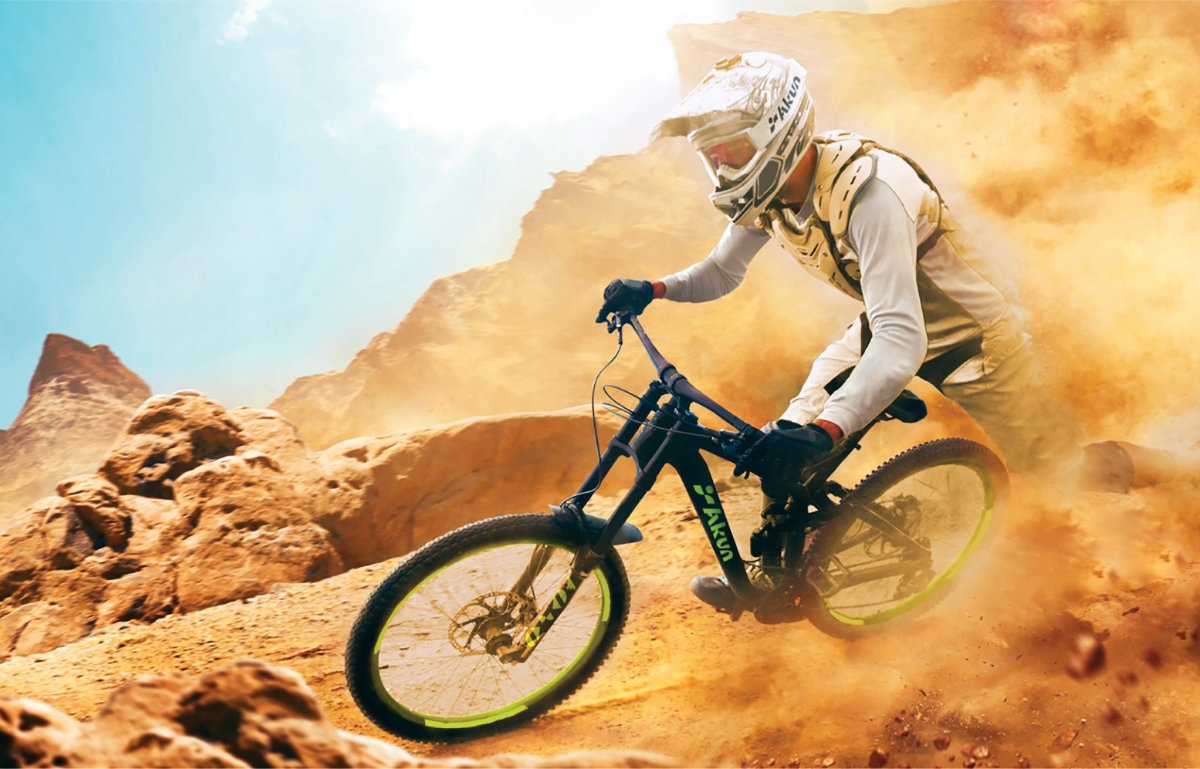
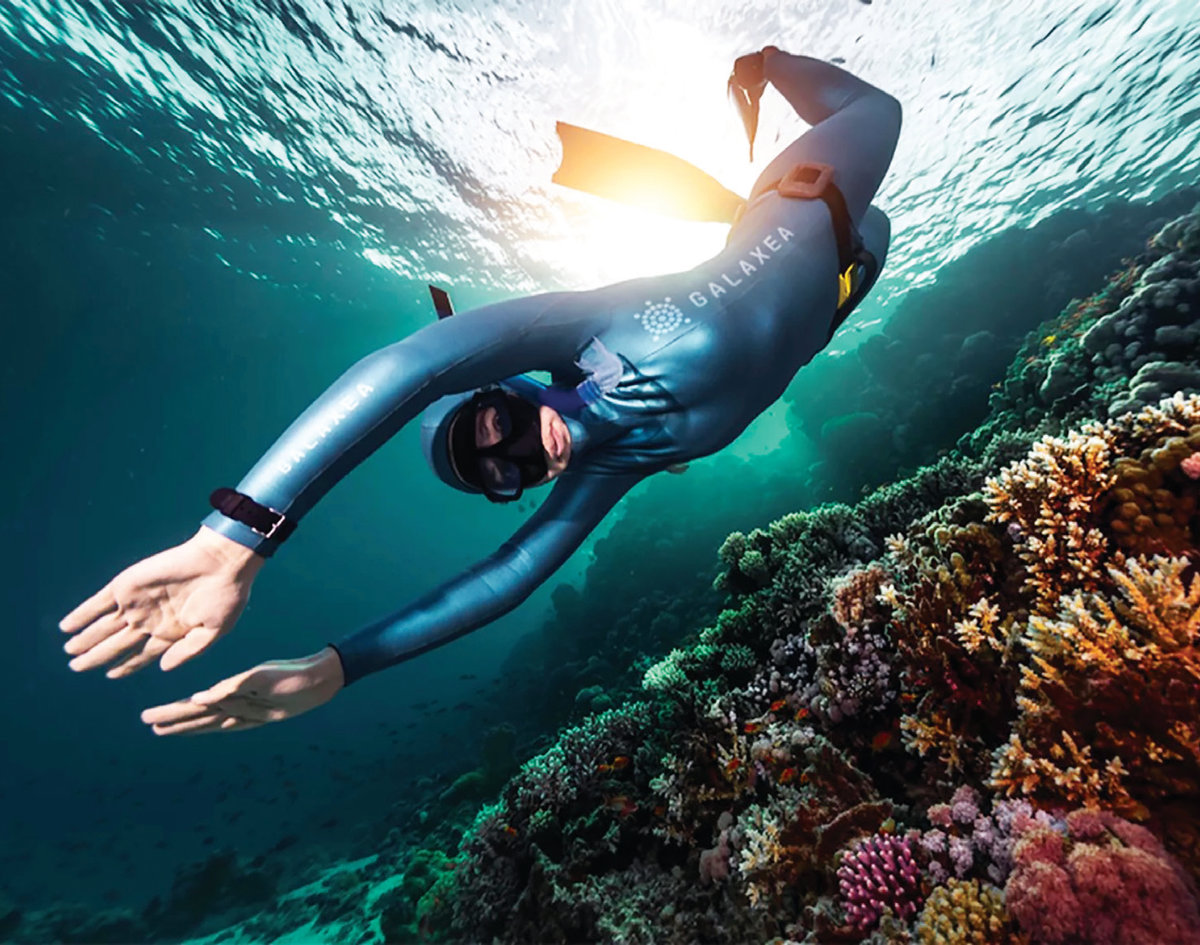
Galaxea provides diving experiences to visitors, while WAMA and Akun offer water activities and adventure sports respectively.
“Galaxea is a coral that’s endemic to the Red Sea. It looks like, a kind of submarine galaxy that sits below a constellation and is beautiful. Then we created WAMA which is a way for water. And then we created Akun, which to us, is obviously ‘to be’ in the moment, start when you stand, breathe, leave everything behind,” said Wood.
Oliver Wood, senior director of Destination Development at Red Sea Global. AN photo by Huda Bashatah
He added: “So, all three of these businesses work together to do something that will reduce the misconceived fact that we are just water. We are land as well. In fact, similar to our surroundings, our land was created by water. Fifty million years ago, the sea was 120 km inland and 200 m higher. So we’re finding dinosaur bones. We’ve got petroglyphs, we’ve got ancient trade routes.”
According to Wood, some of the land activities offered in the Red Sea and AMAALA destinations include biking and hiking, with RSG recently delivering electric fat bikes for visitors.
“So for us, it’s about taking you out hiking. It’s taking you biking, supercool Akun electric fat bikes that we just got delivered. So, you can go sand, and gravel wherever you want. It’s about climbing to the top of our mountains,” he added.
The RSG executive also lauded the efforts of the Saudi Sailing Federation and the Saudi Water Sports and Diving Federation in promoting water sports in the Kingdom.
“The Saudi Sailing Federation, Saudi Water Sports and Diving Federation, they’re bringing this sport to the forefront. So, together we’ve created this blueprint so that you have more Saudis in the water, more tourists that are going in the water,” he noted.
FASTFACTS
• The Red Sea Global created three business entities last year — Galaxea, WAMA, and Akun.
• Galaxea provides diving experiences to visitors, while WAMA and Akun offer water activities and adventure sports respectively.
• RSG has plans to create a scuba spa, where people can enjoy the silence in water.
Wood said that the availability of e-foils is one of the major attractions in the destination.
“E-foils is a surfboard that’s electrified, has this fin in the middle that pushes you above the water, so you glide through it without any friction. That is one of the most popular things we do. It is really good fun,” said Wood.
He added: “You can kayak through mangroves. And, then below the water is incredible. It’s one of the most well-preserved reefs in the world, and we’re very lucky to be working with KAUST on the scientific side.”
According to Wood, Galaxea is not just a diving brand, but it will allow visitors to understand the beauty and value of nature.
“There are lots of rare and endangered species beneath the water and it’s just incredible. It is a beautiful experience that allows you to reset your mind and just have a beautiful time in the Red Sea,” said the RSG official.
He revealed that RSG brand Corallium, which is a marine life institute, will help travelers understand more about protecting, preserving, and supporting water ecosystems.
Wood added that Corallium would also help divers communicate with experts in real-time, as they enjoy the beauty of the marine world.
According to the RSG website, Corallium can host 650 people at one time, and guests will be able to walk underwater, snorkel with rare species, participate in lab tours as well as dive into the depths of the Red Sea in a submarine.
“So as a diver, so you go snorkeling, you’re kind of shut off from it and experiencing it. Then you can speak to somebody afterward and understand.
“We try and extend that a bit further. you actually get to go out in these experiences and dive with a full face mask, communicating in real-time, under the water with our team,” he noted.
RSG brand Corallium, which is a marine life institute, will help travelers understand more about protecting, preserving, and supporting water ecosystems. (Supplied)
Wood also revealed that RSG has plans to create a scuba spa, where people can enjoy the silence in water.
Talking about the multiple options available for travelers in the Red Sea, he said: “You can be in the middle of desert dunes, you can be out in granite mountains. You can even go down to volcanoes. We have incredible volcanic lava fields that sit close to us. And then you can be in the water. You can be in front of 600-year-old pillars of coral reef. You can go through caves into the water.”
Wood also hinted that RSG is working toward offering Red Sea and AMAALA destinations to people who fall both in the luxury class and the middle range.
“We’re trying to show generosity in the value that we offer everybody there. We’ve tried to not only benchmark globally but try and push it right down so it is accessible to everybody and so that everybody can come and really enjoy it,” said Wood.
He added: “For me, it’s about building things around that enable people to come and get involved with it. So there are all sorts of things that we’re working on right now that will be revealed and are coming up.”


