



KARACHI: With the aroma of Eid dinner still lingering in the air, Syed Turrab Hussain Zahedy left his apartment with a friend earlier this month to withdraw cash from an ATM near his roadside apartment in the teeming city of Karachi.
The muggers hit soon after they stepped out of the building and demanded they hand over their valuables. While his friend complied, Zahedy, 38, resisted and within minutes was shot dead, one among over 60 people who have been killed in attempted muggings and other incidents of street crime this year in Pakistan’s largest city and commercial hub.
Karachi, a metropolis of 20 million that hosts the stock exchange and central bank, has for decades been beset by armed violence. While an armed campaign by the military, with help from police, paramilitary Rangers and intelligence agencies, against armed gangs and suspected militants in the city brought down murder rates after 2013, street crimes have been on the rise again since last year, with shooting deaths in muggings and robberies once again becoming a daily headline.
The government in Pakistan’s southern Sindh province, of which Karachi is the capital, said last week it was intensifying efforts against street crimes but the families of victims remain hopeless, saying their loved ones have become mere statistics.
“My son, in the eyes of this government, was nothing but a moving insect,” Syed Nisar Hussain, Zahedy’s 75-year-old father, told Arab News. “He wasn’t considered a human being.”
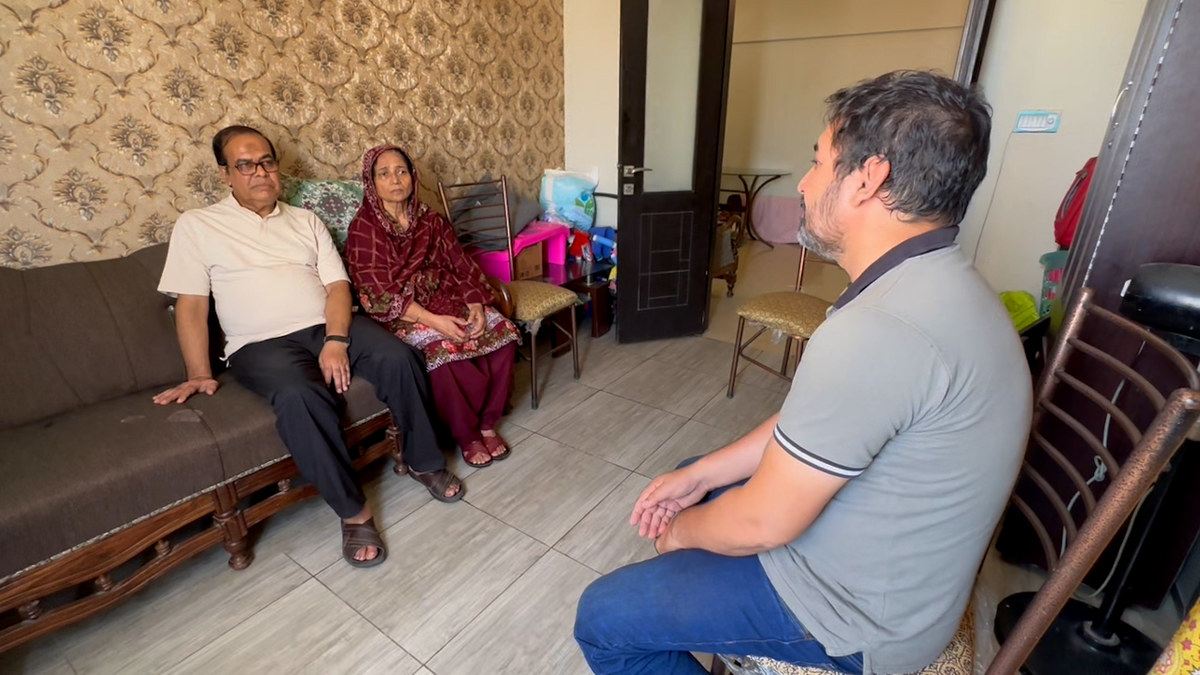
The photo taken on April 26, 2024, shows Syed Turrab Hussain Zahedy's parents during an interview with Arab News in Karachi, Pakistan. (AN Photo)
Hussain urged Pakistan’s prime minister, chief justice and army chief to step in to tackle the “terrorists” who were killing people on Karachi’s streets and lamented the criminal justice system in Pakistan where the conviction rate is very low, 11 percent, and where the failure of prosecutors to attain convictions in major as well as routine cases has badly eroded public confidence in the state’s ability to govern.
But Ghulam Nabi Memon, the inspector general of Sindh Police, said the force was now working overtime to wipe out crime, while acknowledging past neglect and mistakes.
“We have tasked good investigators to investigate cases of street crimes,” Memon told Arab News. “Additionally, we have requested the government to give us prosecutors who may help investigators in the collection of evidence.”
He said police had announced rewards and incentives for investigation officers who prosecuted cases successfully, saying such measures had already boosted the conviction rate in Karachi from less than 10 percent to 24 percent, the highest in Pakistan.
“While we are working hard to stop these killing ... overall, the incidents of crimes have decreased, which shows that police is doing its job,” Memon added.
But many Karachi residents say the feeling of insecurity has only grown.
Abdul Rahim Gul, 50, who works in the real estate business, said frequent mobile phone and car snatchings near his home and office had forced him to hire guards from a private security company six months ago.
“We have installed CCTV cameras and hired guards,” Gul lamented. “We can’t afford it but we have to do it.”
Sayida Rikshenda Jabeen, Zahedy’s 67-year-old mother, still does not know how to cope with the killing of her son, who is survived by his parents, a wife and three children between the ages of six months and six years.
“Just now, my little granddaughter was asking, ‘Grandma, where is Papa?’ What should I tell her?” Jabeen asked.
The sounds of ambulance sirens outside the Zahedys roadside apartment had also become a daily reminder of the “horrors” that lurked on the streets outside.
Scrolling through photos of her son on a cell phone, Jabeen asked the police, government and criminals:
“How many mothers’ hearts will you break? How many mothers’ laps will you people destroy?”


