

Homeland economies face growing challenges amid global turmoil, WEF special meeting in Riyadh told

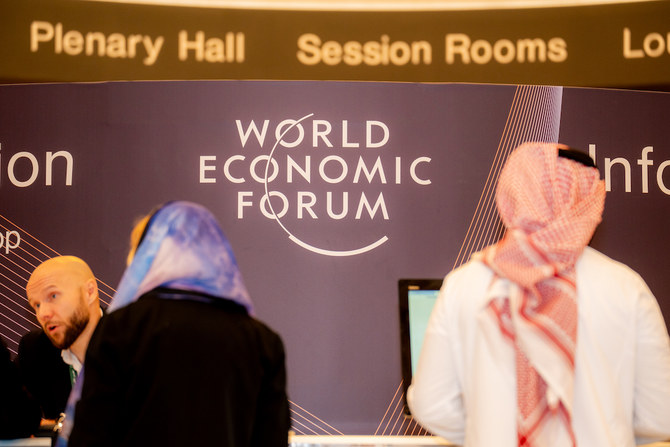
Around 1,000 thought leaders from 92 countries are in Riyadh for the WEF forum to ‘promote forward-thinking approaches to interconnected crises.’ (Abdulrahman Fahad Bin Shulhub/AN)
Short Url
Updated 28 April 2024
Follow

Homeland economies face growing challenges amid global turmoil, WEF special meeting in Riyadh told

  • Partnerships and alliances essential to restore equilibrium, protect security, experts and ministers tell panel discussion

RIYADH: Tensions in the Red are weighing heavily on Egypt, adding to the burdens caused by recent global crises such as the war in Ukraine and the pandemic, the country’s minister of planning and economic development told the World Economic Forum special meeting.

Speaking during a panel discussion on “What Homeland Economics Means for Trade,” Hala Elsaid Younes said that Egypt, like the rest of the world, has faced unprecedented crises in recent years, stemming from climate change problems, the global pandemic, the Russian-Ukraine war, and now the conflict in Gaza.

In order to combat these problems, Egypt has been focusing on controlling inflation, and investing in its labor force and infrastructure, she said.

“What is taking place in the Red Sea at the moment, where 50 percent of shipments are now rerouting, has caused a massive recedes in our profits. Regional and international tensions have also led to a rise in interest rates and soaring food prices.

“If this continues, governments will have little capacity to take care of their poor. We are working very hard on investing in our infrastructure by building more ports, and high railways to link the Mediterranean and Red Sea with inland destinations to expand our exports. We are lucky that over 70 percent of our population are less than 40 years old, so we are also investing in vocational training.”

Aloke Lohia, CEO of petrochemical firm Indorama Ventures, said that the company had to make “significant pivots” in recent years.

“We had a brilliant 20-year run where geopolitics were stable, interest rates were low, and the petrochemical business was growing. However, this all changed after COVID and current wars. Consumer demands and production are not matching anymore, and we are reducing 10 percent of our capacity.

“Homeland economies are great for countries which can leverage it, but not all countries are capable. Some countries, like my own Thailand, have to rely on tourism. So we are now looking at manufacturing our products in countries like India, where a large population resides alongside a stable government,” Lohia said.

US Congressman Brad Schneider said many countries are “looking for leadership.”

He added: “Complexities and uncertainties produce challenges for business; we need to engage in partnerships and alliances. I believe the world is safer when the US is engaged with the rest of the world. Creating equilibrium will be easier established when there are partnerships.”

Ahn Duk-geun, South Korean minister of trade, industry and energy, said that the world is “entering a dangerous phase of industrial competition, and we have to find a way to contain this race that so it won’t cause too much trouble for global trade.”

Clifford Kupchan, CEO of the consulting firm Eurasia Group, highlighted the risks posed by artificial intelligence.

“If AI gets into the wrong hands, the results will be worrisome. It will be very easy to create deepfakes and to create destructive weaponry. This will create an imbalance in world powers,” he said.

“When we talk about homeland economics, national security intervening with trade, I don’t think the prognosis is very good. This applies whether it is (Joe) Biden or (Donald) Trump who will head the presidency. We can be heading toward strategical degradation between the US and China.”


Free trade negotiations between GCC, India mark new phase of partnership, says sec-gen

Updated 24 February 2026
Follow

Free trade negotiations between GCC, India mark new phase of partnership, says sec-gen

RIYADH: The Gulf Cooperation Council’s secretary-general affirmed that the negotiations for a free trade agreement between the GCC and India, and the signing of the joint statement, represents a new phase of strategic partnership.

Jasem Mohamed Al-Budaiwi said that this contributes to enhancing close cooperation and strengthening economic and trade ties, according to the Saudi Press Agency.

This came during the signing ceremony of the joint statement on launching the free trade agreement negotiations between the Al-Budaiwi and India’s Minister of Commerce and Industry, Piyush Goyal, which took place in New Delhi, on Tuesday.

During the signing ceremony, Al-Budaiwi said that the Terms of Reference, signed on Feb. 5, provide a comprehensive and clear framework for these negotiations. The two nations agreed to discuss enhancing cooperation in vital strategic areas, including trade in goods, customs procedures, and services.

Additionally, the framework covers Sanitary and Phytosanitary measures, intellectual property rights, cooperation on Micro, Small, and Medium Enterprises, along with other topics of mutual interest. This reflects the comprehensive nature of the agreement and its ability to keep pace with the future economy.

Al-Budaiwi expressed hope that these negotiations would lead to a comprehensive and ambitious free trade agreement that works to remove customs and non-customs barriers, enhance the flow of quality investments in both directions, and achieve further liberalization in trade and investment cooperation between the GCC and India for mutual benefit. 

This would provide a stimulating economic environment and an investment climate that opens broad horizons for the business sector, supports supply chains, and accelerates the pace of economic growth in line with the ambitious developmental visions of the GCC states. 

The top official affirmed the full readiness of the General Secretariat to host the first round of negotiations at its headquarters in Riyadh during the second half of this year.

The two sides held a meeting during which they reviewed the existing cooperation relations between the GCC and India and discussed ways to develop and elevate them to broader horizons, serving mutual interests and enhancing opportunities for strategic partnership between the two sides, particularly in the economic, investment, and trade fields.

They praised the role undertaken by the negotiating teams from both sides, appreciating the efforts contributing to reaching a comprehensive agreement that enhances economic integration and supports the smooth flow of trade between the two nations.