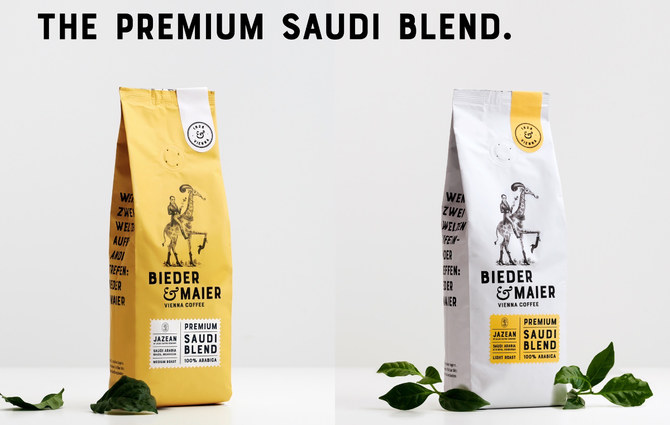


RIYADH: The Kingdom and Austria recently celebrated the world premiere of the “Premium Saudi Blend” by Viennese coffee manufacturer Bieder & Maier and the Saudi Coffee Company.
The launch of the product brings Saudi and Austrian coffee culture together. During the presentations in Vienna and Riyadh, guests tasted the new coffee roast, catering for espresso to filter and cold brewing.
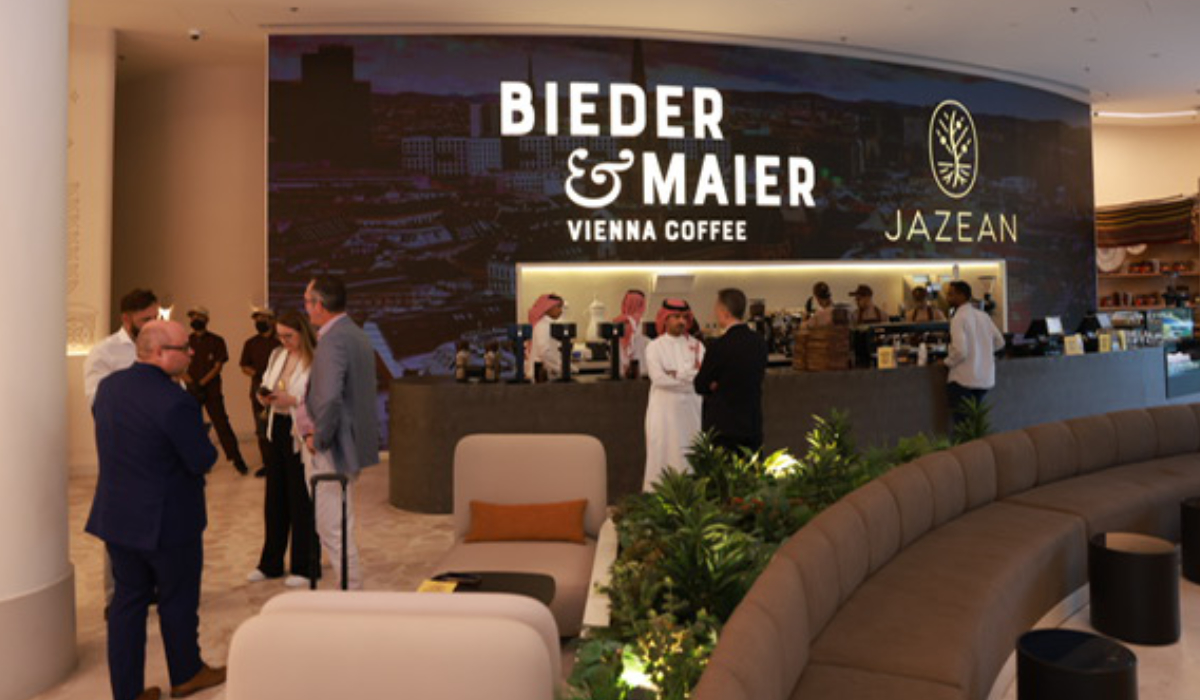
Bieder & Maier collaborates with Jazean brand to become the world's global brand to directly acquire the finest Arabica beans from Jazan. (Supplied)
“The coffee is an embodiment of our culture and identity,” CEO of Saudi Coffee Company Khalid AbuTheeb told Arab News. “With the objective of enhancing the local coffee industry and promoting our coffee tradition, we have collaborated with Bieder & Maier, a Vienna-based coffee powerhouse.”
AbuTheeb said that the collaboration was facilitated by the Saudi Ministry of Investment. “Through this collaboration ... the Saudi Coffee Company will bring forth unique coffee blends utilizing Saudi coffee beans in a mix with international beans to the Saudi and Austrian markets,” he said.
HIGHLIGHTS
• In 2011, Viennese coffee house culture was declared an intangible world heritage, followed by Arabic coffee in 2015 and Saudi Khawlani Arabica beans in 2022.
• They have all been declared intangible world heritage by UNESCO in recognition of their respective traditions and cultural significance.
• Starting during fall this year, a number of coffee houses will be opened in Saudi Arabia, with Cenomi Retail as franchise partner.
According to AbuTheeb, they will supply the finest Saudi coffee beans directly from the Jazan region.
“As we explore roasting capabilities here in the Kingdom, we are not just content with embracing tradition; we are striving to shape the future of coffee, where innovation intersects with heritage on a global scale,” he said.
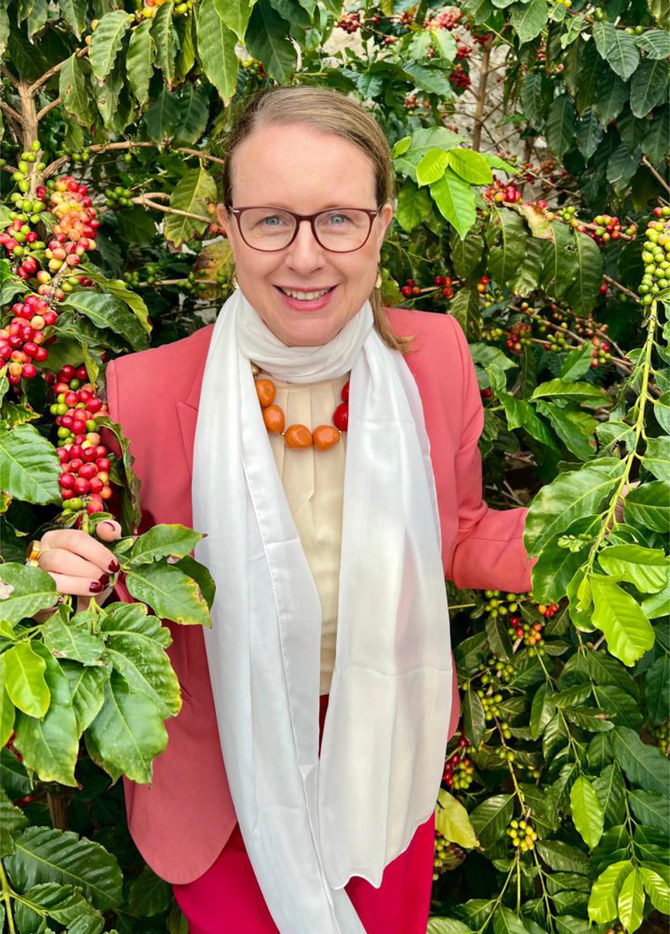
Dr. Margarete Schramboeck, the former minister of economy and digital affairs of Austria, and current Aramco digital board member, expressed her growing interest in Saudi coffee culture since she moved to the Kingdom.
“It was the year 2022 when I first came to the Kingdom and learned about the Year of Saudi coffee and the amazing culture of growing coffee in Jazan,” Schramboeck told Arab News. “Therefore, I was passionate about bringing this idea of a special Saudi blend to life. An exceptional partnership with the support of the Ministry of Investment of Saudi Arabia has been initiated. I want to thank Minister Khalid Al-Falih and team for the support.”
Recalling her visit to Jazan and its coffee-growing families, Schramboeck said: “The quality and tradition of coffee has deeply impressed me.”
Rudi Kobza, founder and CEO of Bieder & Maier Vienna, stressed the importance of the collaboration. “The Saudi heritage is unique and the ambition of the Saudi Coffee Company is impressive. The Premium Saudi Blend brings this philosophy in an authentical way alive. This can be experienced soon in our first Bieder & Maier cafe in Saudi Arabia, which we will operate with our partner Cenomi, as well as in Vienna.”
“Austrians share a common passion for coffee. Therefore, I was passionate about developing this project. When Saudi Arabia meets Vienna, the home of the Arabica coffee bean combines with the home of traditional coffee house culture to create a particularly enjoyable coffee project.”
In 2011, Viennese coffee house culture was declared an intangible world heritage, followed by Arabic coffee in 2015 and Saudi Khawlani Arabica beans in 2022. They have all been declared intangible world heritage by UNESCO in recognition of their respective traditions and cultural significance.
Starting during fall this year, a number of coffee houses will be opened in Saudi Arabia, with Cenomi Retail as franchise partner.