RIYADH: Sheikh Abdulrahman Al-Sudais, head of the Presidency of Religious Affairs at the Grand Mosque and the Prophet’s Mosque, praised King Salman and Crown Prince Mohammed bin Salman for their dedication to the message of Islam.
He commended their promotion of tolerance and moderation, service of Islam, Muslims and the broader Islamic community, and advocation for Islamic world issues in international forums.
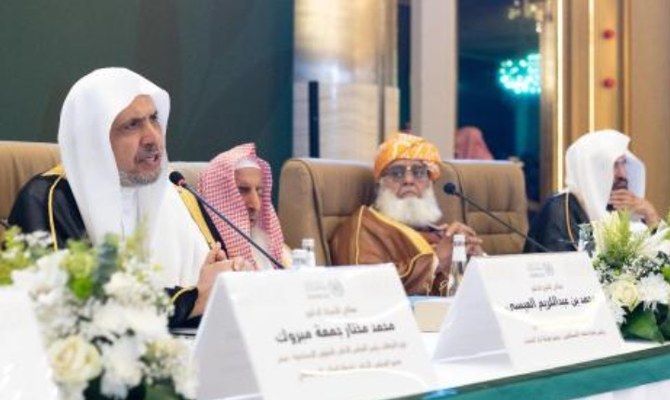
In his speech at the Muslim World League meeting in Riyadh on Tuesday, Al-Sudais expressed his gratitude to the grand mufti of the Kingdom, Sheikh Abdulaziz Al-Asheikh, for his role in supporting the Islamic Fiqh Council’s mission.
Al-Sudais acknowledged the grand mufti’s efforts in addressing contemporary issues facing Muslims, encouraging inter-civilizational dialogue and promoting the values of tolerance.
He also highlighted the role and contributions of Muslim World League Secretary-General Dr. Mohammed bin Abdulkarim Al-Issa in promoting the values of moderation and inclusivity, encouraging interfaith dialogue and serving the league’s mission.
Al-Sudais praised the Muslim World League’s commitment to fostering moderation and moderate thinking, fulfilling Islam’s mission to spread peace and justice, and encouraging familiarity and cooperation among peoples.
He acknowledged the league’s efforts in organizing international conferences and awareness programs, and its role in combating religious extremism.
Al-Sudais highlighted the importance of combating misguided ideologies and terrorist organizations, focusing on the youth, supporting Islamic minorities, combating fanaticism, factionalism and moral decay, and upholding the values of tolerance and moderation.


![]()
![]()

Al-Sudais praises Saudi leadership’s dedication to Islamic values

Short Url
https://arab.news/yrkzn
Al-Sudais praises Saudi leadership’s dedication to Islamic values
- Al-Sudais acknowledged the grand mufti’s efforts in addressing contemporary issues facing Muslims
- He praised the Muslim World League’s commitment to fostering moderation and moderate thinking


Latest updates


© 2026 SAUDI RESEARCH & PUBLISHING COMPANY, All Rights Reserved And subject to Terms of Use Agreement.