

Tunnel, fortification wall unearthed by archaeologists in Jeddah

1 / 4
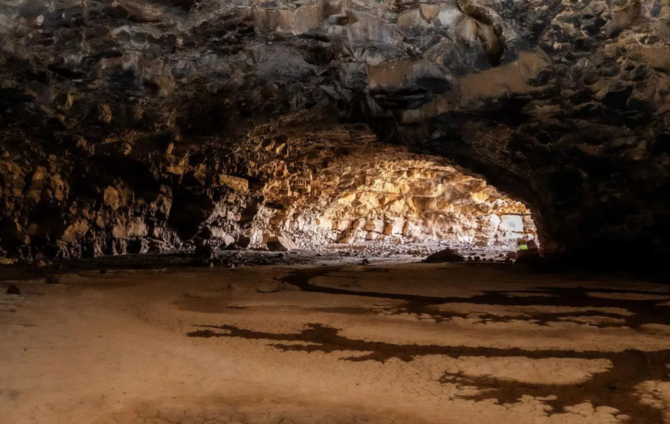
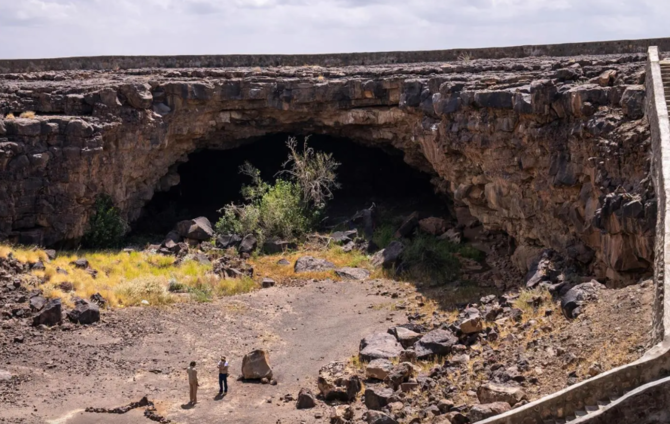
The finding of new evidence of human settlement in Umm Jirsan Cave, located in Madinah’s Harrat Khaybar, was announced by the Saudi Heritage Commission. (SPA)
2 / 4
The finding of new evidence of human settlement in Umm Jirsan Cave, located in Madinah’s Harrat Khaybar, was announced by the Saudi Heritage Commission. (SPA)
3 / 4
The finding of new evidence of human settlement in Umm Jirsan Cave, located in Madinah’s Harrat Khaybar, was announced by the Saudi Heritage Commission. (SPA)
4 / 4
The finding of new evidence of human settlement in Umm Jirsan Cave, located in Madinah’s Harrat Khaybar, was announced by the Saudi Heritage Commission. (SPA)
Short Url
Updated 18 April 2024
Follow

Tunnel, fortification wall unearthed by archaeologists in Jeddah

  • Findings linked to expansion of city’s defenses in 18th and 19th centuries
  • New evidence of human settlement discovered in Umm Jirsan cave in Madinah

RIYADH: A series of archaeological discoveries in Jeddah and Madinah were revealed on Thursday by the Historic Jeddah Program and the Saudi Heritage Commission.

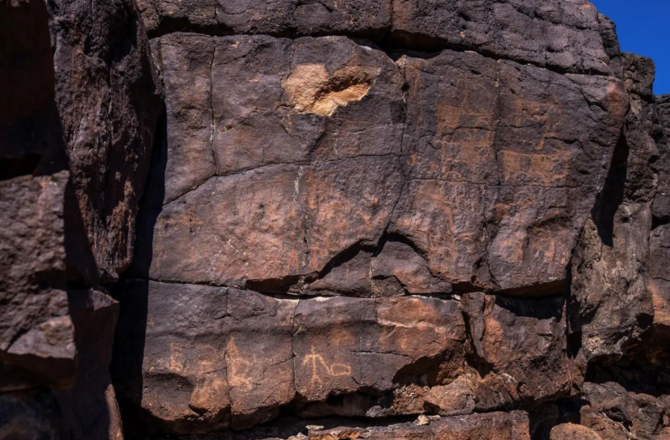
The finding of new evidence of human settlement in Umm Jirsan Cave, located in Madinah’s Harrat Khaybar, was announced by the commission, and the remnants of an ancient underground tunnel and a fortified wall, which once encircled the city, were announced by the program as part of the inaugural phase of Jeddah’s Archaeology Project.

Situated in the northern sector of historic Jeddah, adjacent to Al-Kidwa Square and in close proximity to Al-Bayaa Square, these historical structures date back several centuries.

Some estimations put Jeddah becoming a fortified city during the late 10th to early 11th century, but laboratory analyses suggest that the new finds belong to a later phase of fortification, likely constructed during the 18th and 19th centuries.

Archaeological excavations revealed that by the mid-19th century, the tunnel had become unusable and was quickly filled with sand. However, the wall remained standing until 1947, and some parts of the tunnel’s supporting wall remained intact up to a height of three meters.

Imported European ceramics dating back to the 19th century were also found, highlighting the historic commercial connections of Jeddah. Additionally, a pottery fragment dating back to the 9th century was discovered in Al-Kidwa Square.

These findings are part of a broader collection of archaeological discoveries announced by the Historic Jeddah Program as outcomes of the first phase of its Archaeology Project — a collaborative effort that involves specialized national teams, Saudi experts from the Heritage Commission, and foreign archaeologists.

Their combined expertise has revealed a trove of 25,000 artifacts across four sites, marking a significant development in understanding the cultural evolution of historic Jeddah.

In Madinah, the Heritage Commission announced the discovery of new evidence of human settlement in Umm Jirsan Cave following research conducted by its archaeologists in cooperation with King Saud University, Germany’s Max Planck Institute and Saudi Arabia’s Geological Survey, as part of the Green Arabian Peninsula Project, which focuses on multidisciplinary field research.

It is the Kingdom’s first study that looks into archeological research inside caves, and involved archeological surveys and excavations in several parts of the cave, revealing evidence dating back to the Neolithic period.

The oldest piece of evidence dates back to between 7,000 to 10,000 years ago, encompassing the Copper and Bronze Age periods.

The study of the cave proved that it has been utilized by pastoral groups.

The artifacts discovered include wood, fabric, and some stone tools, in addition to rock art facades depicting scenes of grazing goats, sheep, cows and dogs, as well as hunting activities with different types of wild animals.

The commission noted that the scientific discoveries represent evidence of human settlement in the cave, and a great number of animal bones, including those of striped hyenas, camels, horses, deer, caribou, goats, cows, and wild and domestic donkeys were also identified.

The analysis of human skeletal remains using radioactive isotopes revealed that ancient humans relied on a predominantly carnivorous diet but that, over time, plants were introduced, suggesting the emergence of agriculture.


Fady Jameel awarded Chevalier of France’s Order of Arts and Letters

Updated 20 January 2026
Follow

Fady Jameel awarded Chevalier of France’s Order of Arts and Letters

DUBAI: Fady Jameel, chair of Saudi Arabia’s Art Jameel and vice chairman, international, at Abdul Latif Jameel, has been awarded the title of Chevalier in the Order of Arts and Letters (Ordre des Arts et des Lettres) by the French Ministry of Culture.

The Order of Arts and Letters is one of France’s highest cultural honors and is awarded to individuals whose work has contributed to the enrichment of arts and culture in France and internationally. 

The ceremony took place in Paris last week and was led by French Minister of Culture Rachida Dati, with cultural figures from the arts and cinema sectors in attendance.

Jameel said the honor reflected the collective efforts of his family and partners in advancing cultural initiatives, building on a philanthropic legacy that began in Jeddah eight decades ago. (Supplied)

Jameel’s recognition comes in acknowledgment of the Jameel family’s long-standing philanthropic engagement, including more than 80 years of charitable work and over two decades of arts-focused initiatives led by Art Jameel across Saudi Arabia, the UAE and internationally.

Art Jameel, founded by the Jameel family, supports artists, institutions and creative communities through exhibitions, grants, research, education and public programs. Its work has included projects that encourage cultural exchange and collaboration between the Middle East and Europe, including France.

In remarks following the ceremony, Jameel said the honor reflected the collective efforts of his family and partners in advancing cultural initiatives, building on a philanthropic legacy that began in Jeddah eight decades ago. 

“I would like to thank the Ministry of Culture of France and our colleagues at the French Embassy and Consulate in Saudi Arabia and wish to express my appreciation to colleagues and partners, in both the private and government sectors, for their continued support and encouragement of the cultural sector,” he said in a released statement. 

“From Islamic art, craft and artisanship through to the most contemporary and innovative of practices, at Art Jameel we really believe in the role of the arts in transforming lives — a value we place at the heart of what we do daily,” Jameel continued. “Looking ahead, Art Jameel remains committed to strengthening a robust art ecosystem in Saudi Arabia and beyond, through piloting new initiatives that support students, creatives and wider public engagement with the arts, alongside nurturing international exchange.”