

Egypt’s finance minister says cutting inflation is priority

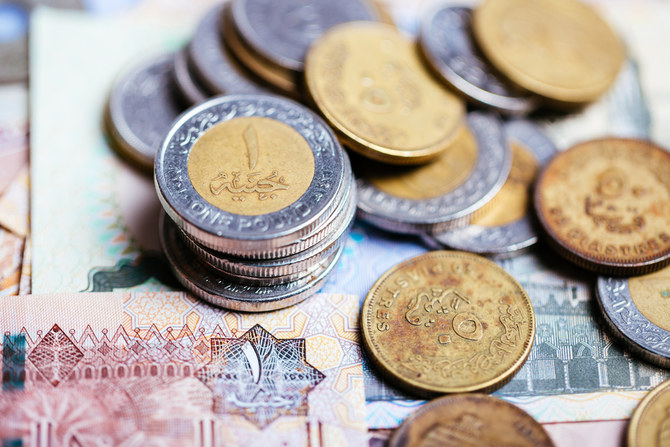
Inflation dipped to 33.3 percent in March from a record 38 percent in September, far higher than the central bank’s long-standing target of between 5 percent and 9 percent. Shutterstock
Short Url
Updated 17 April 2024
Follow

Egypt’s finance minister says cutting inflation is priority

CAIRO: The Egyptian government’s main priority is to reduce inflation to within the central bank’s target, Finance Minister Mohamed Maait said on Tuesday, adding that economic growth was expected to rise in the financial year starting in July to 4.2 percent, from 2.8 percent this year, according to Reuters.

Maait also said the government aimed to sell more state assets, which would reduce the state’s role in the economy, allow the private sector more ownership, increase productivity and generate revenue to reduce Egypt’s debt.

Egypt’s economy has been hurt over the last half year by the crisis in Gaza, which has slowed tourism growth and cut into Suez Canal revenue, two of the country’s biggest sources of foreign currency.

Revenue from the waterway has fallen by more than 60 percent, Maait said, speaking during the IMF Governor Talks series in Washington.

The challenges prompted the IMF to expand financial support to Egypt to $8 billion, while Egypt sharply devalued its currency, made its latest pledge to move to a flexible exchange rate, and struck a record $35 billion investment deal with a UAE sovereign wealth fund.

Inflation dipped to 33.3 percent in March from a record 38 percent in September, far higher than the central bank’s long-standing target of between 5 percent and 9 percent.

Egypt generated growth over the last decade by financing giant state projects, including a new $58 billion capital in the desert, through a borrowing spree abroad that quadrupled its foreign debt.

The government hopes to lower interest rates to reduce interest payments on debt, Maait said. The central bank so far this year has raised its overnight interest rates by 800 basis points.

The government has put a limit of 1 trillion Egyptian pounds ($20.6 billion) on all public investment, including that of the military, Maait said. The private sector should make up at least 65-70 percent of the economy, he added.

“Giving the main role to the private sector to lead the country is in the benefit of the state. Why? Because we have close to 1 million young people coming to the labor market looking for jobs every year,” Maait said.

“Who will be able to create that? The government cannot create more than 100,000 new jobs. An economy led by the private sector can create 900,000 — even more — jobs, but we have to give them the opportunity.”


Egypt’s Suez Canal, Namibian Ports Authority sign MoU to propel port development, training

Updated 7 sec ago
Follow

Egypt’s Suez Canal, Namibian Ports Authority sign MoU to propel port development, training

RIYADH: Egypt’s Suez Canal Authority and the Namibian Ports Authority have signed a memorandum of understanding amid efforts to propel cooperation in development and training.

The agreement aims to exchange expertise and enhance bilateral cooperation in several areas, most notably marine construction, the sale and leasing of marine units, and advanced training through the Suez Canal Authority’s academies, according to a statement.

This is supported by figures from the Suez Canal Authority, which reported revenues of $1.97 billion from 5,874 ship transits since early July, representing a 17.5 percent year-on-year increase, chairman Osama Rabie said during a recent meeting with an International Monetary Fund delegation.

It also aligns well with Rabie’s further forecast that the canal’s revenues would improve during the 2026/2027 fiscal year to around $8 billion, rising to approximately $10 billion the following year, according to a statement issued by the authority.

The newly released statement said: “Rabie affirmed the authority’s readiness for fruitful and constructive cooperation with the Namibian Ports Authority, given the expansion of the entity’s international projects and its efforts to open new markets and engage with the African continent.”

“The chairman explained that the Suez Canal Authority’s efforts succeeded in developing and reopening the Libyan port of Sirte after 14 years of closure, marking a successful start to international projects with friendly and sister nations,” it added.

The chairman instructed that all necessary support and procedures be put in place to initiate practical cooperation on multiple projects, highlighting that the authority offers a comprehensive system for maritime and logistics services through its shipyards and subsidiaries.

For her part, Nangula Hamunyela, chairperson of the Namibian Ports Authority, voiced her enthusiasm for collaborating with the Suez Canal Authority on advancing Namibia’s ambitious port development plan, home to the largest ports in West Africa.

She stressed that this partnership highlights the strong relationship between Egypt and Namibia and will help further deepen bilateral ties.

Hamunyela further highlighted that the Suez Canal Authority’s advanced technology and vast expertise across multiple sectors will play a key role in supporting and speeding up development efforts in Namibian ports, reducing dependence on foreign expertise and technology from outside the region.

Egypt’s Suez Canal generated a total of $40 billion between 2019 and 2024 and remains the country’s most important source of foreign currency.