US to query Israel about 6-year-old’s killing in Gaza, State Dept says

1 / 2
This undated image made available on Sunday Feb. 11, 2024, shows Hind Rajab. (AP)
2 / 2
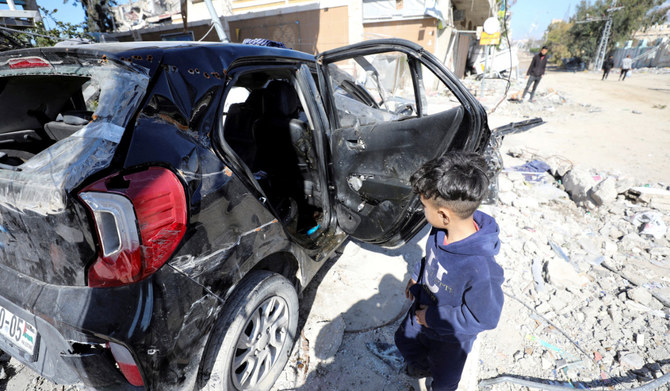
A child walks near a car where the body of Palestinian girl Hind Rajab, 6, who begged Gaza rescuers to send help after being trapped by Israeli military fire, was found along with the bodies of five of her family members as two ambulance workers who had gone to save her were killed, amid the ongoing conflict between Israel and Hamas, in Gaza City, February 10, 2024. (REUTERS)
Short Url
Updated 17 April 2024
Follow

US to query Israel about 6-year-old’s killing in Gaza, State Dept says

  • Israel has killed at least 33,843 people in Gaza, mostly women and children, according to the health ministry in the Hamas-run territory
  • “We’re going to go back to the government of Israel and ask them for further information,” Miller said at a press briefing, calling Hind Rajab’s death “an unspeakable tragedy, something that never should have occurred and never should occur”

WASHINGTON: The US State Department will ask Israel for more information about the January death of 6-year-old Palestinian Hind Rajab in Gaza, spokesperson Matthew Miller said on Tuesday, calling for a full investigation into the matter after a Washington Post report cast doubt on Israel’s earlier explanation.
The terrified girl trapped in a car in Gaza with her dead family had begged for help in a phone call to rescuers, in which gunfire could be heard as she described Israeli forces drawing near.
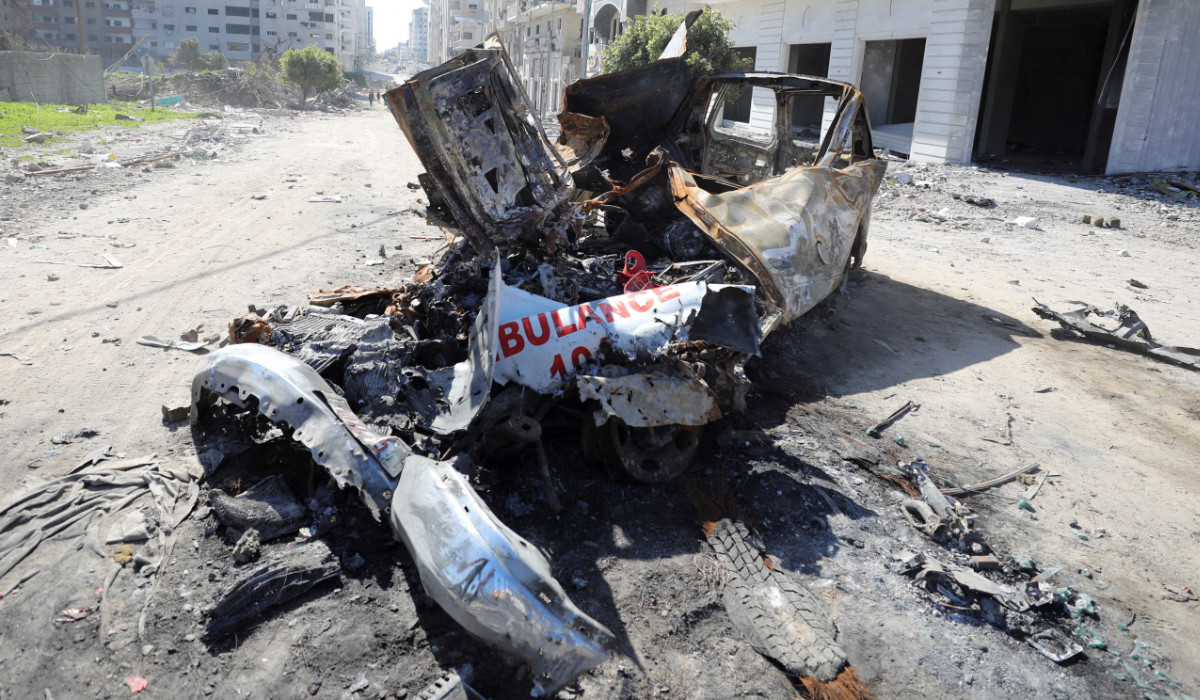


Wreckage of an ambulance used by two workers who were killed while they went to save Palestinian girl Hind Rajab, 6, who begged Gaza rescuers to send help while being trapped by Israeli military fire, after Hind’s body was found in a car along with the bodies of five of her family members, amid the ongoing conflict between Israel and Hamas, is seen in Gaza City, February 10, 2024. (REUTERS)

Relatives found her body 12 days later along with those of her aunt, uncle and their three children in their car near an ambulance and two dead ambulance workers who had tried to save her.
The Washington Post reported on Tuesday that an investigation had found Israeli armored vehicles were present in the area, contrary to the Israeli Defense Forces’ claim that a preliminary investigation had found its forces were not within firing range of the car in which she was trapped.
“We’re going to go back to the government of Israel and ask them for further information,” Miller said at a press briefing, calling Hind Rajab’s death “an unspeakable tragedy, something that never should have occurred and never should occur.”
“We would still welcome a full investigation into this matter and how it occurred in the first place,” Miller added.
Israel’s embassy in Washington did not immediately respond to a request for comment.
US officials have said they are reviewing incidents of civilian harm in Israel’s six-month-old war in Gaza as part of processes meant to ensure US-provided weapons are not used in breaches of international humanitarian law.
Miller said in Hind Rajab’s case, rather than the United States conducting its own review, it had asked Israel what its own investigation had found.
“That’s what we’ll be going back to them to do with the new details that were raised by the Washington Post,” Miller said.

The children in Israel’s prisons
Ongoing hostage-for-prisoners exchange opens the world’s eyes to arrests, interrogations, and even abuse of Palestinian children by Israeli authorities

Enter


keywords

Trump removes nearly 30 career diplomats from ambassadorial positions

Updated 5 sec ago
Follow

Trump removes nearly 30 career diplomats from ambassadorial positions

  • All of them had taken up their posts in the Biden administration but had survived an initial purge in the early months of Trump’s second term that targeted mainly political appointees
  • Africa is the continent most affected by the removals, with ambassadors from 13 countries being removed: Burundi, Cameroon, Cape Verde, Gabon, Ivory Coast, Madagascar, Mauritius, Niger, Nigeria, Rwanda, Senegal, Somalia and Uganda

WASHINGTON: The Trump administration is recalling nearly 30 career diplomats from ambassadorial and other senior embassy posts as it moves to reshape the US diplomatic posture abroad with personnel deemed fully supportive of President Donald Trump’s “America First” priorities.
The chiefs of mission in at least 29 countries were informed last week that their tenures would end in January, according to two State Department officials, who spoke on condition of anonymity to discuss internal personnel moves.
All of them had taken up their posts in the Biden administration but had survived an initial purge in the early months of Trump’s second term that targeted mainly political appointees. That changed on Wednesday when they began to receive notices from officials in Washington about their imminent departures.
Ambassadors serve at the pleasure of the president although they typically remain at their posts for three to four years. Those affected by the shake-up are not losing their foreign service jobs but will be returning to Washington for other assignments should they wish to take them, the officials said.
The State Department declined to comment on specific numbers or ambassadors affected, but defended the changes, calling them “a standard process in any administration.” It noted that an ambassador is “a personal representative of the president and it is the president’s right to ensure that he has individuals in these countries who advance the America First agenda.”
Africa is the continent most affected by the removals, with ambassadors from 13 countries being removed: Burundi, Cameroon, Cape Verde, Gabon, Ivory Coast, Madagascar, Mauritius, Niger, Nigeria, Rwanda, Senegal, Somalia and Uganda.
Second is Asia, with ambassadorial changes coming to six countries: Fiji, Laos, the Marshall Islands, Papua New Guinea, the Philippines and Vietnam affected.
Four countries in Europe (Armenia, Macedonia, Montenegro and Slovakia) are affected; as are two each in the Middle East (Algeria and Egypt); South and Central Asia (Nepal and Sri Lanka); and the Western Hemisphere (Guatemala and Suriname).
Politico was the first to report on the ambassadorial recalls, which have drawn concern from some lawmakers and the union representing American diplomats.