SYDNEY: Australian police said Monday they are investigating why a 40-year-old man with mental illness appeared to target women as he roamed a Sydney shopping mall with a large knife, killing six people and injuring a dozen more.
Videos shared on social media showed unshaven itinerant Joel Cauchi pursuing mostly female victims as he rampaged through the vast, crowded Westfield shopping complex in Bondi Junction on Saturday afternoon.
Five of the six victims killed were women, as well as most of those wounded.
“The videos speak for themselves don’t they, and that’s certainly a line of inquiry for us,” New South Wales police commissioner Karen Webb said.
“That’s obvious to me, it’s obvious to detectives, that that seems to be an area of interest — that the offender had focused on women and avoided men,” she told national broadcaster ABC.
Webb stressed that police could not know what was in the mind of the attacker.
“That’s why it’s important now that detectives spend so much time interviewing those who know him.”
Cauchi’s Facebook profile said he came from Toowoomba, near Brisbane, and had attended a local high school and university.
A distinctive grey, red and yellow dragon tattoo on his right arm was used to help identify him.
The last of Cauchi’s six victims was identified Monday as Yixuan Cheng, a young Chinese woman who was a student.
The other women killed were a designer, a volunteer surf lifesaver, the daughter of an entrepreneur, and a new mother whose wounded nine-month-old baby is in hospital.
The mother, 38-year-old Ashlee Good, handed her injured baby girl to strangers in desperation before being rushed to hospital where she died of her wounds.
The baby, named Harriet, remains in a stable condition in a Sydney hospital, police said.
Good’s family described her as “a beautiful mother, daughter, sister, partner, friend, all-round outstanding human and so much more.”
“To the two men who held and cared for our baby when Ashlee could not — words cannot express our gratitude,” they said in a statement to Australian media.
The only man killed was 30-year-old Pakistani man Faraz Tahir, who had been working as a security guard when he was stabbed.
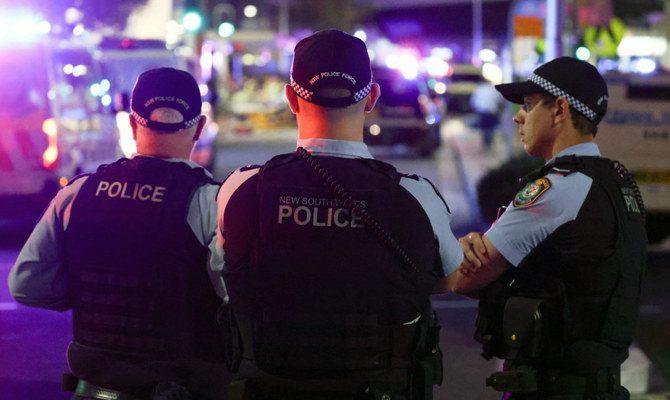
Cauchi’s assault, which lasted about half an hour, was brought to an end when solo police inspector Amy Scott shot him dead.
Following the shooting, Scott — who has been hailed as a hero — was spending time with her family to deal with the “very traumatic matter,” the state police chief said.
In a statement, Cauchi’s parents offered thoughts for the victims and said their son’s actions were “truly horrific.”
“We are still trying to comprehend what has happened. He has battled with mental health issues since he was a teenager.”
The parents also sent a message to the officer who shot their son dead.
“She was only doing her job to protect others and we hope she is coping alright,” they said.
Prime Minister Anthony Albanese said he had spoken to the families of some of the victims.
“The gender break-down is of course concerning — each and every victim here is mourned,” he told ABC radio, promising a “comprehensive” police investigation.
Cauchi is believed to have traveled to Sydney about a month ago and hired a small storage unit in the city, according to police. It contained personal belongings, including a boogie board.
He had been living in a vehicle and hostels, and was only in sporadic contact with his family via text messages, his parents said.


![]()

Police probe killer’s targeting of women in Sydney mall attack
Short Url
https://arab.news/63e6d
Police probe killer’s targeting of women in Sydney mall attack
- Cauchi’s assault, which lasted about half an hour, was brought to an end when solo police inspector Amy Scott shot him dead


Latest updates


© 2026 SAUDI RESEARCH & PUBLISHING COMPANY, All Rights Reserved And subject to Terms of Use Agreement.