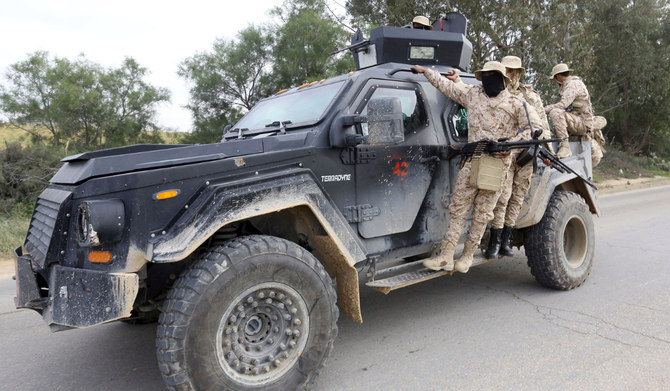

TRIPOLI: Clashes between powerful Libyan armed groups broke out in the capital Tripoli, sparking panic among locals celebrating the end of the Muslim fasting month of Ramadan, local media reported.
The clashes overnight Thursday into Friday lasted for about one hour but claimed no lives, the reports said.
Libya is still struggling to recover from years of war and chaos after the 2011 overthrow of longtime dictator Muammar Qaddafi. Although relative calm has returned to the oil-rich country in the past four years, clashes periodically occur between its myriad armed groups.
Witnesses said they heard exchanges of fire, including from heavy weapons, in Tripoli’s Abu Salim neighborhood, an area controlled by the Stability Support Authority (SSA).
Gunmen from SSA clashed with elements of the Special Deterrence Force (Radaa), the media reports said.
Authorities have not disclosed the reasons behind the fight, but local media said it began after the SSA detained Radaa members in retaliation for the detention of one of its members by the rival group.
Both groups released the detainees the same night.
Families who were observing the second day of Eid Al-Fitr celebrations had to flee nearby cafes and parks during the clash, the media reports said.
SSA and the Special Deterrence Force evolved from the militias that filled a security vacuum following Qaddafi’s overthrow.
The United Nations Support Mission in Libya (UNSMIL) on Friday denounced “the recurring use of violence to settle disputes,” in a statement on X.
Condemning “chronic insecurity,” UNSMIL called for Libya to “prioritize elections to establish legitimate governing bodies.”
“Those responsible must be held accountable,” it said.
In Tripoli, the SSA and Radaa groups are not under the direct authority of the ministries of interior or defense, though they receive public funds.
They operate independently and received a special status from the prime minister and the presidential council in 2021.
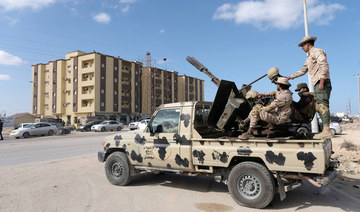
The groups are most visible at roundabouts and main street intersections, where their often-masked members staff checkpoints, blocking traffic with weapon-mounted armored vehicles.
In August 2023, Tripoli’s worst armed clashes in a year left 55 people dead when Radaa and the 444 Brigade clashed.
In February this year, at least 10 people including SSA members were shot dead in Tripoli.
Interior Minister Imad Trabelsi then announced that armed groups in Tripoli agreed to leave and be replaced with regular forces.
He gave no time frame but suggested the measure would be implemented after Ramadan.
Libya is divided between the UN-recognized Tripoli-based government and a rival administration in the country’s east.