
WASHINGTON: Long-simmering tensions between China and its neighbors took center stage on Thursday as leaders of the US, Japan and the Philippines met at the White House to push back on Beijing’s stepped-up pressure on Manila in the disputed South China Sea.
US President Joe Biden’s administration announced new joint military efforts and infrastructure spending in the former American colony while he hosted Philippines President Ferdinand Marcos Jr. alongside Japanese Prime Minister Fumio Kishida in Washington for a first-of-its-kind trilateral summit.
Topping the meeting’s agenda was China’s increasing pressure in the South China Sea, which has escalated despite a personal appeal by Biden to Chinese President Xi Jinping last year.
HIGHLIGHT
Launching the White House meeting with the three leaders, Biden affirmed that a 1950s era mutual defense treaty binding Washington and Manila would require the US to respond to an armed attack on the Philippines in the South China Sea.
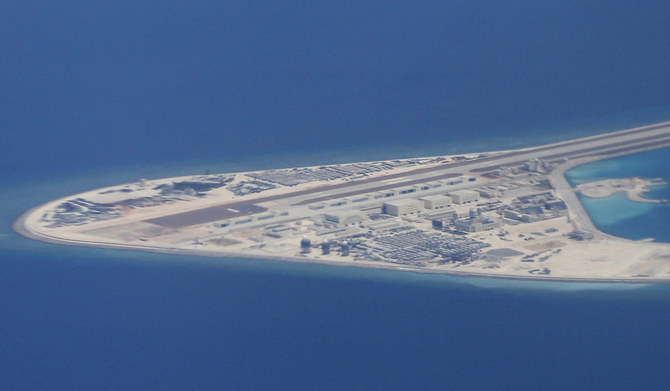
“We express our serious concerns about the People’s Republic of China’s dangerous and aggressive behavior in the South China Sea. We are also concerned by the militarization of reclaimed features and unlawful maritime claims in the South China Sea,” the countries said in a statement issued after the summit.
China’s Foreign Ministry spokesperson Mao Ning said on Friday the statement amounted to a “wanton smear attack” and Beijing summoned a Japanese diplomat to protest against the comments.
The Philippines and China had several maritime run-ins last month that included the use of water cannon and heated verbal exchanges. The disputes center on the Second Thomas Shoal, home to a small number of Filipino troops stationed on a warship that Manila grounded there in 1999 to reinforce its sovereignty claims.
Launching the White House meeting with the three leaders, Biden affirmed that a 1950s era mutual defense treaty binding Washington and Manila would require the US to respond to an armed attack on the Philippines in the South China Sea.
“United States defense commitments to Japan and to the Philippines are iron clad,” he said.
Marcos has successfully pushed Washington to resolve longstanding ambiguity over the treaty by specifying that it would apply to disputes in that sea.
China claims almost the entire South China Sea, including the maritime economic zones of neighboring nations. The Second Thomas Shoal is within the Philippines’ 200-mile (320-km) exclusive economic zone.
A 2016 ruling by the Permanent Court of Arbitration found that China’s sweeping claims have no legal basis.
Japan has a dispute with China over islands in the East China Sea.
The three countries said their coast guards planned to conduct a trilateral exercise in the Indo-Pacific region in the coming year and establish a dialogue to enhance future cooperation.
The moves come after two prominent US senators introduced a bipartisan bill on Wednesday to provide Manila with $2.5 billion to boost its defenses against Chinese pressure.
“China’s frequent tactic is to try to isolate the target of its pressure campaigns, but the April 11 trilateral signals clearly that the Philippines is not alone,” said Daniel Russel, who served as the top US diplomat for East Asia under former President Barack Obama.
The leaders also unveiled a wide range of agreements to enhance economic ties during the meetings, including backing new infrastructure in the Philippines, aimed at ports, rail, clean energy and semiconductor supply chains.