- Overtaken by cars, buses, rickshaws and motorbikes, horse-drawn carriages were once popular Karachi transport
- Drivers say portside metropolis had over 7,000 buggies until few decades ago, now less than 100 in city of 20 million
KARACHI: Fazal Aman led his horse Pappu out of a stable in the Soldier Bazaar area of Karachi and clasped it to the British-style Victoria carriage adorned with fairy lights, before setting off on a five-kilometer journey to the port city’s posh Bahadurabad neighborhood in search of passengers.
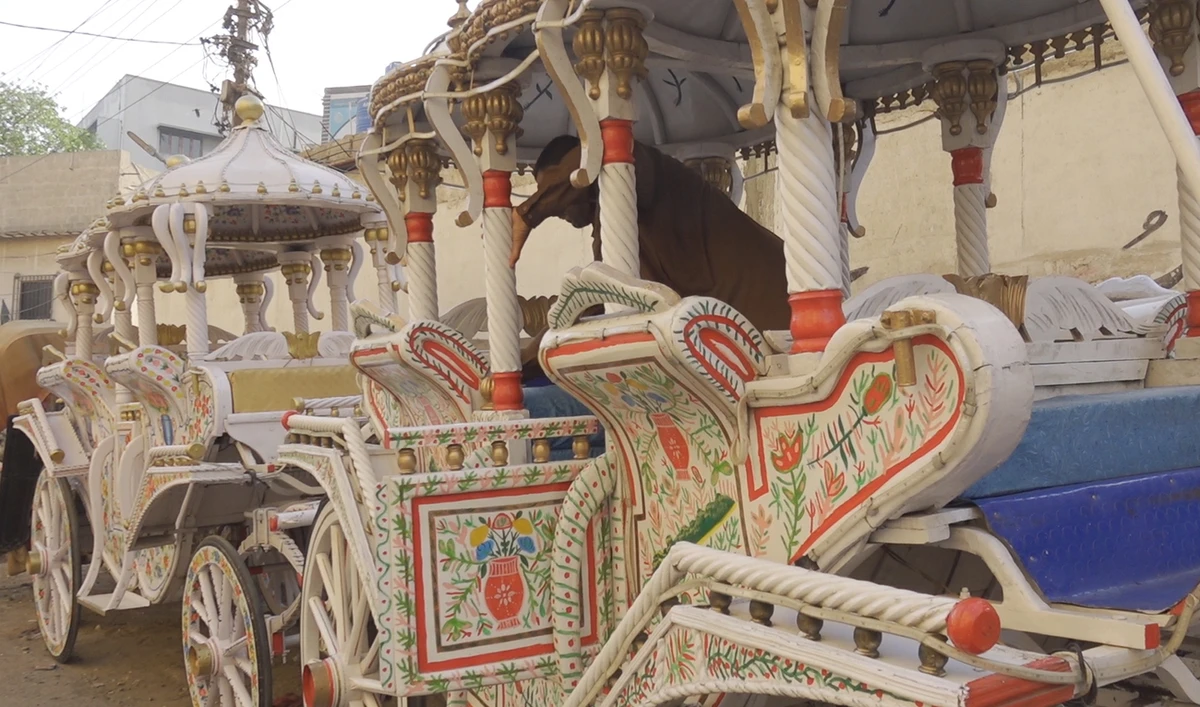
Remnants of Pakistan’s colonial past, the doorless, four-wheel open carriage named after Queen Victoria and drawn by one or two horses, has a coachman’s seat at the front and a retractable roof over the passenger bench. The carriages used to be among the main modes of transportation in Karachi around a century ago and then remained in use in the older areas of the city around Gandhi Garden, Ajmel Colony, Parsi Colony off M.A. Jinnah Road and adjoining areas. Today, there are less than 100 buggies left on Karachi’s roads, mostly used for sightseeing tours throughout the year or by holiday revelers during festive seasons like Ramadan and Eid.
Indeed, Ramadan in particular brings some respite for carriage drivers, who say they sit idle for the rest of the year. The carriage fee is up to Rs10,000 ($36) for a full day tour but in Ramadan, drivers charge around $18-20 a ride.
“During Ramadan, our business thrives,” Aman said as he finished a ride near the city’s famous Chaar Minaar roundabout. “We manage our expenses, our horse feed expenses are covered, and our children have a good Eid.”
The sight and sound of the carriages pulling up are a source of joy for residents and tourists, particularly children who pile in and jostle for a place on the driver’s seat.
“I really enjoyed the experience. It’s an extremely amazing thing,” said Safa Cochinwala, 13, who took a ride with her siblings and grandfather. “The lights are very nice and the experience is just something else.”
Another resident, Jawad Jafrani, had taken his two kids for a ride after the iftar sunset meal.
“During Ramadan, these activities flourish,” the 36-year-old told Arab News as he helped his children onto a buggy. “Children nowadays are particularly attracted to carriages decorated with lights and insist on riding on those.
“Previously, children used to get to experience carriages at weddings and other special events, but now that trend has faded. Now cars have arrived, the expensive ones, and people drive in them but this [carriage ride] is still unique.”
Karachi resident Adeel Arif remembered a time when carriages were widely used to ferry children, including himself, to and from school and after school classes.
“I tell the children that when I was your age, I used to go for after school classes in this carriage’,” he said. “’While you ride them for leisure, we used to travel in them for studying.”
“SIT IDLE YEAR ROUND”
But despite the post-iftar rides bringing business, Aman worries about the months ahead when he knows the work will once more dry up. When Aman’s father and grandfather were coachmen, there were over 7,000 carriages running on Karachi streets, a number now down to down to less than 100 in a city with a population of more than 20 million people.
This decline has led many, including Aman’s elder brother, to abandon the profession.
“Apart from Ramadan, we usually sit idle, waiting for bookings. When bookings come, we go out of home. If they don’t come, we sit idle for months,” Aman said.
Inflation has also hit the business.
“Many people are leaving the carriage business due to inflation and due to the high prices of horses and even horse feed,” Aman said. “A carriage is prepared at a cost of at least Rs450,000 [$1,618] while I have bought the horse separately for Rs210,000 [$755].”
But despite the challenges, Aman does not want Victoria carriages to die out.
“I want my family legacy to not end. This is an asset of Pakistan, may it always remain so,” he said, wistfully. This is the identity of the city of Karachi, let’s not let it fade away.”