BRUSSELS: More than 100 of Europe’s most dangerous criminal networks operate in Belgium, a center for international drug trafficking as well as being the heart of EU politics, officials said on Friday, as street shooting rise in the capital.
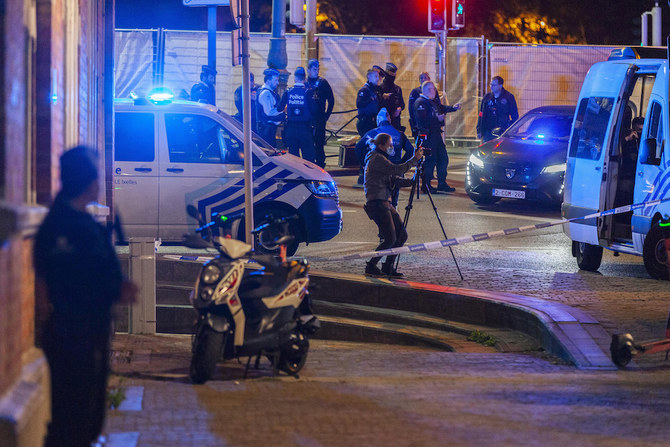
Belgian Justice Minister Paul Van Tigchelt said drug gangs were behind this year’s rise in street shootings in Brussels, with six recorded in March alone. Gangs from the French coastal town of Marseille were seeking to fill a vacuum left in Brussels after arrests of Albanian mafia members, he said.
About 30 people were arrested in a large-scale operation by the country’s federal police in February 2022, Belgian media reported.
With a major port in Antwerp, Belgium is an important drugs hub.
Local media have reported shootings in recent months that have injured passers-by in shopping and residential districts of Brussels that were not previously not associated with such crime.
The federal police declined to comment on street shooting statistics.
Van Tigchelt and Interior Minister Annelies Verlinden, spoke at a news conference as EU police agency Europol said it had identified the 821 most dangerous criminal networks in the bloc, and their 25,000 members, to help cross-border investigations.
Half of the groups were involved in drug trafficking, said Europol head Catherine De Bolle, while 86 percent of them used legal businesses to launder money.

Drug gangs behind rise in shootings in EU capital Brussels, officials say
Short Url
https://arab.news/y6re4
Drug gangs behind rise in shootings in EU capital Brussels, officials say
- Belgian Justice Minister Paul Van Tigchelt said drug gangs were behind this year’s rise in street shootings in Brussels, with six recorded in March alone
- About 30 people were arrested in a large-scale operation by the country’s federal police in February 2022
Germany to take in more than 500 stranded Afghans from Pakistan
BERLIN: The German government said Thursday it would take in 535 Afghans who had been promised refuge in Germany but have been stuck in limbo in Pakistan.
Interior Minister Alexander Dobrindt told the RND media network Berlin wanted to complete the processing of the cases “in December, as far as possible” to allow them to enter Germany.
The Afghans were accepted under a refugee scheme set up by the previous German government, but have been stuck in Pakistan since conservative Chancellor Friedrich Merz took office in May and froze the program.
Those on the scheme either worked with German armed forces in Afghanistan during the war against the Taliban, or were judged to be at particular risk from the Taliban after its return to power in 2021 — for example, rights activists and journalists, as well as their families.
Pakistan had set a deadline for the end of the year for the Afghans’ cases to be settled, after which they would be deported back to their homeland.
Dobrindt said that “we are in touch with the Pakistani authorities about this,” adding: “It could be that there are a few cases which we will have to work on in the new year.”
Last week, the interior ministry said it had informed 650 people on the program they would not be admitted, as the new government deemed it was no longer in Germany’s “interest.”
The government has offered those still in Pakistan money to give up their claim of settling in Germany, but as of mid-November, only 62 people had taken up the offer.
Earlier this month, more than 250 organizations in Germany, including Amnesty International, Save the Children and Human Rights Watch, said there were around 1,800 Afghans from the program in limbo in Pakistan, and urged the government to let them in.
Interior Minister Alexander Dobrindt told the RND media network Berlin wanted to complete the processing of the cases “in December, as far as possible” to allow them to enter Germany.
The Afghans were accepted under a refugee scheme set up by the previous German government, but have been stuck in Pakistan since conservative Chancellor Friedrich Merz took office in May and froze the program.
Those on the scheme either worked with German armed forces in Afghanistan during the war against the Taliban, or were judged to be at particular risk from the Taliban after its return to power in 2021 — for example, rights activists and journalists, as well as their families.
Pakistan had set a deadline for the end of the year for the Afghans’ cases to be settled, after which they would be deported back to their homeland.
Dobrindt said that “we are in touch with the Pakistani authorities about this,” adding: “It could be that there are a few cases which we will have to work on in the new year.”
Last week, the interior ministry said it had informed 650 people on the program they would not be admitted, as the new government deemed it was no longer in Germany’s “interest.”
The government has offered those still in Pakistan money to give up their claim of settling in Germany, but as of mid-November, only 62 people had taken up the offer.
Earlier this month, more than 250 organizations in Germany, including Amnesty International, Save the Children and Human Rights Watch, said there were around 1,800 Afghans from the program in limbo in Pakistan, and urged the government to let them in.
© 2025 SAUDI RESEARCH & PUBLISHING COMPANY, All Rights Reserved And subject to Terms of Use Agreement.