KARACHI: Officials at major Pakistani charities said this week they were receiving fewer local donations of alms during Ramadan amid rising poverty and inflation in the South Asian nation of 241 million people and were having to increasingly rely on contributions from Pakistanis living abroad.
Cash-strapped Pakistan’s $350 billion economy is in crisis with low growth, a weak currency and spiraling prices.
According to a World Bank report released this week, 40.1 percent Pakistanis now live below the poverty line, up from 39.9 percent in the last fiscal year. The report said about 10 million people were floating right above the poverty line and at risk of falling below it.
The economic crisis has changed the traditional dynamics of charity organizations in Pakistan, aid groups said, drying up many of their usual sources of support. Many people who once offered zakat — a pillar of faith requiring all Muslims to donate a portion of their wealth to charity — were now themselves seeking assistance from charities.
Muslims must meet a certain threshold before they can qualify for zakat. The amount is usually 2.5 percent or 1/40 of an individual’s total savings and wealth.
“Unemployment has increased so much … that those who have been giving zakat, fitrana [charitable donations] and charity all their lives are now coming to us for ration,” Maulana Bashir Ahmed Farooqui, the founding chairman of the Saylani Welfare International Trust (SWIT), one of Pakistan’s largest charities, told Arab News in an interview this week.
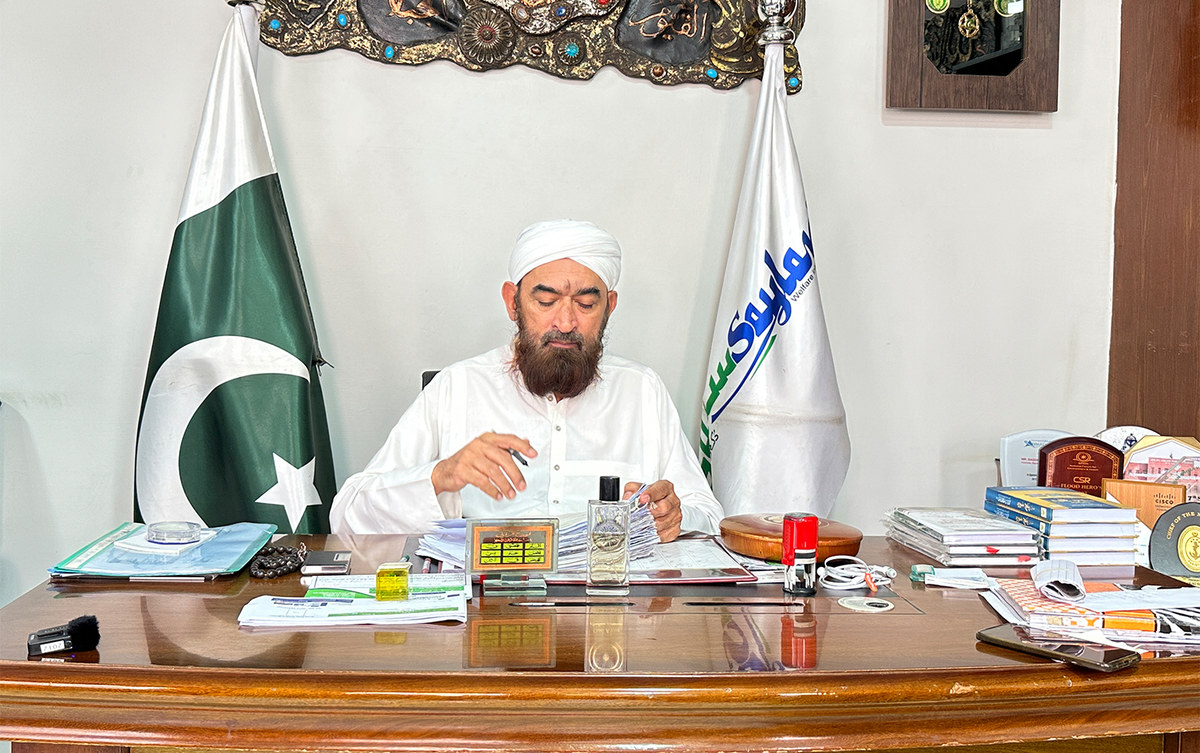
Maulana Bashir Ahmed Farooqui, the founding chairman of the Saylani Welfare International Trust (SWIT), gestures during an interview with Arab News in Karachi, Pakistan on April 4, 2024. (AN photo)
SWIT daily provides three meals a day to 200,000 people as well as other basic humanitarian aid services to 400,000. The charity spent Rs13 billion ($47 million) last year.
But Farooqi said local sources of funding were drying up, while the Pakistani diaspora, particularly expats in the UK, US, UAE and Saudi Arabia, was serving as a lifeline for communities wrestling with poverty, especially in the holy month of Ramadan.
“A person whose salary was Rs50,000 would give us something everymonth, but now he is unable to survive even with Rs50,000 so what will he give us,” the SWIT chairman said. “Much of our funding is coming from mill owners, construction companies and then overseas Pakistanis. They have held our hand in a big way.”
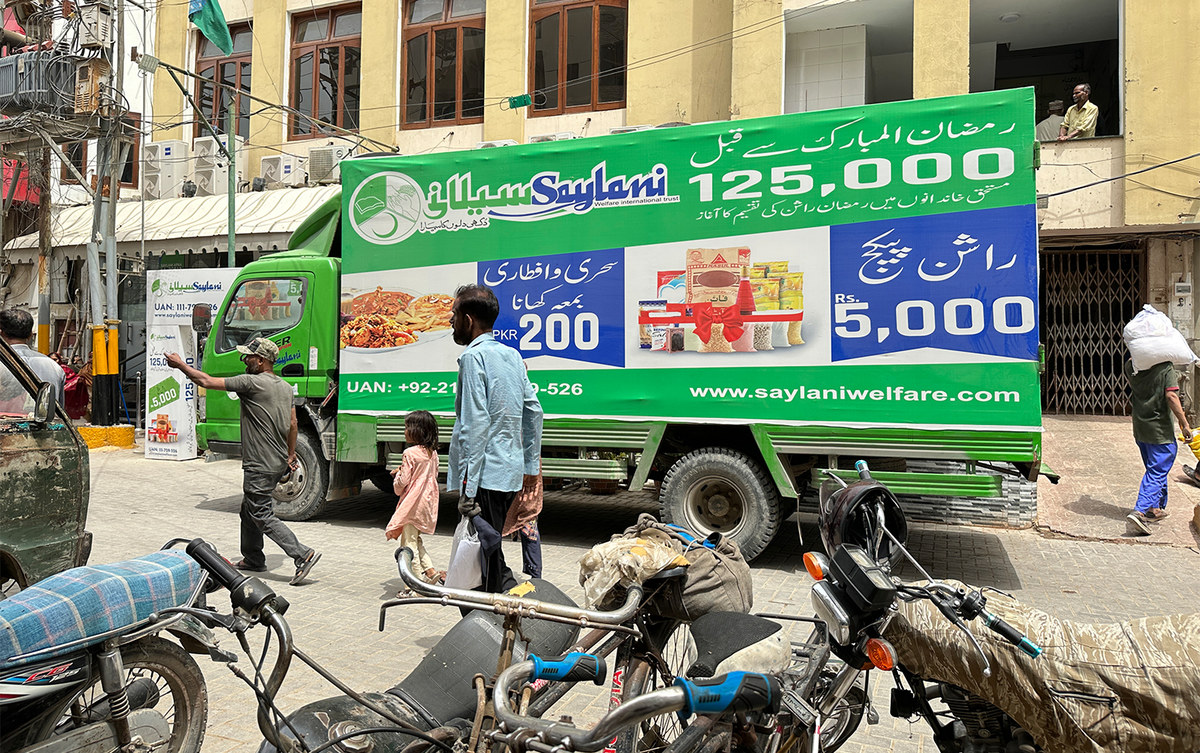
A Saylani food truck is parked on a road in Karachi, Pakistan on April 4, 2024. (AN photo)
Syed Waqas Jafri, the secretary general of AlKhidmat Foundation Pakistan, another large aid group, agreed with Farooqui that local donations had dried up.
“The people who are in low-income groups also used to do charity, but it has become difficult for them now,” he said. “In comparison, the middle and upper classes have been giving more.”
Saad Edhi, a spokesperson for the Edhi Foundation, said the inflow of donations was largely stagnant, but expenditures had doubled due to inflation.
“The flow of donation has not increased as compared to inflation and we are running operations through reserve funds,” he said.
But the Al Qadir Trust, another local charity organization that runs kitchens and clinics, said it had witnessed a rise in donations.
“We don’t have the overseas funding stream, so we rely on local sources,” Amir Madni, the organization’s general secretary, told Arab News.
“As inflation has more than doubled, people are conscious of the needs of those suffering and they have increased their donations.”