

Pakistan facing 30 percent water shortage for sowing season

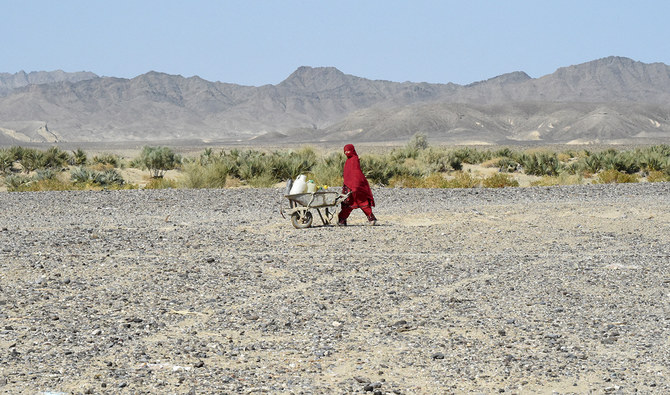
A woman carries water cans in a wheelbarrow at the Koh-e-Sabz area of Pakistan's south-west Baluchistan province where Iran launched an airstrike, on January 18, 2024. (AFP/File)
Short Url
Updated 03 April 2024
Follow

Pakistan facing 30 percent water shortage for sowing season

  • Authorities say gap due to lower-than-normal winter snowfall in Pakistan’s northern glacier region
  • Monsoon crops including rice, maize and cotton are sown in April, require heavy rainfall 

LAHORE: Pakistan is facing a 30 percent water shortage at the start of the sowing season for cash crops such as rice and cotton, the country’s water regulator said.

The Indus River System Authority (IRSA) said the gap is based on lower-than-normal winter snowfall in Pakistan’s northern glacier region, affecting catchment areas of the Indus and Jhelum Rivers that are used for irrigation.

Kharif crops, or monsoon crops, including rice, maize, sugarcane and cotton are sown in April and require a wet and warm climate with high levels of rainfall.

“There was less snow than normal as a result of climate change affecting the country’s glaciers,” Muhammad Azam Khan, assistant researcher with IRSA, which regulates the distribution of water resources along the Indus river, told AFP on Wednesday.

“This will have a direct impact on the availability of water for kharif crops in the summer.”

The water shortage gap is expected to narrow as the monsoon rains arrive later in the season.

However, the country’s meteorological department has also forecast higher than normal temperatures during monsoon season, increasing uncertainty.

Agriculture is the largest sector of Pakistan’s economy, contributing about 24 percent of its GDP.

But it has been criticized for being water inefficient.

“What this current water shortfall means for the crops is that authorities will have to better plan on how to utilize the water that is allotted to them,” said IRSA’s Khan.

Pakistan, the world’s fifth-largest country with a population of more than 250 million, has recently been grappling with the profound impacts of climate change which includes shifting and unpredictable weather patterns.

Devastating floods in 2022 — which scientists linked to climate change — that affected more than 30 million people also severely impacted Pakistan’s cotton crop that year.


EU, Pakistan sign €60 million loan agreement for clean drinking water in Karachi

Updated 17 December 2025
Follow

EU, Pakistan sign €60 million loan agreement for clean drinking water in Karachi

  • Project will finance rehabilitation, construction of water treatment facilities in Karachi city, says European Investment Bank
  • As per a report in 2023, 90 percent of water samples collected from various places in city was deemed unfit for drinking

ISLAMABAD: The European Investment Bank (EIB) and Pakistan’s government on Wednesday signed a €60 million loan agreement, the first between the two sides in a decade, to support the delivery of clean drinking water in Karachi, the EU said in a statement. 

The Karachi Water Infrastructure Framework, approved in August this year by the EIB, will finance the rehabilitation and construction of water treatment facilities in Pakistan’s most populous city of Karachi to increase safe water supply and improve water security. 

The agreement was signed between the two sides at the sidelines of the 15th Pak-EU Joint Commission in Brussels, state broadcaster Radio Pakistan reported. 

“Today, the @EIB signed its first loan agreement with Pakistan in a decade: a €60 million loan supporting the delivery of clean drinking water for #Karachi,” the EU said on social media platform X. 

Radio Pakistan said the agreement reflects Pakistan’s commitment to modernize essential urban services and promote climate-resilient infrastructure.

“The declaration demonstrates the continued momentum in Pakistan-EU cooperation and highlights shared priorities in sustainable development, public service delivery, and climate and environmental resilience,” it said. 

Karachi has a chronic clean drinking water problem. As per a Karachi Water and Sewerage Corporation (KWSC) study conducted in 2023, 90 percent of water from samples collected from various places in the city was deemed unsafe for drinking purposes, contaminated with E. coli, coliform bacteria, and other harmful pathogens. 

The problem has forced most residents of the city to get their water through drilled motor-operated wells (known as ‘bores’), even as groundwater in the coastal city tends to be salty and unfit for human consumption.

Other options for residents include either buying unfiltered water from private water tanker operators, who fill up at a network of legal and illegal water hydrants across the city, or buying it from reverse osmosis plants that they visit to fill up bottles or have delivered to their homes.

The EU provides Pakistan about €100 million annually in grants for development and cooperation. This includes efforts to achieve green inclusive growth, increase education and employment skills, promote good governance, human rights, rule of law and ensure sustainable management of natural resources.