

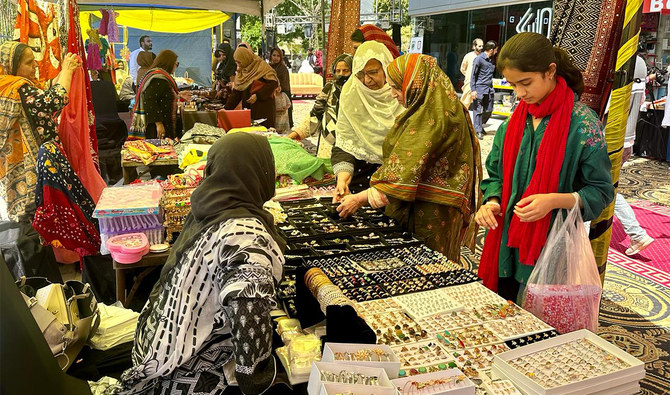
Women entrepreneurs shine at special Ramadan bazaar in Pakistani capital 

Women entrepreneurs from across Pakistan showcase their handmade products at the three-day women Ramadan bazaar in Islamabad, Pakistan on April 1, 2024. (AN Photo)
Short Url
Updated 03 April 2024
Follow

Women entrepreneurs shine at special Ramadan bazaar in Pakistani capital 

  • Three-day event has been organized by Rawalpindi Women Chamber of Commerce and Industry from April 1 to 3
  • Special bazaar features over 30 stalls showcasing embroidered clothing, jewelry and bags made and sold by women

ISLAMABAD: Women entrepreneurs have created a buzz at a three-day Ramadan bazaar being held in Pakistan’s federal capital of Islamabad, arriving from all corners of the country to sell handmade clothing, bags, jewelry and other festive items.

The “Empower Women, Empower Nation” bazaar has been organized by the Rawalpindi Women’s Chamber of Commerce and Industry (RWCCI), which invited woman entrepreneurs from all over Pakistan to display and sell products from their respective regions.

Organized outside the city’s Centaurus Mall, the special bazaar will run from April 1-3 and features more than 30 stalls.

“We have come from Multan to Islamabad because we always get a very good response from Islamabad,” Haseena Begum, an entrepreneur selling handmade embroidered bags, told Arab News as she attended to customers visiting her stall.

“We also attract good customers from Islamabad for online [shopping] and we want to be called [into events] like this so that our handmade work sells out here.”
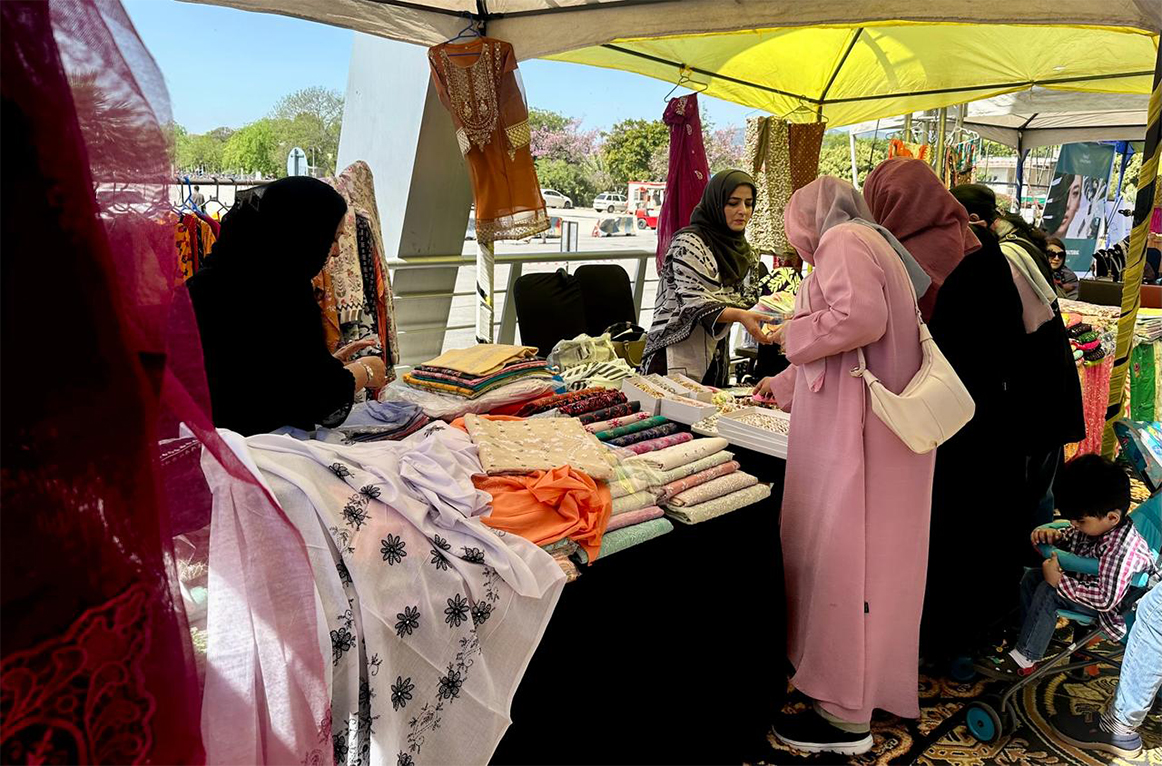


Women entrepreneurs from across Pakistan showcase their handmade products at the three-day women Ramadan bazaar in Islamabad, Pakistan on April 1, 2024. (AN Photo)

RWCCI President Sabohi Hussain said the primary objective of the event was to promote women entrepreneurs who operated from home.

“These ladies belong to remote areas. Some of them are from Multan, Gilgit, Hunza, and other remote areas,” she told Arab News. “We are promoting them, we are guiding them, we are teaching them, training them for international and national exhibitions.”
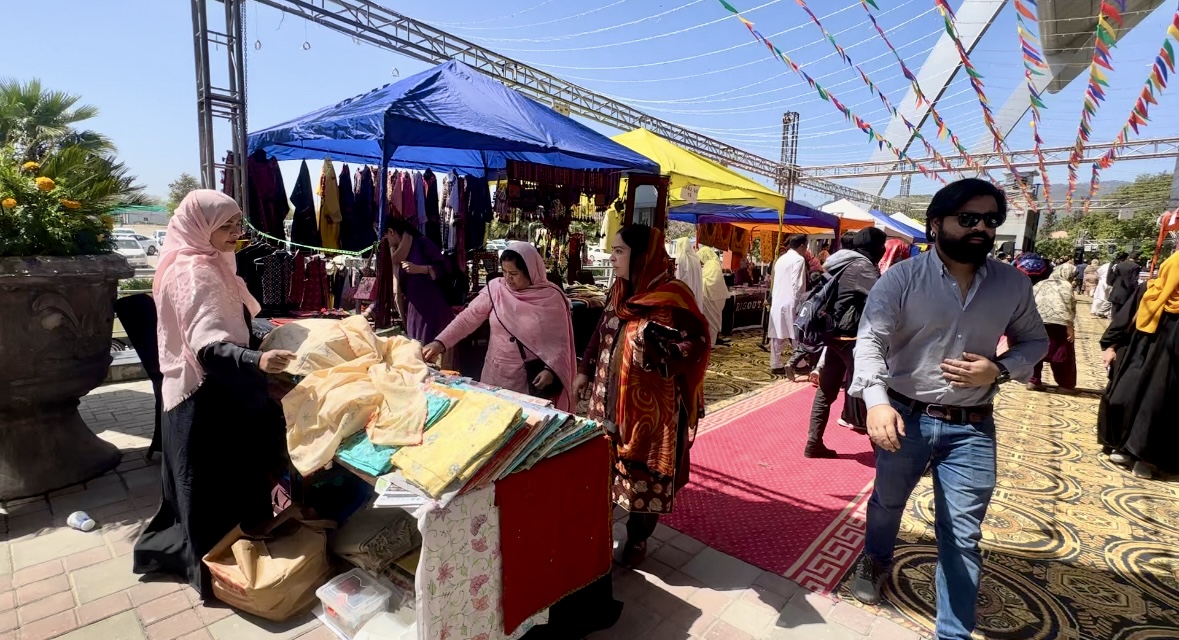


Women entrepreneurs from across Pakistan showcase their handmade products at the three-day women Ramadan bazaar in Islamabad, Pakistan on April 1, 2024. (AN Photo)

Rubab Ghazanfar, an entrepreneur from the Dera Ghazi Khan district who was selling a range of semi-stitched, unstitched and stitched garments, said all her clothes were handmade. 

“These events are much appreciated for the opportunity they provide us,” she told Arab News. “In this holy month of Ramadan, may Allah grant us all success here.”

Ayesha Ikhlas from Rawalpindi said she was excited about the opportunity to exhibit her new clothing and cosmetics line right outside a major mall in Islamabad.

“It is a good opportunity for those who have just launched new businesses, they can start their business in a good way here,” she told Arab News.
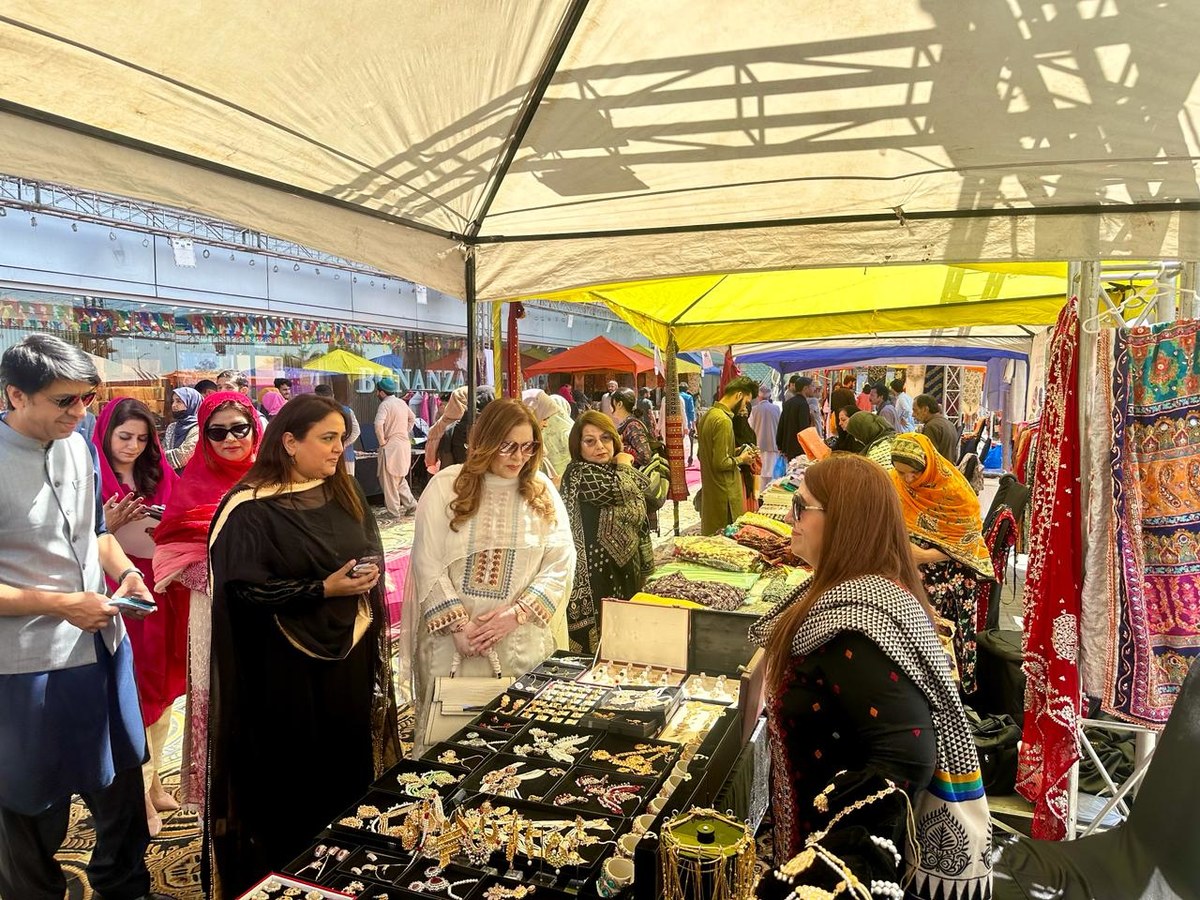


Women entrepreneurs from across Pakistan showcase their handmade products at the three-day women Ramadan bazaar in Islamabad, Pakistan on April 1, 2024. (AN Photo)

Sadia Hashmi, a visitor, said all handmade items at the bazaar were “very lovely,” especially the jewelry, and being sold at reasonable prices. 

“I am standing at a stall that has jewelry which is designed by the woman herself,” she said. “It is beautifully designed and I like it very much.”


Pakistan reviews austerity measures amid Middle East crisis, urges strict nationwide implementation

Updated 11 March 2026
Follow

Pakistan reviews austerity measures amid Middle East crisis, urges strict nationwide implementation

  • Deputy Prime Minister Ishaq Dar chairs review meeting of austerity steps
  • Officials briefed on salary cuts, school closures, four‑day week, petrol conservation

ISLAMABAD: Pakistan’s government on Wednesday assessed progress on a sweeping set of austerity measures introduced to mitigate the country’s economic strain from sharply rising global oil prices and supply disruptions linked to the ongoing war in the Middle East.

Prime Minister Shehbaz Sharif this week announced a series of austerity steps, including a four‑day work week for government offices, requiring 50  percent of staff to work from home, cutting fuel allowances for official vehicles by half, grounding up to 60  percent of the government fleet and closing all schools for two weeks to conserve fuel amid the global oil crisis.

The measures were unveiled in response to global oil market volatility triggered by the conflict involving the United States, Israel and Iran, which has disrupted supply routes such as the Strait of Hormuz and pushed crude prices sharply higher, straining Pakistan’s heavily import‑dependent energy sector.

“The meeting stressed the importance of strict and transparent adherence to the austerity measures, promoting fiscal responsibility and prudent use of public resources,” Deputy Prime Minister and Foreign Minister Senator Mohammad Ishaq Dar said in a statement.

He was chairing a meeting of the Committee for Monitoring and Implementation of Conservation and Additional Austerity Measures, constituted under the directions of the PM, bringing together federal and provincial officials to review execution of the broad cost‑cutting plan. 

Dar emphasized the government’s commitment to enforcing the PM’s austerity steps nationwide. The committee’s review also covered reductions in departmental expenditure, deductions from salaries of senior officials earning over Rs. 300,000 ($1,120), and coordination with provincial administrations to ensure uniform implementation of the plan.

Participants at the meeting reiterated that all ministries and divisions must continue strict monitoring and reporting, with transparent oversight mechanisms, as Pakistan navigates the economic pressures from the prolonged Middle East crisis and its fallout on global energy and trade markets.