
CAIRO: Startups across the Middle East and North Africa region are increasingly collaborating through strategic partnerships to enhance the entrepreneurial ecosystem.
Ventures from various industries are forging alliances, and signing agreements to bolster expansion, penetrate new markets, and enhance customer satisfaction initiatives.
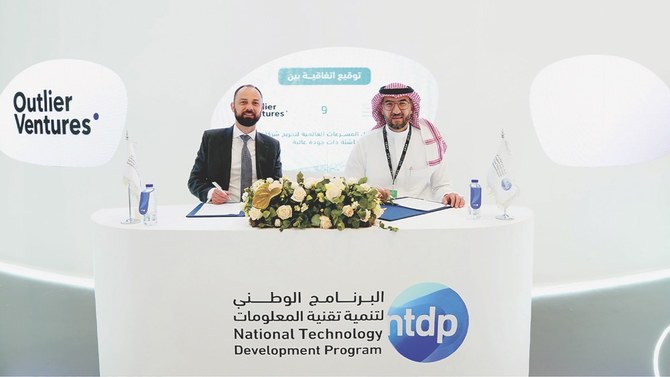
At the forefront of these strategic partnerships, the Kingdom’s National Technology Development Program has joined forces with Outlier Ventures, a prominent global Web3 accelerator, to bolster the technology sector in Saudi Arabia.
Under the memorandum of understanding, the Base Camp Web3 accelerator program aims to support and cultivate the growth of promising Web3 startups in the Kingdom.
Participating startups will benefit from Outlier Ventures’ expertise, receiving guidance on product development, entity structuring, and token design from a team of in-house experts.
Additionally, these startups will gain invaluable insights and networking opportunities through direct interactions with leading mentors and investors in the Web3 domain.
“Under Vision 2030, the rapid pace of change and development is visible across all sectors of the economy. The achievements are testimony to the level of dedication and focus driving the Kingdom forward. Our strategic collaboration underscores our joint dedication to nurturing technological progress,” said Stephan Apel, CEO and founding partner of Outlier Ventures.
This collaboration marks the introduction of the first deep tech Web3 accelerator program in Riyadh, slated to begin later in 2024.
The initiative aligns with Saudi Vision 2030 and Outlier Venture’s commitment to nurturing global entrepreneurial talent, specifically targeting the burgeoning Web3 ecosystem within the Kingdom.

Mohsin Ali, CEO of Inbox Business Technologies. (Supplied)
Inbox Business partners with AstroLabs for expansion in KSA
Pakistan’s Inbox Business Technologies sealed a partnership with business facilitator AstroLabs to support the former in entering the Saudi market.
Inbox Business Technologies, under the ownership of the Dawood Group, is renowned for its extensive experience in delivering transformative innovation across various technology domains in Pakistan. With a workforce exceeding 1,800 professionals, Inbox is well-equipped to offer services in business applications, enterprise-managed services, cloud migration, digital security, and cybersecurity.
The collaboration with AstroLabs will establish Inbox Business Arabia, the company’s Saudi branch, to capitalize on the burgeoning digital sector, enabling a timely and strategic market expansion in the Kingdom.
“Inbox Technologies Arabia is actively expanding its operations within Saudi Arabia, with several key projects currently in progress,” said Mohsin Ali, CEO of Inbox Business Technologies.
“Among these initiatives is the development of a content management database specifically for a multinational corporation based in Jeddah. Additionally, we’re playing a crucial role in delivering IT services and overseeing strategic programs for the nation’s foremost IT enterprise, along with a company owned by the Public Investment Fund,” he added.

Archie Rudyuk, CEO and co-founder of Takefluence. (Supplied)
True Gamers partners with Takefluence to introduce ambassador program
True Gamers and Takefluence have partnered to unveil an ambassador program dedicated to the gaming community.
This innovative initiative aims to empower gaming enthusiasts and content creators, providing them with a platform to express their creativity, engage with broader audiences, and convert their gaming passion into tangible opportunities.
“This partnership reflects a shared vision for the future of Gaming, eSport and content creation in the region, highlighting the synergies between technological innovation and community engagement,” said Archie Rudyuk, CEO and co-founder of Takefluence.
True Gamers is a UAE-based esports gaming cafe network with 150 outlets globally.
Takefluence is a platform that automates the onboarding, reporting and payouts for brands looking to launch their ambassador and creator campaigns, engage audience, and leverage influencers and user-generated content.
“By combining our resources and expertise, we are not just offering a platform for gamers and creators but also setting the stage for the next generation of gaming content. This initiative is about recognizing and amplifying the talents within our community, ensuring that the Middle East becomes a main hub of innovation and creativity in the global gaming scene,” said Vlad Belyanin, co-founder of True Gamers.
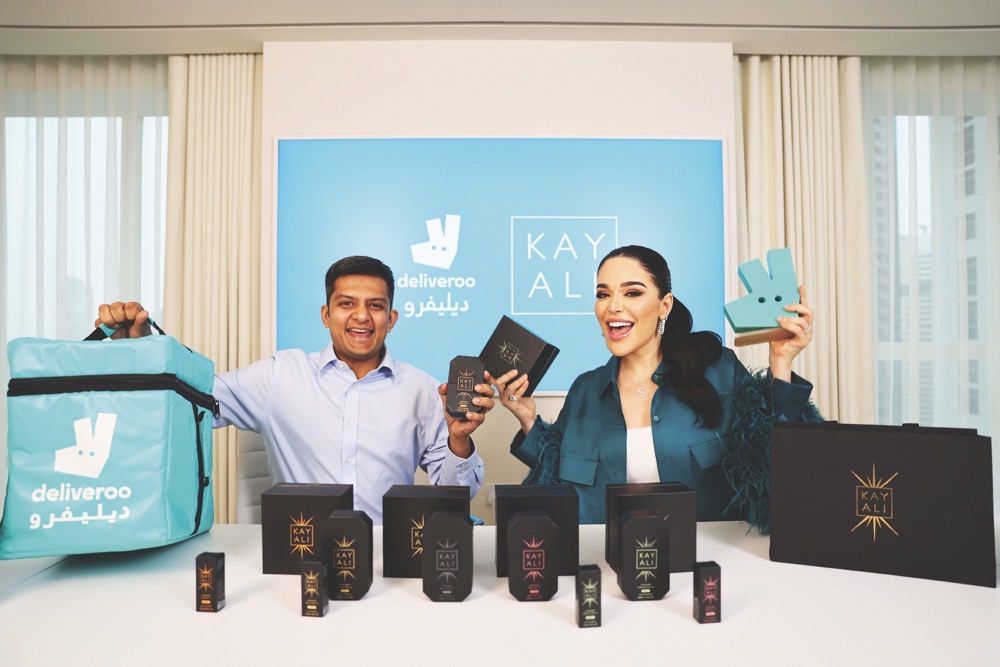
Deliveroo underscores its position as a trusted platform for brands and a provider of unique value to its customers across the UAE. (Supplied)
Deliveroo UAE teams up with Kayali to offer luxury fragrances
Deliveroo UAE has forged a partnership with Kayali, the prestigious perfume brand created by beauty entrepreneur Mona Kattan. This collaboration marks a significant development in on-demand shopping, with Deliveroo being the exclusive aggregator to feature Kayali’s luxury fragrances on its new shopping vertical.
This move expands Deliveroo’s range of offerings and showcases its commitment to providing customers with convenient and premium shopping experiences.
Through this partnership, Deliveroo underscores its position as a trusted platform for brands and a provider of unique value to its customers across the UAE.
MBC Group acquires significant stake in Anghami
Saudi Arabian media giant MBC Group, via its MBC Ventures division, has acquired over 4 million ordinary shares in the Nasdaq-listed music streaming service Anghami.
This purchase secures MBC Group a 13.7 percent ownership in Anghami and raises its stake’s value to $6.48 million from $4.074 million.
The acquisition also coincided with a substantial 59 percent increase in Anghami’s share price on March 20, which soared to $1.59 from $1 the previous day.
SPEEDREAD
• Pakistan’s Inbox Business Technologies sealed a partnership with business facilitator AstroLabs to support the former in entering the Saudi market.
• True Gamers and Takefluence have partnered to unveil an ambassador program dedicated to the gaming community. This initiative aims to empower gaming enthusiasts and content creators.
• Deliveroo UAE has forged a partnership with Kayali, the prestigious perfume brand created by beauty entrepreneur Mona Kattan. This collaboration marks a significant development in on-demand shopping.
Ahlan App secures $3m in funding
Bahrain’s Ahlan App, a loyalty program and delivery service, has secured a $3 million investment at a $15 million valuation in a round led by Hope Ventures, with contributions from Al Rajhi Holdings and other angel investors.
Founded in 2021 by Faisal Rashed, Ahlan rewards users with cashback for dining in, picking up, or home delivery services.
This fresh influx of capital is earmarked for increasing Ahlan’s market presence, emphasizing its commitment to enhancing customer loyalty and expanding its services.
Egypt’s Sprints.ai raises $3m
Sprints.ai, an Egypt-based edtech firm, has raised $3 million in a bridge round led by Disruptech Ventures, with contributions from EdVentures and Challenge Fund for Youth Employment, among others.
Founded by Ayman Bazaraa and Bassam Sharkawy in 2020, Sprints.ai is addressing the tech talent shortage in the Middle East and Africa region by offering a guaranteed hiring program to prepare qualified candidates for the job market.
This new funding will support Sprints.ai’s ambitious plan to penetrate 10 new markets, reinforcing its mission to bridge the educational gap in technology sectors across the region.