

Foreign direct investment inflows to Saudi Arabia hit $5.17bn

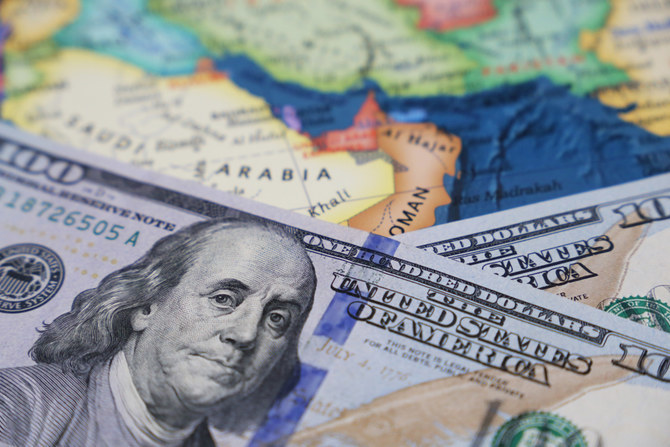
Foreign direct investment inflows to Saudi Arabia rose 17 percent in the fourth quarter of 2023 compared to the previous period, according to recent data by GASTAT. Shutterstock
Short Url
Updated 28 March 2024
Follow

Foreign direct investment inflows to Saudi Arabia hit $5.17bn

RIYADH: Foreign direct investment inflows to Saudi Arabia rose 17 percent in the fourth quarter of 2023 compared to the previous period, according to recent data. 

The analysis, released by the General Authority of Statistics, utilizes an updated approach characterized by heightened transparency and governance standards. FDI inflows were shown to have reached SR19.38 billion ($5.17 billion), up from SR16.6 billion in the third quarter.

FDI outflows, representing the Kingdom’s investments in foreign countries, also increased by around 17 percent to SR6.19 billion during this period. Consequently, the net inflow, reflecting the difference between the two, reached SR13.187 billion.

The updated methodology for calculating FDIs aligns with international standards and was developed to enhance accuracy and comprehensiveness through collaborative efforts by the Ministry of Investment, the General Authority for Statistics, and the Saudi Central Bank, in conjunction with the International Monetary Fund.

The new methodology reflects the Kingdom’s commitment to enhancing investment promotion and transparency, aiming to create an attractive global financial environment.

This effort includes initiatives such as the National Investment Strategy, the Regional Headquarters Program, and zero-income tax incentives for foreign companies. These measures are seen as essential for advancing Vision 2030, which aims to expand and diversify Saudi Arabia’s economy.

In 2023, the Kingdom saw a 12 percent increase in FDI inflows, reaching SR72.28 billion compared to SR64.6 billion in 2022. This excludes a major SR58.1 billion deal with Aramco in 2022, where a consortium led by BlackRock Real Assets and Hassana Investment Co. acquired a 49 percent stake in a new gas pipeline subsidiary.

Saudi Arabia’s regional headquarters program has attracted multinational corporations like Google, Microsoft, and Amazon to establish operations in the Kingdom. Additionally, companies such as Northern Trust, Bechtel, and Pepsico from the US, as well as IHG Hotels & Resorts, PwC, and Deloitte from the UK, have joined this initiative.

These moves enable these companies to participate in government contracts, energize Saudi Arabia’s hospitality sector, and establish it as a global business hub.

Looking ahead, the Kingdom aims to achieve an FDI inflow target of SR388 billion by 2030, equivalent to 5.7 percent of gross domestic product, while positioning itself among the 15 largest economies in the world.


Qatar, Brookfield launch $20bn AI infrastructure venture 

Updated 10 sec ago
Follow

Qatar, Brookfield launch $20bn AI infrastructure venture 

JEDDAH: Qatar has partnered with Canada’s Brookfield to establish a $20 billion joint venture aimed at building advanced artificial intelligence infrastructure and positioning the Gulf state as a regional hub for next-generation computing. 

The venture, involving Qai — a subsidiary of Qatar Investment Authority — will invest in domestic and select international markets, the companies said in a statement. 

Under the partnership, the companies will provide capital and operational expertise to develop AI infrastructure in Qatar, including fully integrated AI facilities, supporting the country’s rapidly growing digital and AI ecosystem. 

Qatar has been steadily developing its AI ecosystem as part of its broader digital transformation and economic diversification strategy under the Qatar National Vision 2030. 

In February 2024, the country launched its Digital Agenda 2030 to position itself as a regional hub for AI and advanced digital technologies, creating an enabling environment for large-scale projects, research, and strategic investment. 

Mohammed Saif Al-Sowaidi, CEO of QIA, said: “QIA has been at the forefront of driving advancement though our AI investments. This joint venture is testament to QIA’s commitment to delivering both local and global impact.” 

He added: “Leveraging on the long-term partnership we have with Brookfield, this JV will advance Qatar’s National Vision 2030 and help build a diversified, innovation-based economy for future generations.” 

Among the plans is an Integrated Compute Center which will widen regional access to high-performance computing and support the rollout of trusted AI technologies across key sectors.

 Brookfield plans to invest through its recently launched Artificial Intelligence Infrastructure Fund, with the Qai partnership forming a key part of a broader global AI infrastructure program that aims to mobilize up to $100 billion worldwide. 

“We are thrilled to assist Qatar in establishing this investment in next generation AI and digital infrastructure alongside Qai. As our inaugural AI infrastructure investment in the Middle East, this partnership combines Qatar’s strategic vision with Brookfield’s global expertise in developing and operating large-scale, mission-critical infrastructure with global partners,” said Bruce Flatt, CEO of Brookfield. 

He added: “Together, we look forward to building an integrated AI ecosystem that will accelerate innovation, deepen regional capability, and support the responsible deployment of advanced AI technologies across the Middle East.” 

Abdulla Al-Misnad, chairman of Qai, said the partnership with Brookfield represents a key milestone in Qatar’s journey to develop world-class AI infrastructure and capabilities. 

“By leveraging Brookfield’s expertise in developing and managing critical infrastructure alongside Qais’ mission to deliver trusted AI solutions, we are creating a robust platform to drive responsible AI adoption,” he added. 

Al-Misnad further emphasized that the collaboration would attract investment and top-tier talent while reinforcing Qatar’s position as a trusted hub for advanced digital technologies regionally and globally.