

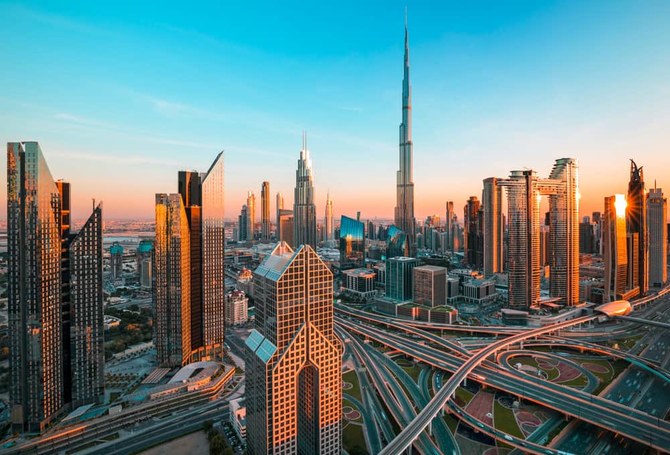
Dubai sees 550% annual rise in global SMEs attracted to the emirate

The emirate’s international chamber has revealed 104 SMEs were attracted to Dubai in the 12 months to the end of December, a development that underlines its ambitions to double the size of the emirate’s economy and consolidate its position among the top three global cities.
Short Url
Updated 01 October 2024
Follow

Dubai sees 550% annual rise in global SMEs attracted to the emirate

RIYADH: Asian and Australian businesses helped fuel a 550 percent annual rise in small and medium enterprises setting up in Dubai in 2023, according to a report.

The emirate’s international chamber has revealed 104 SMEs were attracted to Dubai in the 12 months to the end of December, a development that underlines its ambitions to double the size of the emirate’s economy and consolidate its position among the top three global cities.

According to a statement, 32 percent of the firms shifting to the emirate were from the Middle East and Eurasia, followed by Asian and Australian SMEs at 29 percent.

Latin America and Europe accounted for 26 percent of companies, while 13 percent attracted were from Africa.

The top sector for these SMEs was trade and logistics at 17 percent, followed by IT at 13 percent, and food and agricultural firms third with 10 percent.

Mohammad Ali Rashed Lootah, president and CEO of Dubai Chambers, attributed the rise to the emirate’s business-friendly environment, the ongoing development of services together with favorable legislation, and the diverse range of investment opportunities available.

He added: “Our network of international representative offices in key global markets has effectively promoted Dubai’s business community and highlighted the emirate’s value for companies seeking global expansion.

“We remain dedicated to contributing to the objectives of the Dubai Economic Agenda, with a primary focus on attracting foreign direct investments in both traditional and emerging sectors.”

The growth in SMEs from across the globe moving to Dubai sits alongside a goal from the emirate’s leadership to see home-grown small businesses expand overseas.

The total number of representative offices across the world operated by the Dubai International Chamber increased by 16 in 2023 and now stands at 31.

This expansion received additional fuel in January when Dubai’s Crown Prince Sheikh Hamdan bin Mohammed announced a 500 million dirham ($136.16 million) plan to help SMEs tap into global markets.

The initiative was launched in conjunction with Emirates NBD, Dubai’s biggest lender by market value, and will see the bank provide financing to companies at competitive rates.

According to a release at the time, the SME sector accounts for 60 percent of the workforce in the emirate.


Maersk latest shipping firm to halt Gulf cargo bookings as Iran conflict pushes up insurance costs 

Updated 15 sec ago
Follow

Maersk latest shipping firm to halt Gulf cargo bookings as Iran conflict pushes up insurance costs 

JEDDAH: Danish shipping giant Maersk has suspended cargo bookings to and from several Gulf markets in light of the war in Iran, becoming the latest logistics company to reassess its operations in the region.

The firm has halted new business related to the UAE, Kuwait, and Qatar, as well as Iraq, Bahrain, parts of Saudi Arabia and most ports in Oman “until further notice” after a fresh risk assessment.  

In a statement, Maersk added that “exceptions will be made for critical foodstuff, medicine and other essential goods,” and the measure does not apply to Jordan and Lebanon. Two of its vessels are currently in the Gulf.

This comes as Iran’s Revolutionary Guards said on March 5 that passage through the critical transit passage of the Strait of Hormuz would remain under Iranian control during wartime and claimed a US tanker had been hit in the northern Gulf, though there was no immediate independent confirmation of the incident. 

The strait is a critical transit route for roughly 20 percent of global crude oil shipments and significant volumes of liquefied natural gas. 

Khaled Ramadan, an economist and head of the International Center for Strategic Studies in Cairo, said oil and gas transit through Hormuz could fall by as much as 80 percent if tensions intensify, driving up prices and creating shortages. 

“This crisis will also hamper global trade by escalating freight and insurance costs, forcing vessel rerouting, and causing widespread supply chain delays, particularly for oil-dependent economies,” he told Arab News. 

Hapag-Lloyd said on March 5 it would implement contingency procedures for cargo already in transit to and from the Upper Gulf after suspending all shipments to and from the area. 

The company said vessels may be diverted to contingency ports or held in safe waters for shipments linked to the UAE, Saudi Arabia, and Kuwait, as well as Qatar, Bahrain, Iraq, Oman and Yemen. 

Chinese shipping line COSCO Shipping has halted new container bookings to multiple Gulf ports following traffic restrictions in the Strait of Hormuz, while Mediterranean Shipping Co. has announced the end of a voyage. 

In a statement on March 3, MSC said: “In light of the ongoing situation in the Middle East, MSC regrets to inform you that it is compelled to declare an End of Voyage for all shipments currently under MSC’s custody and care, whether located ashore or at sea, and destined for ports in the Arabian Gulf.” 

It added that all shipments already en route will be diverted to the nearest safe port, with a mandatory $800 surcharge per container to cover deviation costs. 

MSC later said Gulf-bound cargo would be offloaded at the closest safe seaport amid ongoing hostilities following US and Israeli attacks on Iran. 

CMA CGM has also introduced emergency measures for Gulf-bound vessels, prioritizing the safety of crews, ships, and cargo. 

APM Terminals Bahrain declared force majeure at Khalifa Bin Salman Port, saying regional security conditions were disrupting port operations and that the duration of the disruption remained uncertain. 

Insurance providers have also reduced Gulf exposure. Reuters reported that Angus Blayney of Gallagher said London insurers were still offering cover, but at sharply higher premiums depending on cargo, vessel type and route. 

Separately, the agency reported that insurance broker Marsh McLennan said it had met US officials to explore ways to restore maritime trade as escalating fighting threatens energy shipments through the Strait of Hormuz.