

Pakistan to hire consultants next month to digitize tax collection body — PM

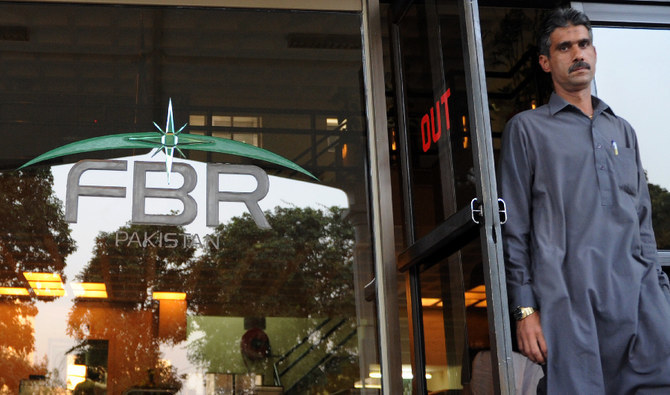
A Pakistani pedestrian leaves the entrance of the headquarters of the Federal Board of Revenue (FBR) in Islamabad on November 14, 2012. (AFP/File)
Short Url
Updated 26 March 2024
Follow

Pakistan to hire consultants next month to digitize tax collection body — PM

  • Pakistan is currently making efforts to introduce economic reforms under an IMF program that helped it avert a default last year
  • The South Asian country has to meet a primary budget deficit target of $1.44 billion, or 0.4 percent of the GDP, for the current fiscal year

ISLAMABAD: Prime Minister Shehbaz Sharif said on Tuesday that his country would be digitizing its tax collection body, the Federal Board of Revenue, and hire consultants next month for this purpose, Pakistani state media reported, amid a push for economic reforms in the South Asian nation.

Pakistan, which has been facing an economic meltdown, is making efforts to introduce structural reforms under a $3 billion International Monetary Fund (IMF) program that helped it avert a sovereign default last year.

The South Asian country has to meet a primary budget deficit target of Rs401 billion ($1.44 billion), or 0.4 percent of gross domestic product, for the current fiscal year before the government presents its budget in June.

In Dec., the FBR said Pakistan had a “very narrow tax base” of around 5.2 million people in 2022, out of a population of 240 million people and it had planned to add 1.5 million new taxpayers to the existing base during the current fiscal year.

“The FBR will be totally restructured,” Sharif was quoted as saying by the state-run Radio Pakistan broadcaster. “Consultants will be hired next month for complete digitalization of the tax collection body.”

The comments came during the prime minister’s address with attendees at a Tax Excellence Awards ceremony in the federal capital.

Sharif said his government was compelled to enter a new IMF program for the sake of stability, but along with the program, it would focus on fostering growth, creating job opportunities and addressing the issue of inflation. 

“We will have to enhance the tax base,” he added.

Amid negotiations with an IMF team for the final review of the existing $3 billion program last week, an official of the finance ministry told Arab News Pakistan had been lagging on two fronts that were digitization of the taxation and bringing new taxpayers into the net.

“The IMF wants us to continue the economic stabilization and reforms agenda till negotiation of the new loan program,” the official said.

In his remarks at the Tax Excellence Awards ceremony, Finance Minister Muhammad Aurangzeb said the digitization of the FBR was aimed at ensuring transparency and increasing revenue collection.

This would also restore the trust and confidence of the people in the tax collection body, he added.


Pakistan reviews austerity measures amid Middle East crisis, urges strict nationwide implementation

Updated 11 March 2026
Follow

Pakistan reviews austerity measures amid Middle East crisis, urges strict nationwide implementation

  • Deputy Prime Minister Ishaq Dar chairs review meeting of austerity steps
  • Officials briefed on salary cuts, school closures, four‑day week, petrol conservation

ISLAMABAD: Pakistan’s government on Wednesday assessed progress on a sweeping set of austerity measures introduced to mitigate the country’s economic strain from sharply rising global oil prices and supply disruptions linked to the ongoing war in the Middle East.

Prime Minister Shehbaz Sharif this week announced a series of austerity steps, including a four‑day work week for government offices, requiring 50  percent of staff to work from home, cutting fuel allowances for official vehicles by half, grounding up to 60  percent of the government fleet and closing all schools for two weeks to conserve fuel amid the global oil crisis.

The measures were unveiled in response to global oil market volatility triggered by the conflict involving the United States, Israel and Iran, which has disrupted supply routes such as the Strait of Hormuz and pushed crude prices sharply higher, straining Pakistan’s heavily import‑dependent energy sector.

“The meeting stressed the importance of strict and transparent adherence to the austerity measures, promoting fiscal responsibility and prudent use of public resources,” Deputy Prime Minister and Foreign Minister Senator Mohammad Ishaq Dar said in a statement.

He was chairing a meeting of the Committee for Monitoring and Implementation of Conservation and Additional Austerity Measures, constituted under the directions of the PM, bringing together federal and provincial officials to review execution of the broad cost‑cutting plan. 

Dar emphasized the government’s commitment to enforcing the PM’s austerity steps nationwide. The committee’s review also covered reductions in departmental expenditure, deductions from salaries of senior officials earning over Rs. 300,000 ($1,120), and coordination with provincial administrations to ensure uniform implementation of the plan.

Participants at the meeting reiterated that all ministries and divisions must continue strict monitoring and reporting, with transparent oversight mechanisms, as Pakistan navigates the economic pressures from the prolonged Middle East crisis and its fallout on global energy and trade markets.