


PESHAWAR: A delegation from the Pakistani commerce ministry arrived in Kabul on Monday to discuss matters relating to bilateral trade between Pakistan and Afghanistan, a week after Islamabad carried out two airstrikes against suspected militants it says were harboring inside Afghan territory.
The neighboring countries have traded blame in recent months over who is responsible for a recent spate of militant attacks in Pakistan. Islamabad says the attacks are launched mostly by members of the Tehrik-e Taliban Pakistan (TTP) who operate from safe havens in Afghanistan. Kabul’s ruling Taliban deny this and blame Islamabad for not being able to handle its own security challenges.
Tensions have also worsened as Islamabad began expelling more than a million undocumented foreigners, mostly Afghans, from Nov. 1 last year, amid the row over accusations that Kabul harbored Pakistani militants.
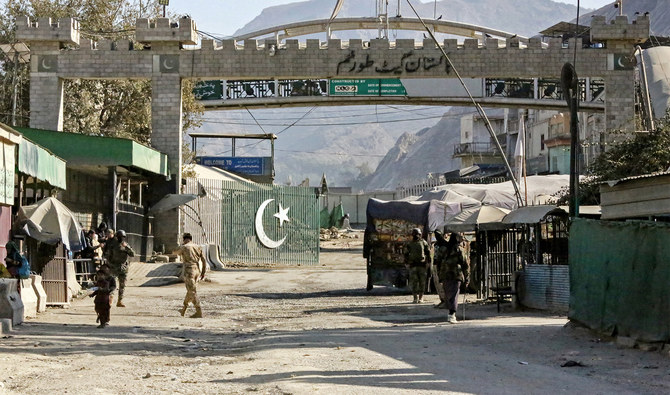
The diplomatic tensions over the last few months have also led to economic losses as key border crossing for trade and travel have been intermittently closed, hitting trade-dependent communities and industries.
“Mohammad Khurram Agha, Deputy Minister of Trade of the Islamic Republic of Pakistan, at the head of a high-ranking delegation of that country, arrived in Kabul at the official invitation of the Ministry of Industry and Trade Afghanistan,” the Afghan commerce ministry said on X.
“The purpose of this trip is to continue the dialogue on strengthening and expanding trade and transit relations between the two countries.”
However, formal discussions between Pakistan and Afghanistan trade and commerce officials will start on Tuesday, Afghan commerce ministry spokesperson Akhundzada Abdul Salam Jawad told Arab News.
On Sunday, Mumtaz Zahra Baloch, a spokesperson for the Pakistani foreign office, said Commerce Secretary Khurrum Agha would undertake a two-day visit to Afghanistan on March 25 to discuss trade-related matters.
“Pakistan remains committed to promoting trade and people-to-people ties with Afghanistan,” she added.
Last week, Hajji Usman, a member of the Nangarhar Chamber of Commerce and Industry, said security issues between the two countries were impeding the smooth flow of trade.
“I don’t think bilateral trade can move forward in the current state of affairs,” he told Arab News. “First, both countries need to restore confidence and pave ground for boosting trade.”
“BUREAUCRATIC HURDLES”
Muhammad Zubair Motiwala, chief executive officer of the Trade Development Authority of Pakistan (TDAP), the country’s export promotion arm, told Arab News the delegation would visit Kabul “for confidence-building measures to foster trust and ensure smooth trade flow between the two neighbors.”
“Both countries need to revisit their policies to simplify trade, ease restrictions and simplify transit at the border points,” Motiwala added.
Speaking to Arab News earlier, Jawad, the Afghan commerce ministry spokesperson, accused Islamabad of complicating bilateral trade issues.
“Talks will focus on unnecessary delay in movement of goods’ trucks, red tapism in preparing documents for transit of heavy containers and Islamabad’s latest tightening of rules for Afghan truckers to get Pakistani visas,” Jawad said.
A year ago, Jawad said, almost 1,500 to 2,000 trucks from Pakistan entered Afghanistan on a daily basis, but “undue restrictions by Pakistan’s border and trade authorities have made business nearly impossible by introducing new rules,” bringing down the number of Pakistani trucks to about 700.
Meanwhile, Afghanistan’s business with Iran through the Chabahar Port had witnessed a boost due to the trade complications with Pakistan, Jawad added.
“We will discuss with Pakistani side either bureaucratic or infrastructural hurdles for trade and businesses at the border points with impediments and massive congestion, often closure and reopening of crossing points for trade, low scanning capacity, hurdles in trade movement such as transportation of perishable goods, which often result in massive financial losses to our businessmen,” he said.


