



ISLAMABAD: Pakistan’s premier arts council, dedicated to promoting and preserving the nation’s cultural heritage, has set up a Ramadan exhibition showcasing Qur’anic calligraphy by leading artists, attracting art enthusiasts and the general public who believe the initiative will boost interest in the traditional art form.
The Pakistan National Council of the Arts (PNCA) was established in 1973 and periodically organizes various cultural events, exhibitions, workshops and performances to highlight Pakistani art and culture both nationally and internationally.
Its decision to hold the ongoing exhibition coincides with the Muslim fasting month of Ramadan since calligraphy holds a profound significance in Islamic art since it also serves as a means of spiritual devotion and communication.
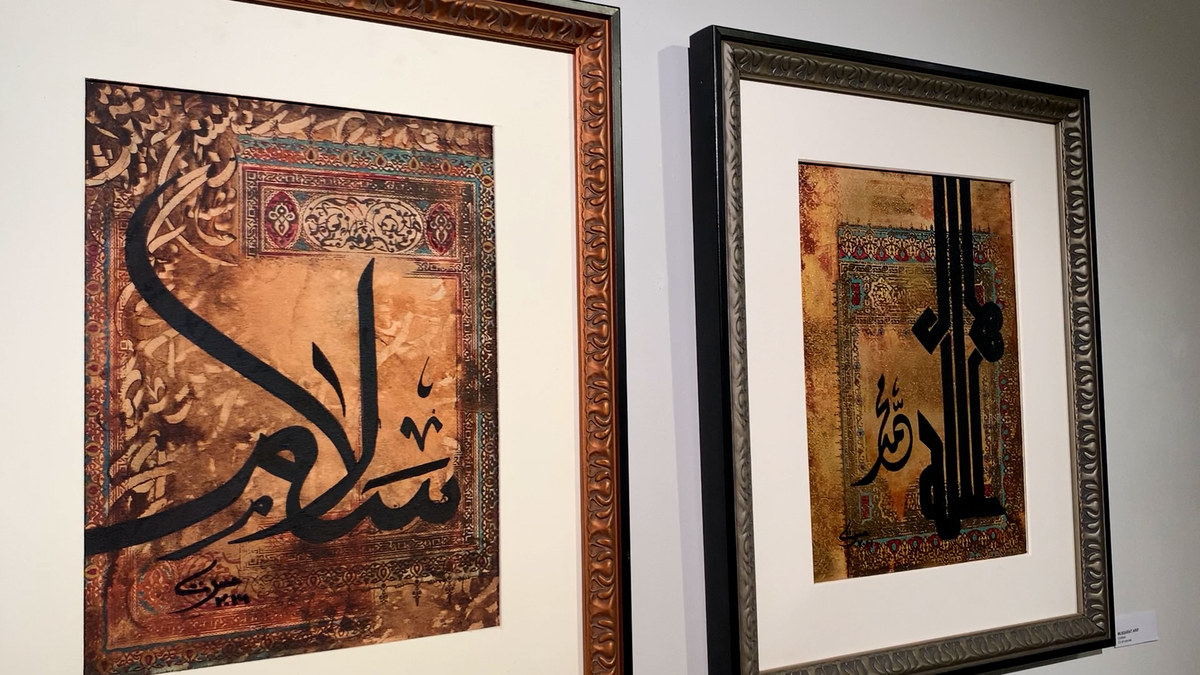
The photos shows paintings exhibited at Ramadan exhibition showcasing Qur’anic calligraphy by leading artists at the Pakistan National Council of the Arts in Islamabad, Pakistan on March 20, 2024. (AN Photo)
The art form dates back to the early days of Islam when the holy Qur’an was revealed. The intricate and ornate scripts used to transcribe the Islamic scripture became a central focus of artistic expression, embodying the beauty and reverence of religious teachings.
“This is the permanent collection of PNCA that is displayed here today and many people are visiting it,” Noshaba Naz, a designer at the council, told Arab News. “We have the work of many senior artists such as Sadequain, Aslam Kamal, Ustad Elahi Bux, Nasir Khan Seemab, Rasheed Butt and Guljee.”
“These are the people who have made a name for themselves through the art of calligraphy,” she added. “Not only in Pakistan but in the whole world, I think, these people are known for their calligraphy work.”
The exhibition has also attracted schools and other education institutions where teachers want their students to develop interest in calligraphy.
“Being a Muslim, our foundation is Islam, our foundation is Qur’an, and when you see Qur’an in different scripts such as Sulus or Kufic manuscript, so when you see it written in the best way possible, then it will create more interest [in young people] to read it, to see it, to open it,” Sehrish Jabeen, who works with the Unity International School and had brought a group of students with her to the gallery, told Arab News. “So this is why calligraphy exhibitions must be held.”
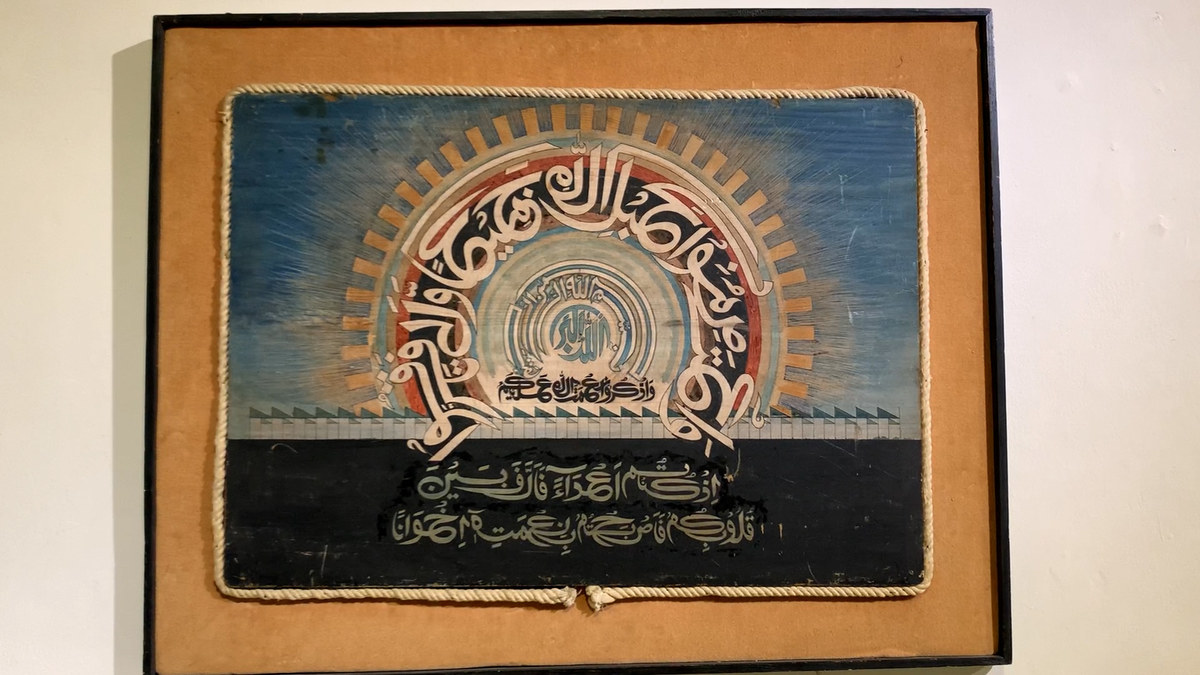
The photo shows a painting exhibited at Ramadan exhibition showcasing Qur’anic calligraphy by leading artists at the Pakistan National Council of the Arts in Islamabad, Pakistan on March 20, 2024. (AN Photo)
The event has more than 25 pieces on display, showcasing a range of mediums and techniques.
It has also attracted professional artists who have been in the field for many decades.
“After coming here, the biggest peace we feel is seeing the work of our teachers, such as behind me the work of Sajid Rasheed sahib is displayed,” Shakeel Tabassum, who has been a calligrapher for about 15 years, said. “He held my hand and taught me how to walk. He taught me calligraphy. He taught me the Kufi manuscript.”
He lamented a general lack of interest in calligraphy in Pakistan, saying the presence of school children at the event could change that.
The development of calligraphy in the Muslim world was strongly tied to the Qur’an, though it is not limited strictly to religious subjects and played an important role in Persian and Mughal maniatures as well.
The PNCA exhibition will remain open to public throughout Ramadan, though the gallery will be closed on Friday and Saturday.


