KSrelief concludes medical camps in Sindh, aiding Pakistan’s fight against blindness, eye diseases

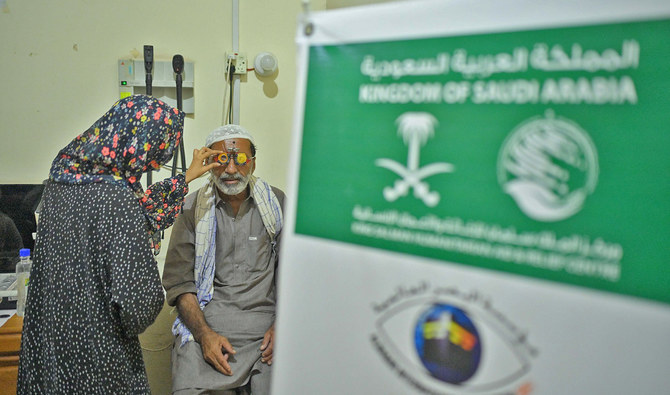
The picture shared by March 19, 2024 by King Salman Humanitarian Aid and Relief Center (KSrelief) shows a female doctor examining a patient in a medical camp sponsered by King Salman Humanitarian Aid and Relief Center (KSrelief) in Pakistan's Sindh province. (KSrelief)
Short Url
Updated 19 March 2024
Follow

KSrelief concludes medical camps in Sindh, aiding Pakistan’s fight against blindness, eye diseases

  • The Saudi humanitarian organization periodically sets up such camps in Pakistan, providing free medical services to people
  • It successfully completed more than 23,356 medical examinations and over 1,656 surgeries throughout the program duration

ISLAMABAD: King Salman Humanitarian Aid and Relief Center (KSrelief) on Tuesday announced the successful conclusion of its sponsorship of four medical camps in Pakistan’s southern Sindh province, saying the initiative was part of its efforts to combat blindness and eye diseases in the South Asian country.

The camps, organized in collaboration with the Al-Basar International Foundation and Al-Ibrahim Eye Hospital Karachi, aimed to provide advanced eye care facilities to individuals who lack access to specialized treatment or face financial constraints.

KSrelief periodically sets up medical camps to provide free medical services in remote and underprivileged areas of Pakistan, offering treatments and surgeries to those in need.

The Saudi humanitarian organization has also contributed to the country’s health care sector by donating medicines, medical equipment and ambulances, and by supporting health projects that aim to improve the overall health conditions of the local population.

“The primary objective of this outreach program was to detect and address eye-related issues at an early stage, thereby combating blindness and improving the quality of life for thousands of individuals,” KSrelief said in a statement.

“Throughout the duration of the program, more than 23,356 medical examinations and over 1,656 surgeries were successfully completed,” it continues. “Additionally, 3,788 pairs of glasses for vision correction were distributed, alongside the medications prescribed by doctors.”

The initiative ensured that individuals not only received essential treatment but also had access to the necessary eyewear to enhance their visual capabilities.

The camps were held in the cities of Karachi, Matli, Kundairo and Shikarpur, allowing residents from these areas to benefit from specialized eye care services and regain their vision.

KSrelief said the campaign reflected the kingdom’s steadfast commitment to humanitarian causes and dedication to improving the lives of individuals affected by blindness.

It added that its teams had made a significant difference in the lives of thousands of patients through these medical camps, restoring their sight and providing hope for a brighter future.


Pakistan reviews austerity measures amid Middle East crisis, urges strict nationwide implementation

Updated 11 March 2026
Follow

Pakistan reviews austerity measures amid Middle East crisis, urges strict nationwide implementation

  • Deputy Prime Minister Ishaq Dar chairs review meeting of austerity steps
  • Officials briefed on salary cuts, school closures, four‑day week, petrol conservation

ISLAMABAD: Pakistan’s government on Wednesday assessed progress on a sweeping set of austerity measures introduced to mitigate the country’s economic strain from sharply rising global oil prices and supply disruptions linked to the ongoing war in the Middle East.

Prime Minister Shehbaz Sharif this week announced a series of austerity steps, including a four‑day work week for government offices, requiring 50  percent of staff to work from home, cutting fuel allowances for official vehicles by half, grounding up to 60  percent of the government fleet and closing all schools for two weeks to conserve fuel amid the global oil crisis.

The measures were unveiled in response to global oil market volatility triggered by the conflict involving the United States, Israel and Iran, which has disrupted supply routes such as the Strait of Hormuz and pushed crude prices sharply higher, straining Pakistan’s heavily import‑dependent energy sector.

“The meeting stressed the importance of strict and transparent adherence to the austerity measures, promoting fiscal responsibility and prudent use of public resources,” Deputy Prime Minister and Foreign Minister Senator Mohammad Ishaq Dar said in a statement.

He was chairing a meeting of the Committee for Monitoring and Implementation of Conservation and Additional Austerity Measures, constituted under the directions of the PM, bringing together federal and provincial officials to review execution of the broad cost‑cutting plan. 

Dar emphasized the government’s commitment to enforcing the PM’s austerity steps nationwide. The committee’s review also covered reductions in departmental expenditure, deductions from salaries of senior officials earning over Rs. 300,000 ($1,120), and coordination with provincial administrations to ensure uniform implementation of the plan.

Participants at the meeting reiterated that all ministries and divisions must continue strict monitoring and reporting, with transparent oversight mechanisms, as Pakistan navigates the economic pressures from the prolonged Middle East crisis and its fallout on global energy and trade markets.