

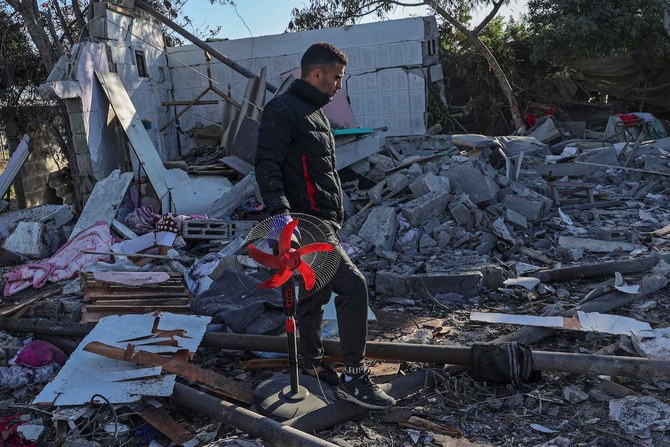

NEW YORK CITY: The secretary-general of the UN on Monday appealed for all sides involved in the conflicts in Gaza and Sudan to honor the spirit of the holy month of Ramadan by silencing their guns.
Antonio Guterres also called for the release of the Israeli hostages held by Hamas in Gaza and for all obstacles to the provision of aid to the people of the territory to be removed “at the speed and massive scale required.”
Speaking at the UN headquarters in New York, he said: “Today marks the start of the holy month of Ramadan, a period when Muslims around the world celebrate and spread the values of peace, reconciliation and solidarity.
“Yet even though Ramadan has begun, the killing, bombing and bloodshed continue in Gaza.”
The war in Gaza, now in its sixth month, began on Oct. 7 when Hamas militants attacked Israeli towns, killing about 1,200 people, according to the Israeli authorities.
The relentless Israeli military onslaught that followed has so far killed more than 31,000 Palestinians and injured more than 100,000. The bodies of several thousand additional victims are believed to be buried under the rubble of damaged and destroyed buildings.
Meanwhile the growing risk of famine threatens to add to the death toll in the besieged territory. More than 25 Palestinians have reportedly died of starvation so far, most of them children.
“The eyes of the world are watching,” said Guterres. “The eyes of history are watching. We cannot look away. We must act to avoid more preventable deaths.”
The killing of civilians and the destruction of buildings and infrastructure in Gaza are on a level unseen in the time since he became secretary-general, he added as he lamented the fact that life-saving humanitarian aid for Palestinians “is coming in trickles, if it comes at all.”
He said that “international humanitarian law lies in tatters,” and warned that a threatened Israeli incursion into Rafah, the last remaining refuge for more than 1.5 million displaced Palestinians, who are living in squalid conditions amid a “catastrophic” humanitarian crisis, could “plummet the people of Gaza into an even deeper circle of hell.”
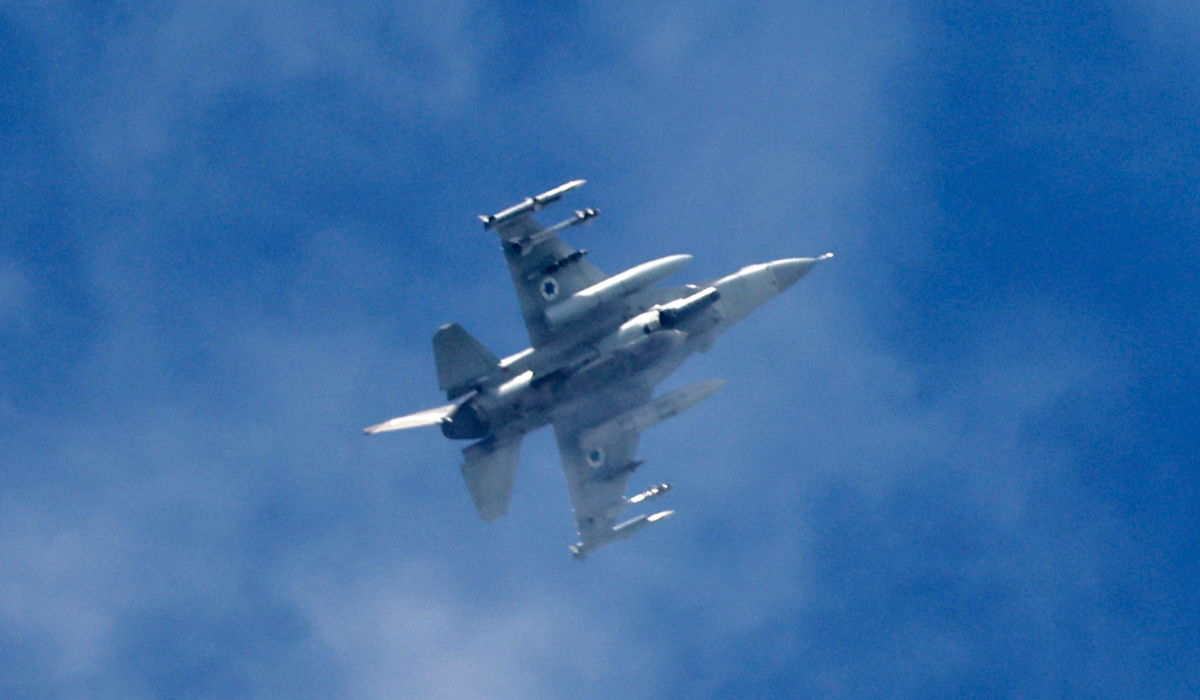
This picture taken from a position in northern Israel shows an Israeli Air Force fighter jet flying over the border area with south Lebanon on March 10, 2024, amid increasing cross-border tensions between Lebanon's Hezbollah and Israel as fighting continues with Hamas militants in the Gaza Strip. (AFP)
The most compelling calls for an immediate ceasefire and the release of hostages have come from the families of victims of the war, Guterres said, as he pleaded for their voices to heard and heeded.
“Israeli hostage families who shared their torment and anguish and pleaded for the immediate release of their loved ones,” he said. “And Palestinian families who shared heart-wrenching testimonies of family members killed in Israeli bombardments and pleaded for an immediate ceasefire.
“As one of those family members said: ‘We are not here for condolences. We are not here for apologies. We are here for immediate action.’”
Guterres also renewed his appeal for hostilities to cease in Sudan during Ramadan. Fighting broke out in the Sudanese capital, Khartoum, in April 2023 between Abdel Fattah Al-Burhan, the nation’s army chief and de facto head of state, and Mohammed Hamdan Dagalo, known as Hemedti, who leads the Rapid Support Forces paramilitaries.
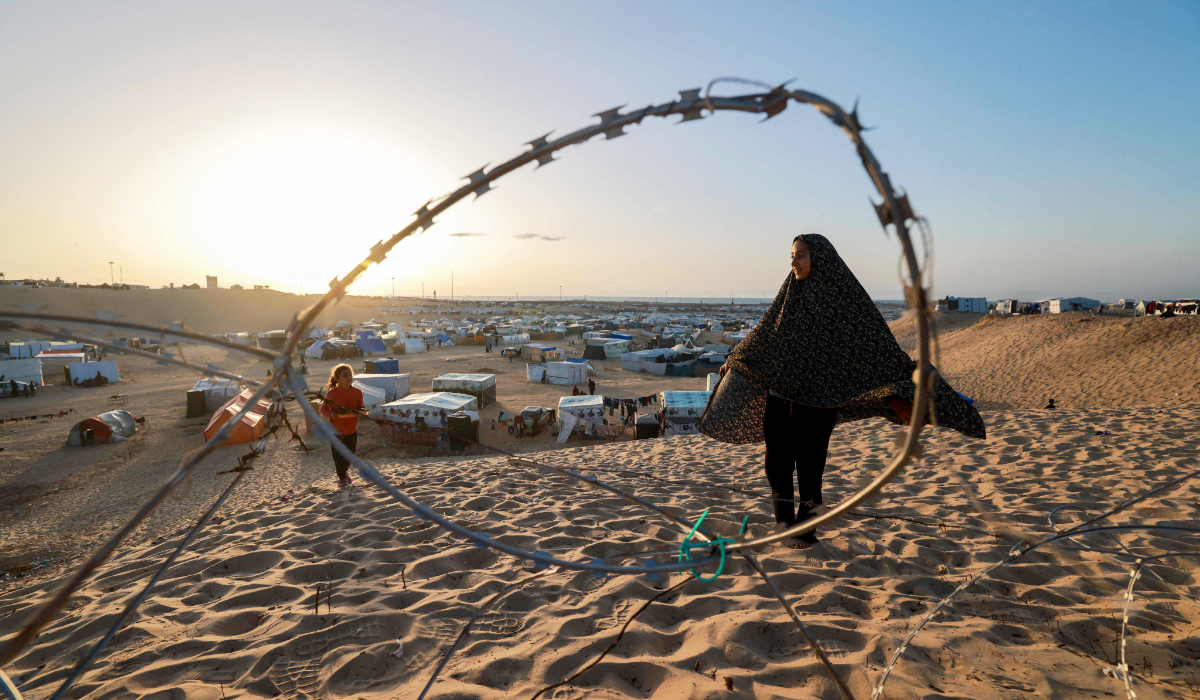
Children play at a camp for displaced Palestinians in Rafah, in the southern Gaza Strip, on the eve of the Muslim holy fasting month of Ramadan on March 10, 2024, amid ongoing battles between Israel and the militant group Hamas. (AFP)
Since then the civil war has spread, killing 12,000 people, displacing at least 8 million, and forcing 19 million children out of school. The widespread threat of starvation also looms.
“The fighting there must end for the sake of the Sudanese people, who face hunger, horrors and untold hardships,” said Guterres.
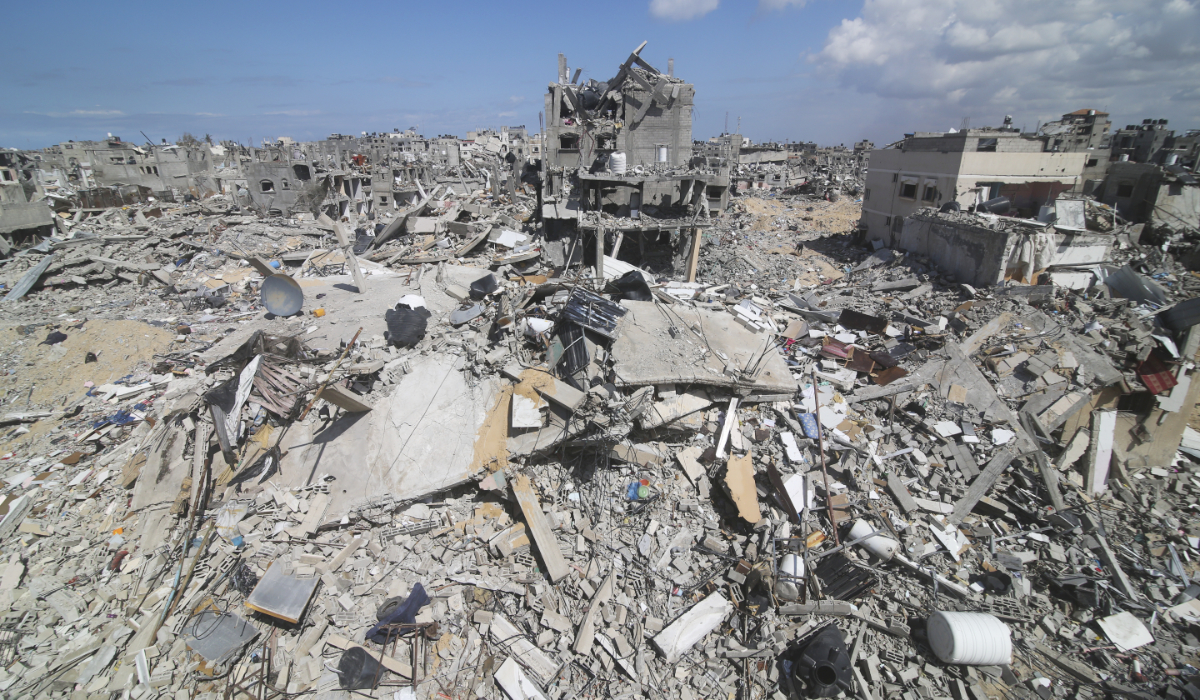
Destruction left by the Israeli offensive on Khan Younis, Gaza Strip, is seen Friday, March 8, 2024. (AP)
“In Gaza, in Sudan, and beyond, it is time for peace. I call on political, religious and community leaders everywhere to do everything in their power to make this holy period a time for empathy, action and peace.
“Let’s not forget that beyond Ramadan, Christians will soon celebrate Easter and Jews will celebrate Passover. It is time to end the terrible suffering. Now is the time to do it.”


