Art of falcon feather repair thrives in Kingdom

1 / 4
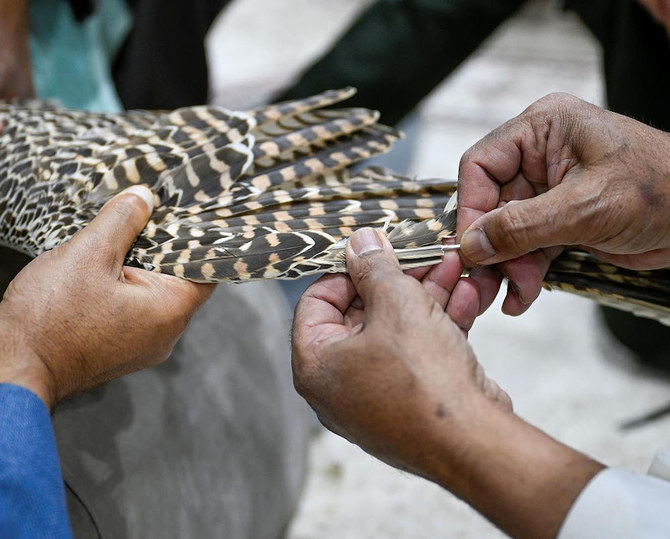
The art of tawseer requires a deep understanding of falcon anatomy, feather types, and the intricate process of feather replacement. (SPA)
2 / 4
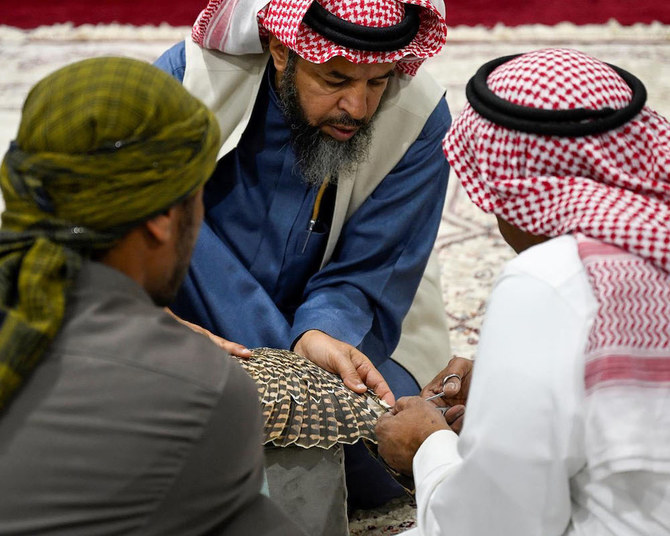
The art of tawseer requires a deep understanding of falcon anatomy, feather types, and the intricate process of feather replacement. (SPA)
3 / 4
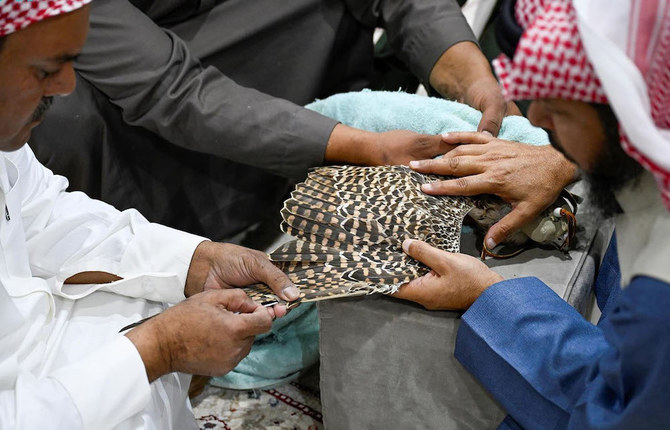
The art of tawseer requires a deep understanding of falcon anatomy, feather types, and the intricate process of feather replacement. (SPA)
4 / 4
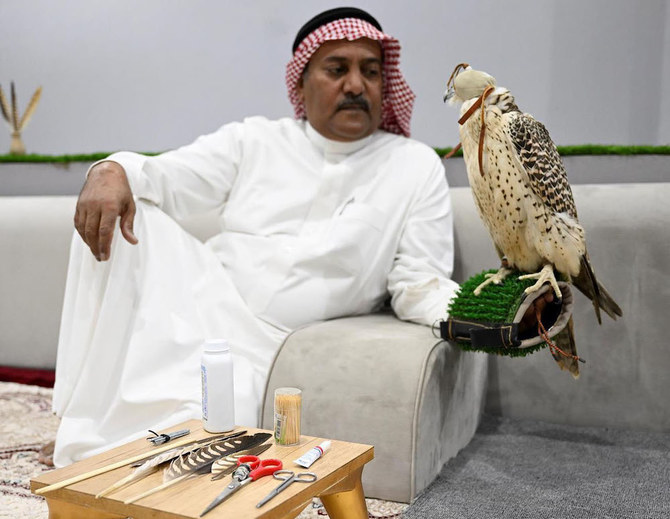
The art of tawseer requires a deep understanding of falcon anatomy, feather types, and the intricate process of feather replacement. (SPA)
Short Url
Updated 10 March 2024
Follow

Art of falcon feather repair thrives in Kingdom

  • The meticulous craft is commonly used on birds of prey, particularly falcons, to replace a damaged feather with a healthy one

RIYADH: In the heart of Taif, the unique and time-honored tradition of feather imping, or mending, is thriving.

Known locally as tawseer, the meticulous craft is commonly used on birds of prey, particularly falcons, to replace a damaged feather with a healthy one, the Saudi Press Agency reported.

It involves the insertion of a donor feather, obtained either from the bird’s previous molting, or from another bird of the same or different species.

After a hunting or training season, falcons may suffer broken or damaged feathers. Skilled craftsmen, who have inherited their knowledge from generations past, step in to mend the falcon’s feathers using specialized tools and techniques.

According to imping expert Masoud Al-Juaid, the process is delicate, requiring a keen eye and a steady hand.

Skilled craftsmen, he said, can complete the task in just four or five minutes, using simple tools such as wooden skewers, copper wire, adhesive glue, and white powder or wood ash. The latter helps to stabilize the newly added feather and prevent it from affecting the falcon’s flight.

Imping is not merely an aesthetic practice; it is essential to maintaining the falcon’s balance and flight capabilities. A broken or damaged feather can disrupt the bird’s aerodynamics, leading to difficulty in flying or even injury.

A falcon’s wing consists of 22 feathers: 10 primary feathers, on the outer edge, and 12 secondary feathers on the inner edge. The molting and growth of each feather takes between three to eight weeks, depending on its length, according to the SPA report.

The art of tawseer requires a deep understanding of falcon anatomy, feather types, and the intricate process of feather replacement. It is testament to the rich cultural heritage of falconry in Saudi Arabia, and the dedication of its practitioners to preserving this tradition.


Malaysian minister commends Saudi Arabia’s Ramadan programs

Updated 27 February 2026
Follow

Malaysian minister commends Saudi Arabia’s Ramadan programs

  • Ministry of Islamic Affairs implements Custodian of the Two Holy Mosques’ program for distributing dates in 120 countries, iftar meals in 70 countries

RIYADH: Malaysian Religious Affairs Minister Zulkifli Hasan has commended Saudi Arabia’s Ramadan programs, saying that the implementation of the Custodian of the Two Holy Mosques’ iftar and date distribution programs in Kuala Lumpur embodies the deep ties and humanitarian solidarity between Malaysia and Saudi Arabia.

Speaking at the inauguration ceremony at the Tuanku Mizan Zainal Abidin Mosque, the minister praised the Kingdom’s historical commitment to caring for the Two Holy Mosques in Makkah and Madinah and attending to the affairs of Muslim nations, Saudi Press Agency reported.

He described the initiative as a generous gesture that reflected the values of cooperation, concluding with prayers for the continued security and stability of the Kingdom and its leadership.

Meanwhile, the Ministry of Islamic Affairs, Dawah and Guidance, represented by the Saudi Embassy in Bosnia and Herzegovina, launched the Custodian of the Two Holy Mosques’ dates distribution program during a ceremony at the Saudi Embassy in Bucharest, Romania, SPA reported.

The total quantity allocated for distribution is five tonnes of premium Saudi dates, benefiting about 15,000 people in various Romanian cities and regions, as part of the ministry’s Ramadan programs implemented outside the Kingdom during the holy month.

A number of attendees and beneficiaries expressed their appreciation to the Kingdom, its leadership and people for the donation.

The Ministry of Islamic Affairs also launched the iftar program for fasting Muslims in Korea at the Seoul Central Mosque, in the presence of the charge d’affaires at the Kingdom’s embassy in Korea, Fahd Al-Barakah.

Three tonnes of dates will be distributed, benefiting 12,000 people, while about 10,000 will benefit from the iftar program.

This initiative is part of the ministry’s efforts to promote the values of solidarity and compassion among Muslims worldwide during Ramadan.

The Ministry of Islamic Affairs implements the Custodian of the Two Holy Mosques’ program for distributing dates in 120 countries and the program for providing iftar meals in 70 countries.