

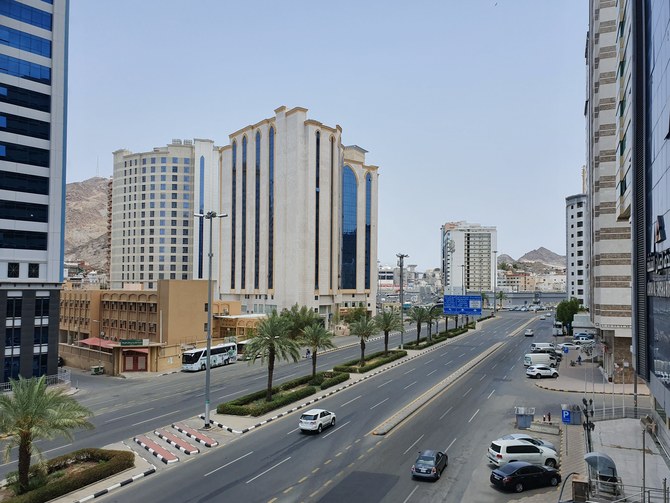

RIYADH: Saudi Arabia’s real estate market is set for an upswing as high-net-worth Muslim individuals plan to invest $2 billion in Makkah and Madinah properties, a recent survey indicated.
The survey was conducted by Knight Frank, a global property consultancy, and published in the firm’s inaugural Destination Saudi report. It found that among the individuals interviewed, a whopping 92 percent HNWI are planning to acquire branded residential units in one of the two holy cities— Makkah and Madinah.
“The holy cities of Makkah and Madinah represent some of the most sought-after Saudi locations for property ownership among global HNWI. The chance to live not only in the Kingdom but in one of the holy cities is itself a key demand driver,” said Vera Zabelina, a research analyst at Knight Frank.
It would be pertinent to mention here that the Kingdom’s real estate market is bracing for changes in foreign ownership regulations, notably with the introduction of new premium residency visa options linked to real estate ownership.
The aim of these changes is to draw in international investments amid challenges of affordability and changing market dynamics. This aligns with the Kingdom’s Vision 2030 blueprint, which looks toward a future less dependent on oil revenues and emphasizes top-tier housing for its citizens.
However, with the requirement of properties valued at least SR4 million ($1.06 million) and outright ownership, along with an annual visa renewal fee of SR100,000, the full impact of these changes may be gradual rather than immediate, according to the report.
In the survey, the consultancy was able to quantify, for the first time, the depth of demand to own real estate in Saudi Arabia for Muslim HNWI, particularly in the two holy cities.
The survey included almost 506 HNWI from nine countries with significant Muslim populations with a personal net worth exceeding $500,000. The findings showed that 82 percent of the respondents were interested in owning real estate in Saudi Arabia.
The demand drivers, according to the Knight Frank survey, are Saudi Arabia’s perception as a good investment opportunity with 60 percent of the respondents indicating so, and the significant influence of cultural and religious reasons among potential buyers, with 45 percent citing this as a key factor.
For Muslims, a journey to Makkah and Madinah is often seen as once-in-a-lifetime experience. Thus, the opportunity to own property in these holy cities is understandably very enticing, the report added.
However, historical ownership laws have made this prospect impossible. Even with the introduction of the new premium residency visa linked to property ownership, owning real estate in Makkah or Madinah is currently restricted to a 99-year leasehold basis.
“While the new premium residency visa options still do not permit outright ownership of real estate in the holy cities, the prospect of a 99-year leasehold title will undoubtedly fuel a wave of new purchasing demand from Muslim majority nations,” according to Mohamad Itani, partner at Knight Frank.
This was evident in survey results with 84 percent of those interested in buying residential property in Saudi Arabia are focused on the holy cities.
Specifically, 40 percent are interested in Makkah, 19 percent prefer Madinah, and 26 percent have no specific preference. For those seeking a primary residence in Saudi Arabia, 58 percent lean toward Makkah, while 20 percent favor Madinah.
The main drivers for desiring property ownership in the holy cities were predominantly investment opportunities, with culture and religion also playing significant roles. Meanwhile, those interested in Madinah also cited work and business reasons as additional motives.
Survey results also revealed that the average allocated budget for residential property in either of the holy cities amounts to $4.7 million, with total allocation by all 506 respondents totaling $2 billion. This underscores the substantial weight of international demand for real estate investment building overseas, according to the report.
According to Knight Frank’s analysis, the preference for cash payments among property buyers rises with personal wealth, ranging from 31 percent for those with under $500,000 net worth to 78 percent for those with over $3 million.
The opportunity for luxury housing and branded residences was further seen when 92 percent of surveyed HNWI Muslim respondents expressed eagerness to purchase such properties in the holy cities, with a spending appetite for branded residences that far exceeds the current apartment prices in these cities.
The potential arises from the scarcity of luxury housing in the desired holy cities, notably as the Thakher and Masar Makkah projects emerge as the sole planned giga developments with approximately 10,000 homes in the pipeline.
This represents a mere 1.5-2 percent of the total 660,000 units planned nationwide, indicating ample capacity for the real estate markets in the two cities, particularly Makkah, to accommodate a substantial influx of luxury housing.
Global HNWI were also found to be willing to commit substantially more, with 40 percent ready to invest over $10,000 per square meter for a branded home in Makkah, highlighting a significant market gap for high-end branded residences.
According to Knight Frank partner Faisal Durrani, “branded residences represent a significant area of opportunity for developers across the Kingdom, particularly given the high budgets among domestic branded residential purchasers. 69 percent of Saudis are interested in owning a branded residence … Furthermore, 55 percent of GCC HNWI are keen to secure branded residences in the Kingdom.”
“Clearly, the international wealthy feel the same, however a limited range of branded residences, lack of local financing options and no scope as yet for partial, or timeshare ownership remain key barriers,” he added.
The survey found that for potential buyers of branded residences in the holy cities, key factors that would increase their likelihood of purchasing include a desire for a wider selection of property types, and the availability of local financing options and fractional ownership options.
The desire to purchase a branded residence is primarily influenced by the expected high yield and investment potential, along with considerations for building maintenance, management, and the quality of service provision and amenities, as showed by the survey results.
Mohamad Itani, a Knight Frank partner and head of residential project sales and marketing, Saudi Arabia, said: “The management of branded residential purchases for the international HNWI should be a central consideration for developers. Remote purchasers will want to have peace of mind that their investments are well looked after and secure in a well-regulated environment.”
According to Knight Frank, branded residences are a rapidly growing sector in the Middle East’s real estate market, mirroring global trends among wealthy buyers seeking exclusivity.
Saudi Arabia is becoming a key market, with significant investment in branded offerings. According to the report, the region’s share of this market stands at 10 percent, indicating its increasing significance.
Knight Frank forecast a 120 percent increase in these properties by 2030, demonstrating confidence in the region’s real estate growth.
These properties offer unique allure, quality services, and premium amenities, attracting investors and ensuring asset appreciation. Owners enjoy exclusive benefits and a community of like-minded individuals.


