

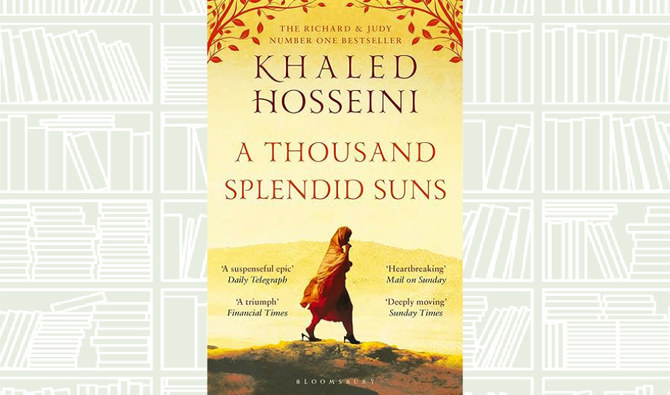
What We Are Reading Today: ‘A Thousand Splendid Suns’ by Khaled Hosseini

Short Url
Updated 07 March 2024
Follow

What We Are Reading Today: ‘A Thousand Splendid Suns’ by Khaled Hosseini

“A Thousand Splendid Suns,” by Khaled Hosseini, is a beautifully written novel about the struggles and resilience of two Afghan women, Mariam and Laila. The book was published in 2007.

With the author’s narration and strong imagery, he captures the complexity of human emotions as well as the unbeatable spirit of the Afghan people.

Mariam and Laila end up marrying the same man in different times for different reasons.

Overtime, an unlikely friendship grows between the women in the middle of the hardships they face, and in the way that they together navigate the oppressive patriarchy, domestic violence and constant threat of war.

The book is evocative and deeply moving. Hosseini skilfully illustrates the tough realities faced by Afghan women through his vivid descriptions of the physical and emotional abuse that they endure.

The author’s ability to blend these harsh realities with moments of tenderness and hope is impressive. He explores angles of love, sacrifice and friendship, making readers empathize with the characters and feel their pain, joy and victories.

One of the strong points of the book is how well-developed and relatable the characters are. The readers can witness the women’s growth as they find solace and support in each other, combating the oppressive society they live in.

He captures the destruction, loss and displacement Afghans have experienced, and the resilience that they show in the face of unimaginable adversity.  

“A Thousand Splendid Suns” is a remarkable novel that illuminates the lives of Afghan women and the enduring human spirit.

This book is a testament to the power of storytelling and serves as a reminder of the strength and resilience of individuals in the face of adversity.


What We Are Reading Today: ‘The Bell Jar’

Photo/Supplied
Updated 20 December 2025
Follow

What We Are Reading Today: ‘The Bell Jar’

  • The bell jar — clear, enclosing, and distorting the air she breathes — becomes the perfect image of Greenwood’s entrapment. Just as telling is the fig tree she imagines, with each fig representing a possible future: writer, traveler, mother, lover

Author: Sylvia Plath

Sylvia Plath’s “The Bell Jar” (1963) is a raw and luminous portrait of a young woman standing at the edge of adulthood, grappling with ambition, doubt, and the suffocating weight of expectation. 

Through the eyes of the novel’s troubled protagonist Esther Greenwood, Plath reveals the loneliness that can lie hidden beneath achievement and the unease brought on by future expectations.  

The novel opens in New York, where Greenwood’s magazine internship seems the gateway to success. Yet the city’s glamor soon feels hollow, and the confidence around her thin and brittle. 

Her sense of direction begins to fade, and the life laid out before her starts to feel both too small and impossibly distant.  

The bell jar — clear, enclosing, and distorting the air she breathes — becomes the perfect image of Greenwood’s entrapment. Just as telling is the fig tree she imagines, with each fig representing a possible future: writer, traveler, mother, lover. 

Torn between these possibilities, she hesitates until the figs shrivel and drop. This image, perhaps more than any other, reveals how fear of choice can quietly undo a person.   

Plath’s writing is sharp and deeply humane. She exposes the subtle pressures shaping women’s lives at that time without sentiment or complaint. 

The narrative’s erratic rhythm mirrors the character’s disoriented state of mind, where thought and memory blur at the edges. 

“The Bell Jar” speaks to anyone who has felt caught between possibility and paralysis, between who they are and who they are expected to be. 

Plath writes with precision and compassion, turning confusion into clarity and despair into something almost inspiring.