

Egypt begins process for privatization of airports

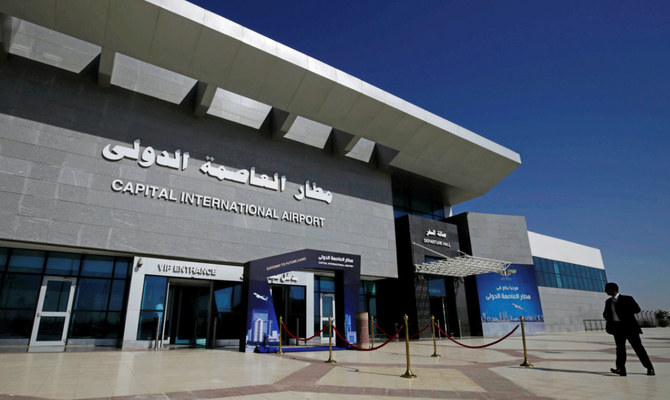
A man walks past the entrance of the Capital International Airport, east of Cairo, Egypt. (Reuters/File)
Short Url
Updated 04 March 2024
Follow

Egypt begins process for privatization of airports

  • Egypt is due to set an international tender for operating Egyptian airports, which include Cairo International Airport

RIYADH: Egypt began the executive process for offering the management and operation of Egyptian airports to the private sector, a Cabinet statement said on Monday.

Egypt is due to set an international tender for operating Egyptian airports, which include Cairo International Airport, the country’s Civil Aviation Minister Mohamed Abbas Helmy has said.

Egypt is set to transition the management and operations of critical logistics and transportation entities to the private sector, starting with the aviation industry. 

In November 2023, Egyptian Prime Minister Mostafa Madbouly declared that seaports, dry ports and airports would be offered to private sector management in the near future. 

Madbouly highlighted a strong commitment to fostering partnerships with private entities in the stewardship and operational aspects of mass transit systems.

An integrated strategy has been formulated by the Egyptian Transport Ministry, in collaboration with global corporations, to begin localization of the industry. 

In July 2023, Egypt’s efforts to bolster its private sector and empower small and medium enterprises received $533.7 million in support from the European Bank for Reconstruction and Development as it undertakes massive privatization and restructuring measures for the public sector.  

Under the umbrella of Egypt 2022-2027 strategy, launched by the Minister of International Cooperation Rania Al-Mashat in March 2022, the EBRD approved development financing worth $400 million for the National Bank of Egypt to support SMEs, focusing on regional companies led or owned by young entrepreneurs.  

The bank also approved funding worth $100 million for Banque Misr to improve financing for SMEs in a way that promotes inclusive and sustainable growth. In addition, it aims to increase funding to SMEs in areas with limited access to financial services.

The EBRD also approved another funding for the Mediterrania Capital IV Fund at a value of €30.2 million ($33.7 million).


European gas prices soar almost 50% as Iran conflict halts Qatar LNG output

Updated 02 March 2026
Follow

European gas prices soar almost 50% as Iran conflict halts Qatar LNG output

  • Analysts warn prolonged disruption could push prices higher
  • Some shipments of oil, LNG through Strait of Hormuz suspended
  • Benchmark Asian LNG price up almost 39 percent

LONDON: ​Benchmark Dutch and British wholesale gas prices soared by almost 50 percent on Monday, after major liquefied natural gas exporter Qatar Energy said it had halted production due to attacks in the Middle East.

Qatar, soon to cement its role as the world’s second largest LNG exporter after the US, plays a major role in balancing both Asian and European markets’ demand of LNG.

Most tanker owners, oil majors and ‌trading houses ‌have suspended crude oil, fuel and liquefied natural ​gas shipments ‌via ⁠the ​Strait of ⁠Hormuz, trade sources said, after Tehran warned ships against moving through the waterway.

Europe has increased imports of LNG over the past few years as it seeks to phase out Russian gas following Russia’s invasion of Ukraine.

Around 20 percent of the world’s LNG transits through the Strait of Hormuz and a prolonged suspension or full closure would increase global competition for other ⁠sources of the gas, driving up prices internationally.

“Disruptions to ‌LNG flows would reignite competition between ‌Asia and Europe for available cargoes,” said ​Massimo Di Odoardo, vice president, gas ‌and LNG research at Wood Mackenzie.

The Dutch front-month contract at the ‌TTF hub, seen as a benchmark price for Europe, was up €14.56 at €46.52 per megawatt hour, or around $15.92/mmBtu, by 12:55 p.m. GMT, ICE data showed.

Prices were already some 25 percent higher earlier in the day but extended gains ‌after QatarEnergy’s production halt.

Benchmark Asian LNG prices jumped almost 39 percent on Monday morning with the S&P Global ⁠Energy Japan-Korea-Marker, widely used ⁠as an Asian LNG benchmark, at $15.068 per million British thermal units, Platts data showed.

“If LNG/gas markets start to price in an extended period of losses to Qatari LNG supply, TTF could potentially spike to 80-100 euros/MWh ($28-35/mmBtu),” Warren Patterson, head of commodities strategy at ING, said. The British April contract was up 40.83 pence at 119.40 pence per therm, ICE data showed.

Europe is also relying on LNG imports to help fill its gas storage sites which have been depleted over the winter and are currently around 30 percent full, the latest data from Gas Infrastructure ​Europe showed. In the European carbon ​market, the benchmark contract was down €1.10 at €69.17 a tonne